
Cafe curtains—traditionally covering only the lower half of a window—are a functional design tool used to balance privacy with natural light. In a cottage-style interior, they provide a “softened” architectural line, breaking up the hard edges of window frames while introducing texture and pattern.
Beyond the kitchen, cafe curtains are effective in bathrooms, laundry rooms, and dining nooks where a connection to the outdoors is desired without compromising privacy at eye level.
1. Selecting the Right Fabric Weight
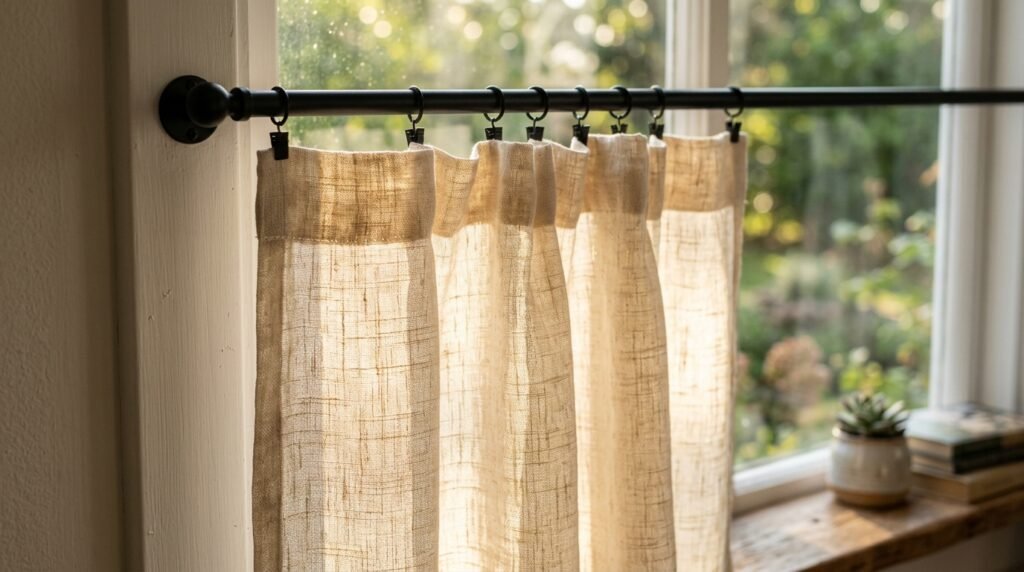
The material of the curtain dictates the “mood” of the room. For a classic cottage feel, prioritize natural fibers:
- Linen: Offers a relaxed, slightly wrinkled texture that filters light into a soft glow.
- Cotton Scrim or Voile: A lighter, sheerer option that provides a “breezy” look, perfect for small windows.
- Heavy Canvas: Best for rooms requiring more privacy or insulation; it provides a structured, “utilitarian” cottage look.
2. Incorporating Vintage Patterns
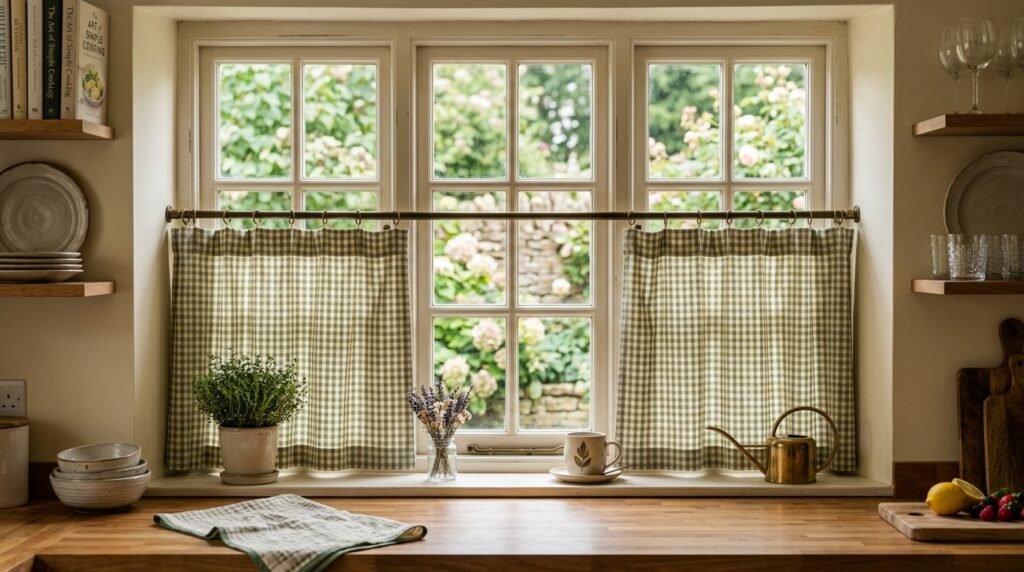
Pattern is a hallmark of the cottage aesthetic. To keep the look sophisticated rather than cluttered, stick to traditional, small-scale prints:
- Gingham & Checks: In muted tones like sage green, dusty blue, or ochre.
- Micro-Florals: Dainty “ditsy” prints that add a touch of romanticism.
- Ticking Stripes: Provides a classic farmhouse feel that elongates the appearance of the window.
3. Rod Placement and Hardware Choice
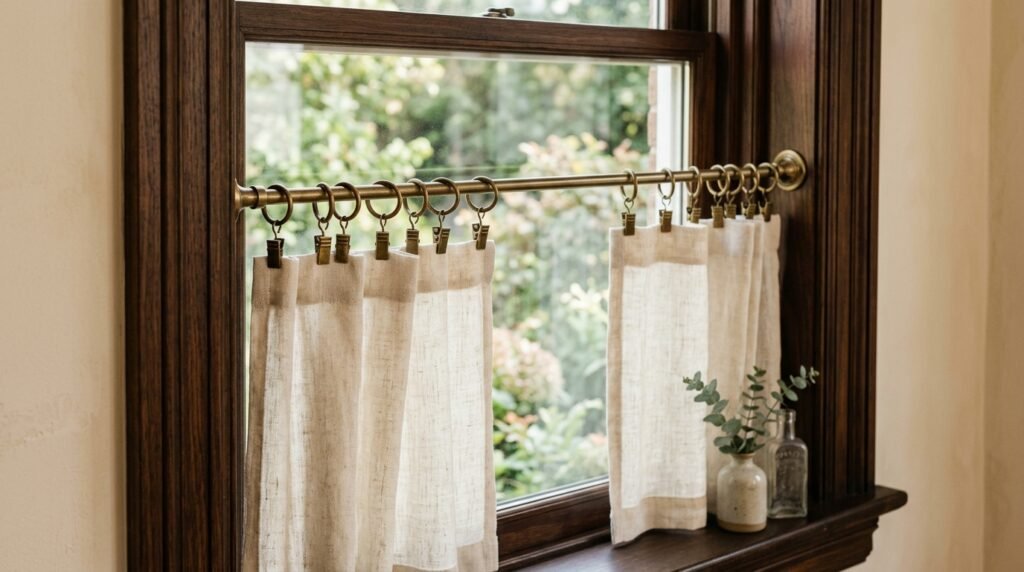
The hardware is as important as the fabric. For a vintage cottage feel, avoid plastic or modern chrome.
- Antique Brass or Bronze: These warm metals complement wood trim and provide a high-end, historical weight.
- Wrought Iron: Ideal for a “dark cottagecore” or rustic look.
- Placement: Mount the rod at the midpoint of the window or slightly lower (at the meeting rail) to maintain a clear view of the sky while shielding the lower half from street view.
4. Edge Details: Ruffles, Scallops, and Lace
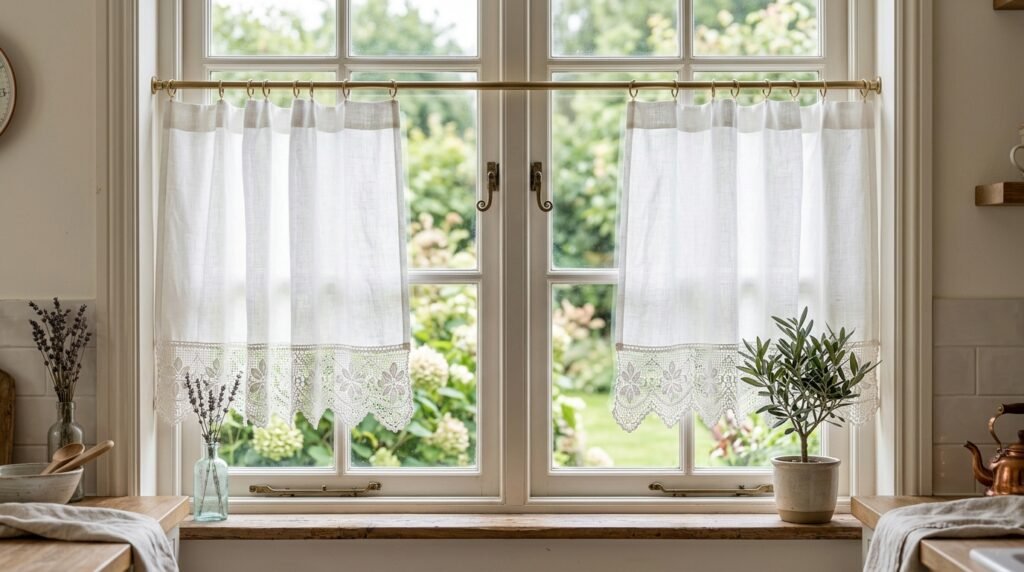
Small details elevate a basic curtain to a custom designer piece.
- Scalloped Edges: Adds a soft, undulating line that feels handcrafted.
- Ruffled Headers: A “pleated” top creates a fuller, more traditional look.
- Lace Insets: Adding a strip of crochet or eyelet lace to the bottom edge allows extra light to “sparkle” through the hem, a signature detail of European cottage style.
5. Using Ring Clips vs. Rod Pockets
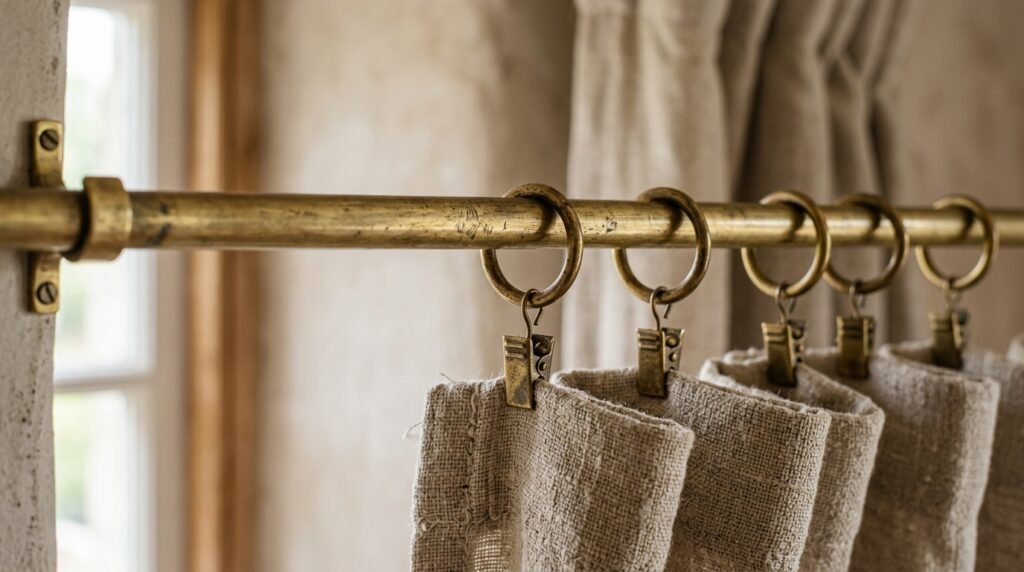
The way the curtain hangs affects how it moves.
- Ring Clips: These allow the fabric to “pleat” naturally and slide easily. They add a bit of height to the curtain and show off the hardware.
- Rod Pockets: This creates a more “gathered” and informal look. It covers the rod entirely, which is a great solution if the hardware is mismatched or utilitarian.
6. Functional Styling: The “Sink Skirt” Connection
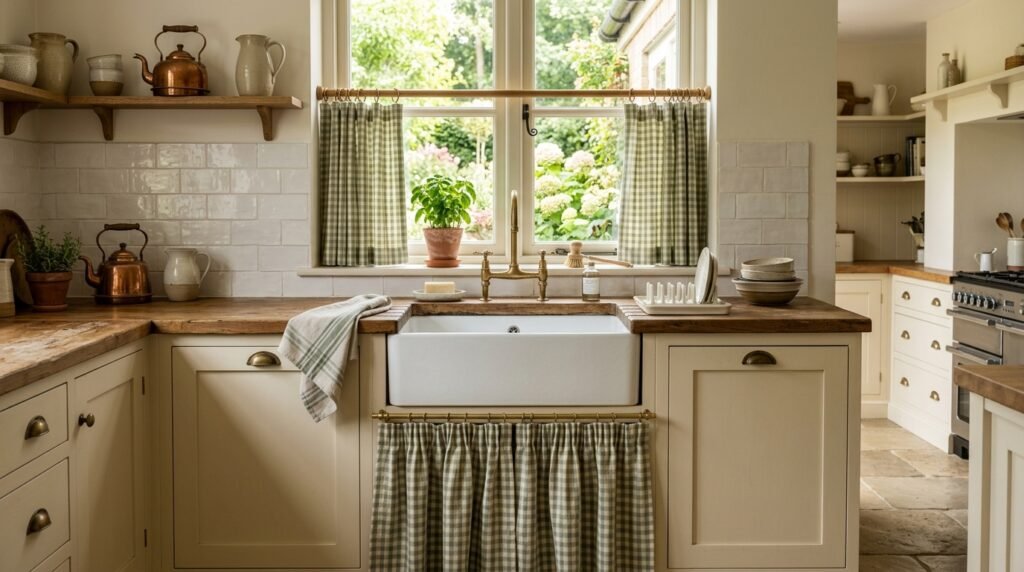
To create a cohesive “cottage” environment, match your cafe curtains to other fabric elements in the room. In a kitchen or laundry room, using the same fabric for a sink skirt (a curtain that replaces lower cabinet doors) creates a unified, “lived-in” aesthetic that feels intentionally curated.
Practical Installation Tips
- The 2x Rule: To ensure the curtains look “full” and not flat, the total width of your fabric panels should be double the width of your window.
- Hem Length: Cafe curtains should ideally end half an inch above the windowsill. This prevents them from dragging and gathering dust while maintaining a crisp, professional line.
- Tension Rods: If you are in a rental or don’t want to drill into your window frames, high-quality tension rods are a non-permanent solution that stays hidden behind the fabric.
Common Mistakes to Avoid
- Too Short: A cafe curtain that stops 3 or 4 inches above the sill looks unfinished. Accuracy in measuring is key.
- Heavy Hardware: Avoid thick, 1-inch diameter rods. Cafe curtains are lightweight; a slim, 1/2-inch or 3/8-inch rod is more proportionate and elegant.
- Synthetic Fabrics: Polyester “sheers” often have a blueish, artificial tint under natural light. Stick to off-white or cream natural fibers for a warmer, authentic feel.