
In a small bedroom, “coziness” is achieved through the strategic compression of soft materials. While large rooms can feel cold, a small space has the unique advantage of becoming a “cocoon” if the layers are handled with professional intent. To avoid a “cluttered” feeling, you must focus on tactile variety rather than visual volume.
The goal is to create a high-performance sanctuary where the quality of the materials—linen, wool, velvet, and wood—overrides the limitations of the square footage.
1. The Bedding Foundation: The “Cloud” Layer
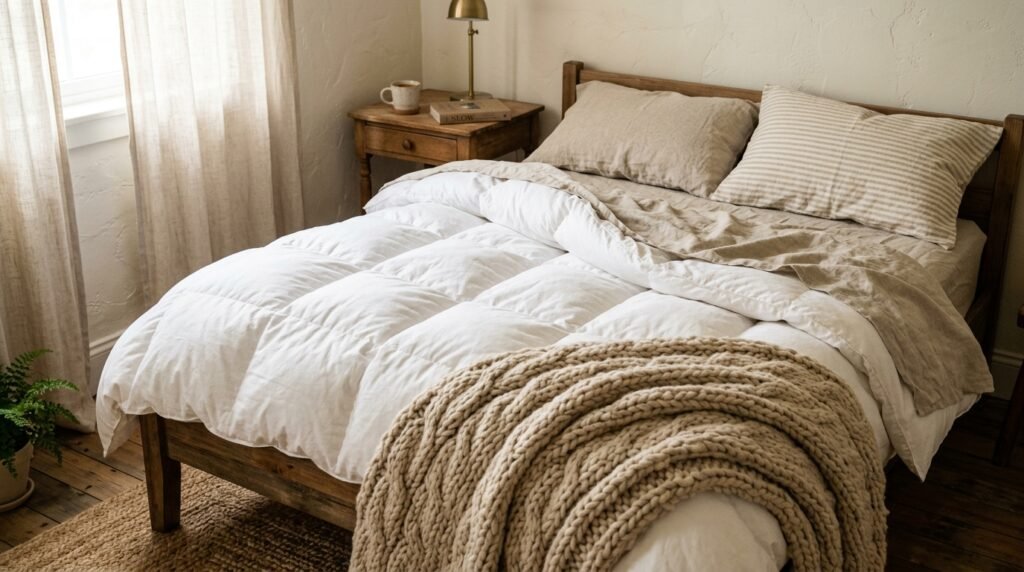
The bed occupies the majority of the room’s real estate, making it your primary canvas for texture. To make a small bed feel high-end, use the oversizing technique: buy a duvet one size larger than your bed frame (e.g., a King duvet on a Queen bed). This ensures the fabric “puddles” over the sides, hiding the bed frame and adding immediate visual weight.
- Pro Tip: Mix your materials. Use a crisp cotton fitted sheet, a stone-washed linen duvet cover for that organic “crumple,” and a heavy wool blanket at the foot. This triple-layering creates depth without taking up extra floor space.
2. Underfoot Comfort: High-Pile Rug Layering
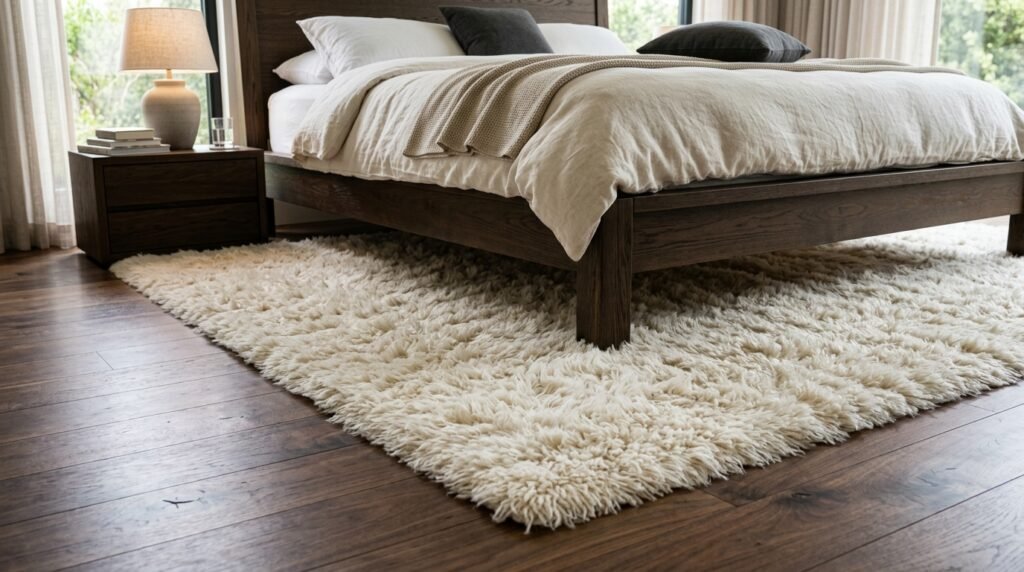
In a small room, a rug shouldn’t just be a decorative accent; it should be a boundary. A high-pile or “shag” rug provides acoustic dampening, which is essential for making a small room feel quiet and private.
- The Designer Secret: If your room is too small for a large area rug, layer a small faux-sheepskin or a long-hair Moroccan rug directly where your feet land in the morning. This “vertical” texture contrast against a hard floor provides an immediate sensory signal of comfort.
3. Window Treatments: The Floor-to-Ceiling “Soft Wall”
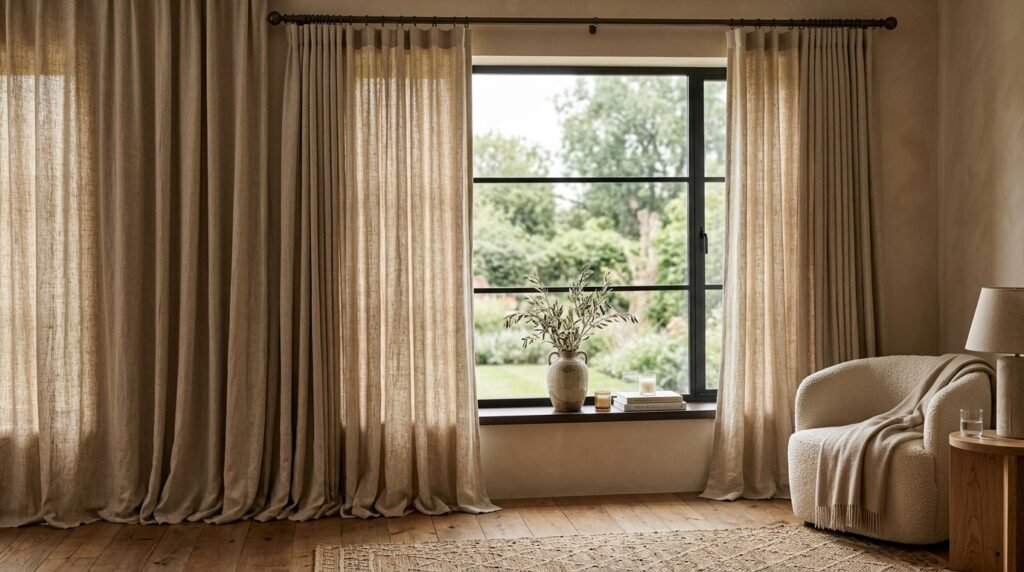
Windows in small bedrooms often look “clipped” if the curtains only cover the glass. To increase the cozy factor, hang your curtains high and wide. Use a heavy-weight fabric like velvet or a thick-weave linen.
- Why it works: By extending the fabric from the ceiling to the floor, you essentially create a “soft wall.” This masks the hard lines of the window and provides a layer of thermal insulation that makes the room feel physically warmer and more “tucked in.”
4. Vertical Texture: Upholstered Headboards
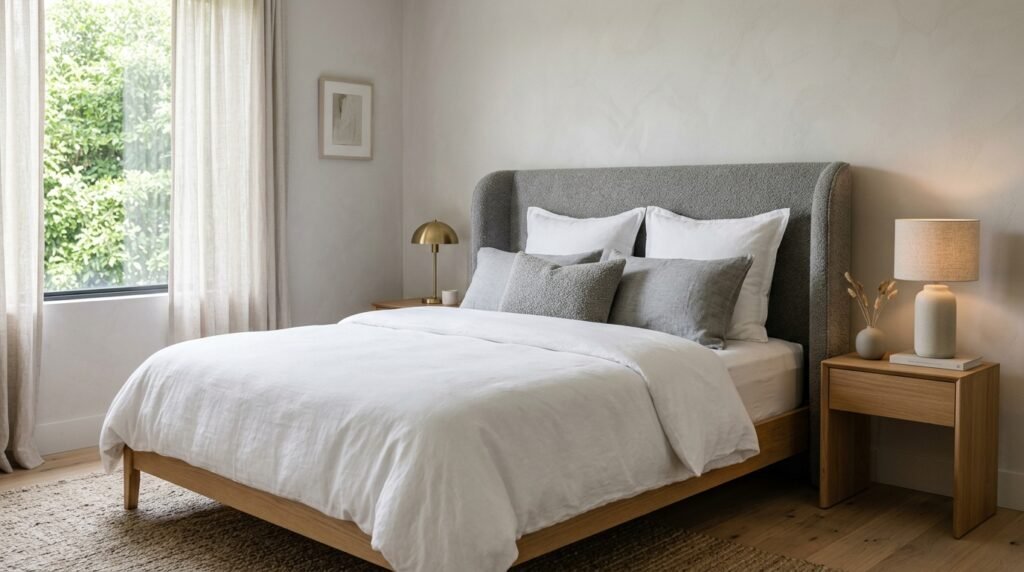
A wooden or metal headboard can feel cold and rigid in a tight space. An upholstered headboard—specifically in a tactile fabric like bouclé or velvet—adds another layer of soft surfacing.
- Functionality: It provides a comfortable backrest for reading, turning the bed into a multi-functional lounge space. In a small room, every surface should contribute to the “softening” of the environment.
5. Sensory Lighting: The Amber Glow
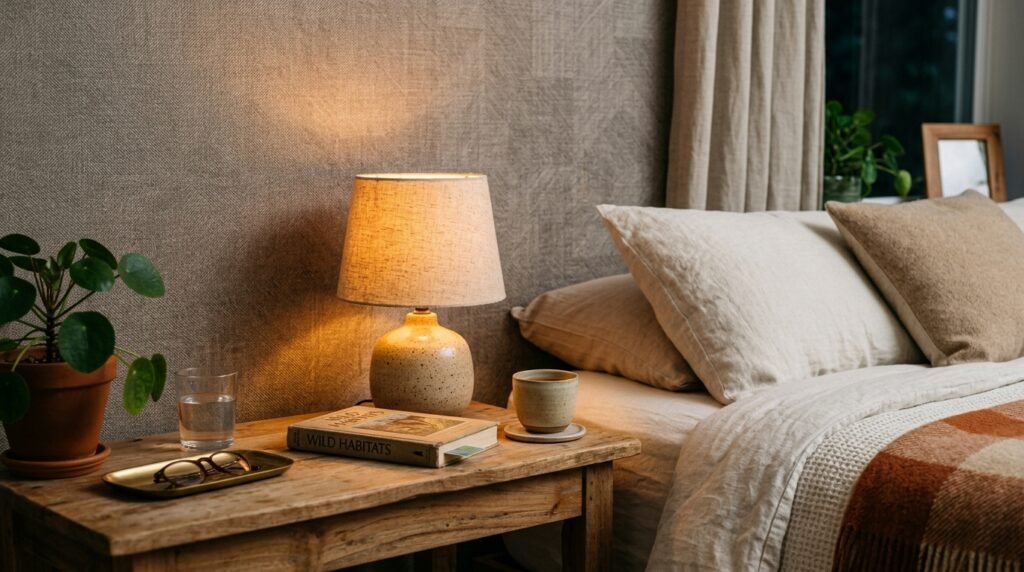
Texture is invisible without the right light. Standard overhead lighting flattens the room. To highlight the “grain” of your blankets and curtains, use low-level, warm lighting (2700K bulbs).
- The Setup: Use a small table lamp with a fabric shade. The weave of the shade will diffuse the light, casting soft shadows that emphasize the textures of the bedding and walls, creating an intimate evening atmosphere.
6. Walls: Grasscloth and Matte Finishes
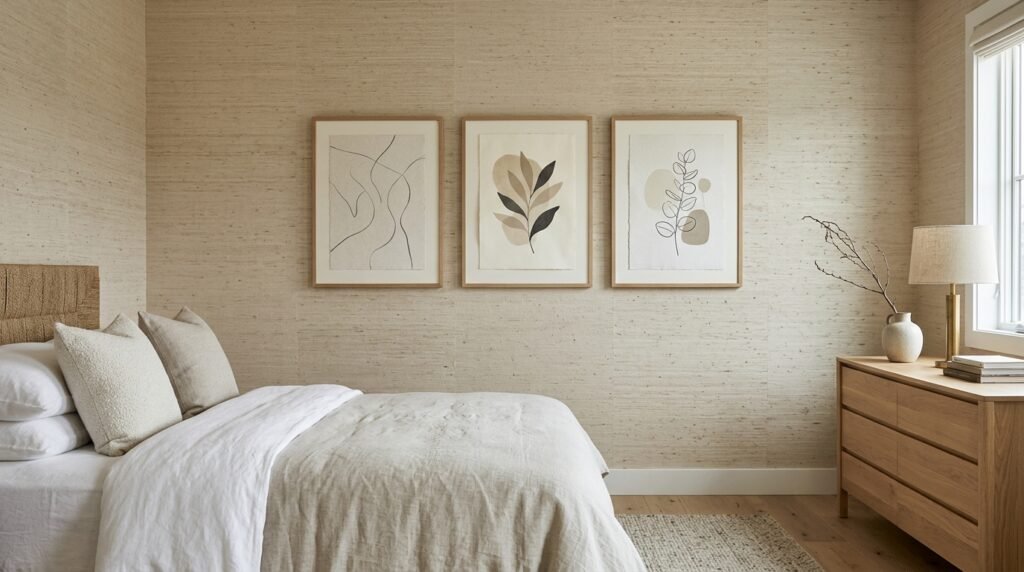
If you want to go beyond paint, grasscloth wallpaper is the professional choice for small, cozy bedrooms. It introduces a subtle, organic “weave” to the walls that absorbs light and sound.
- Budget Alternative: Use a “limewash” or “matte” paint finish. These finishes have a velvety, non-reflective quality that makes the walls feel soft to the touch and visually deeper than standard eggshell paint.
7. The “No-Clutter” Curation
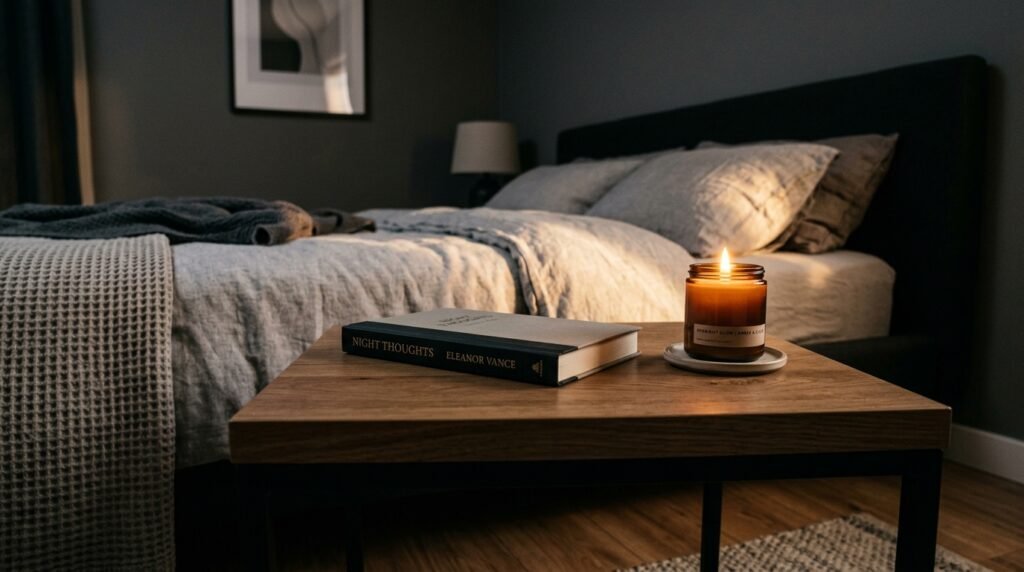
Coziness is often ruined by “visual noise.” In a small room, keep your surfaces 80% clear. A single, high-quality ceramic vase or a stack of two books provides enough “texture” without making the room feel cramped.
- Final Layer: Add one living element, like a small plant with soft, rounded leaves (e.g., a Peperomia). The organic shape provides a final, living texture that completes the “natural” retreat.
Comparison: Texture Materials for Small Rooms
| Material | Sensory Impact | Design Benefit |
| Linen | Organic / Breathable | Adds a relaxed, “lived-in” luxury. |
| Velvet | Heavy / Soft | Absorbs sound and provides deep color. |
| Wool | Chunky / Warm | Provides the best “visual weight” for winter. |
| Bouclé | Nubby / Modern | Adds architectural interest to furniture. |
FAQ
Will too many textures make a small room look smaller?
Not if you stay within a tonal palette. If you use different shades of the same color (e.g., all creams and beiges), the textures will blend together seamlessly, making the room feel “rich” rather than “busy.”
What is the most important layer for a cozy feel?
The lighting. You can have the best fabrics in the world, but if you use a “cool-white” ceiling light, the room will never feel cozy. Warm, localized light is the “glue” that makes textures work.
How do I clean a high-texture room?
Natural fibers like linen and wool are surprisingly durable. Use a handheld steamer to refresh curtains and duvets, and vacuum rugs regularly to keep the fibers “lifted” and soft.