
There is something inherently more satisfying about eating your breakfast with a spoon rather than sipping it through a straw. If a traditional smoothie is a quick fuel stop, a smoothie bowl is a destination. It’s a vibrant, nutrient-dense canvas that allows you to slow down, enjoy the textures, and fuel your body with intentionality.
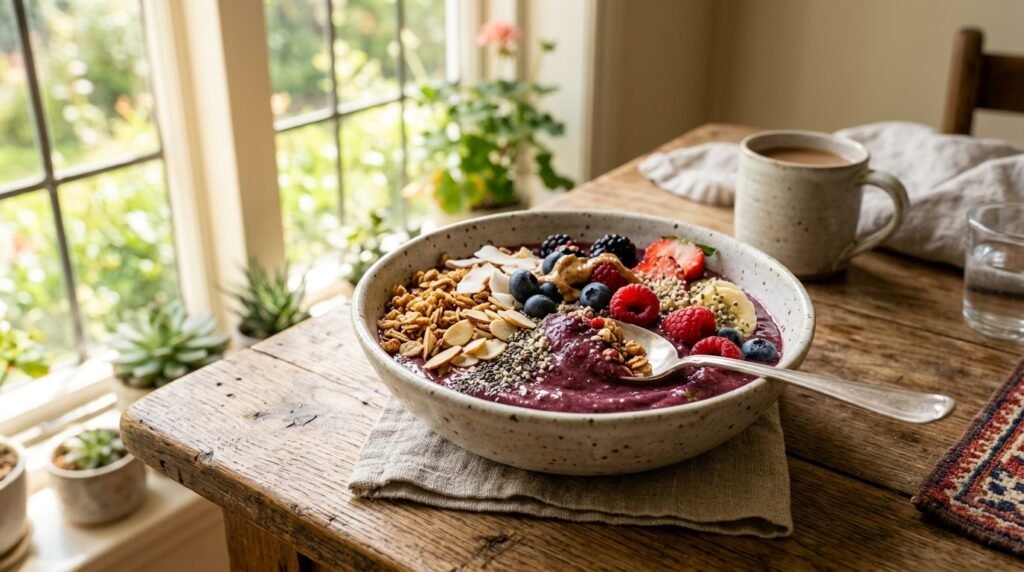
However, anyone who has tried to recreate those Pinterest-perfect bowls at home knows it’s not as simple as throwing fruit in a blender. You often end up with a “smoothie soup” that sinks under the weight of your granola.
In this comprehensive guide, we are going to master the art of the bowl. We’ll cover the science of the “thick base,” the nutritional breakdown of key ingredients, and five world-class recipes that will make your kitchen feel like a high-end juice bar.
Why the Smoothie Bowl Is More Than Just a Trend
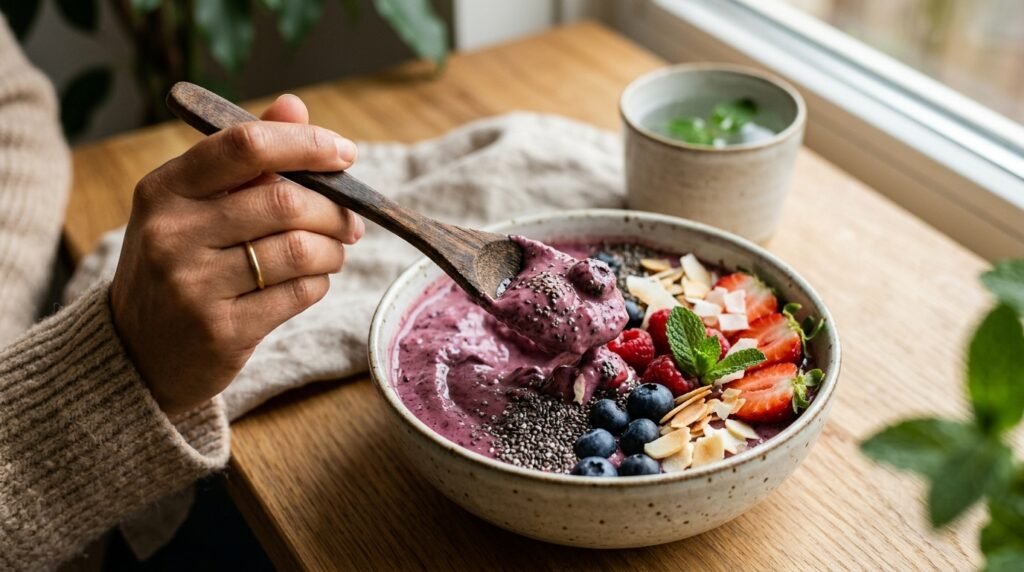
The rise of the smoothie bowl isn’t just about aesthetics or Instagram likes. From a nutritional standpoint, chewing your food—even when it’s partially blended—triggers digestive enzymes in your saliva that help your body process nutrients more efficiently.
Beyond digestion, smoothie bowls offer:
- Satiety: The addition of toppings like nuts, seeds, and fresh fruit adds fiber and healthy fats, keeping you full longer than a liquid meal.
- Customization: Whether you are keto, vegan, or looking for a protein boost post-workout, the base can be pivoted to meet any dietary need.
- Micro-Nutrient Density: It’s an easy way to hide greens, seeds, and superfoods that you might not eat otherwise.
The Golden Rule: How to Achieve That Ultra-Thick Texture
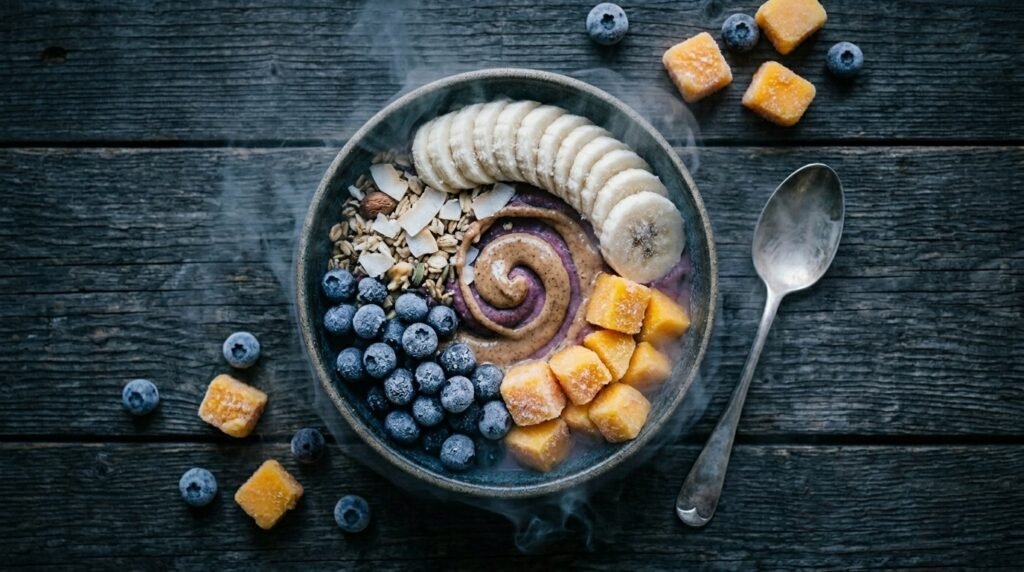
The number one complaint in the world of home blending is a runny base. If your smoothie bowl looks like a melted milkshake, you’ve missed the mark. To get that “soft-serve” consistency, you need to follow these three rules:
1. The Frozen Fruit Foundation
Never use ice to thicken a bowl. Ice dilutes the flavor and creates a gritty texture. Instead, every single fruit component should be frozen. Frozen bananas are the industry standard because their high starch content creates a creamy, custard-like texture. If you aren’t a fan of bananas, frozen mango, steamed-then-frozen cauliflower (trust us, you can’t taste it), or frozen zucchini coins are excellent alternatives.
2. The Liquid-to-Solid Ratio
This is where most people fail. Start with much less liquid than you think you need. For a standard bowl, start with 1/4 cup of liquid. You want your blender to struggle just a little bit. You can always add a splash more, but you can’t take it out once it’s in there.
3. The Power of the Tamper
If you have a high-speed blender (like a Vitamix or Blendtec), use the tamper tool to push the frozen ingredients down into the blades. This creates a “vortex.” If you don’t have a high-speed blender, you will need to stop the blender frequently, scrape down the sides, and pulse manually.
The Anatomy of a Balanced Bowl
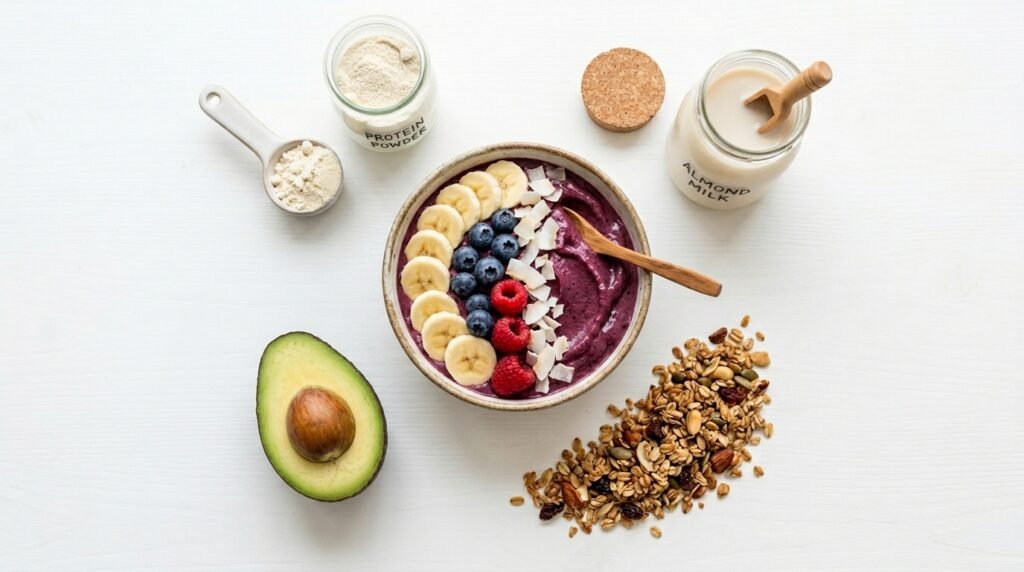
A professional-grade smoothie bowl is built in layers. To maximize AdSense-friendly “dwell time” on your blog or to simply impress your guests, understanding these components is key.
| Component | Purpose | Best Examples |
| The Base | Texture & Volume | Frozen bananas, Acai puree, Pitaya, Frozen berries. |
| The Liquid | Movement | Almond milk, Coconut water, Oat milk, Cold brew coffee. |
| The Thickener | Creaminess | Avocado, Greek yogurt, Nut butter, Chia seeds. |
| The Booster | Nutrition | Spirulina, Protein powder, Maca, Flaxseeds. |
| The Crunch | Texture | Granola, Cacao nibs, Toasted coconut, Hemp hearts. |
5 Signature Smoothie Bowl Recipes

1. The Classic Brazilian Acai Bowl
The OG of the smoothie bowl world. Acai is a superfruit from the Amazon packed with antioxidants and healthy fats.
- The Base: 2 packs of unsweetened frozen acai puree, 1/2 frozen banana, 1/4 cup blueberries.
- The Liquid: 1/4 cup coconut water.
- The Secret: Add a tablespoon of almond butter directly into the blend for a richer mouthfeel.
- Top with: Sliced bananas, hemp seeds, and a heavy drizzle of local honey.
2. The Tropical Glow (Pitaya & Mango)
This bowl is a showstopper because of its vibrant neon pink color. Pitaya (Dragon Fruit) is high in magnesium and B vitamins.
- The Base: 1 cup frozen pitaya chunks, 1/2 cup frozen mango, 1/4 cup pineapple.
- The Liquid: 1/3 cup light coconut milk (from the carton).
- The Secret: Add a squeeze of fresh lime juice to the blender to cut through the sweetness.
- Top with: Kiwi slices, shredded coconut, and macadamia nuts.
3. The Deep Green Goddess
For those who want to start their day with a massive serving of vegetables without feeling like they are eating a salad.
- The Base: 2 cups frozen spinach, 1/2 frozen avocado, 1 large frozen banana.
- The Liquid: 1/2 cup unsweetened soy or pea milk (for extra protein).
- The Secret: Add a 1-inch knob of fresh ginger and a teaspoon of matcha powder for an energy kick.
- Top with: Green apple matchsticks, chia seeds, and pumpkin seeds (pepitas).
4. PB & J Protein Power
The ultimate post-workout meal. This tastes like dessert but is packed with muscle-building fuel.
- The Base: 1.5 frozen bananas, 1 scoop of vanilla or chocolate plant-based protein.
- The Liquid: 1/2 cup unsweetened almond milk.
- The Secret: 2 tablespoons of peanut butter powder (PB2) in the base and 1 tablespoon of actual peanut butter on top.
- Top with: Smashed raspberries (to mimic the “jelly”), granola, and cacao nibs.
5. Blue Lagoon (The Anti-Inflammatory Bowl)
Using Blue Spirulina, this bowl looks like the ocean and is incredible for fighting inflammation.
- The Base: 2 cups frozen cauliflower rice (steam it first, then freeze), 1/2 cup frozen zucchini, 1 frozen banana.
- The Liquid: 1/2 cup cashew milk.
- The Secret: 1 teaspoon of Blue Spirulina powder and a dash of vanilla bean paste.
- Top with: Blueberries, blackberries, and edible flowers for the full aesthetic.
Mastering the Toppings: It’s All About Contrast
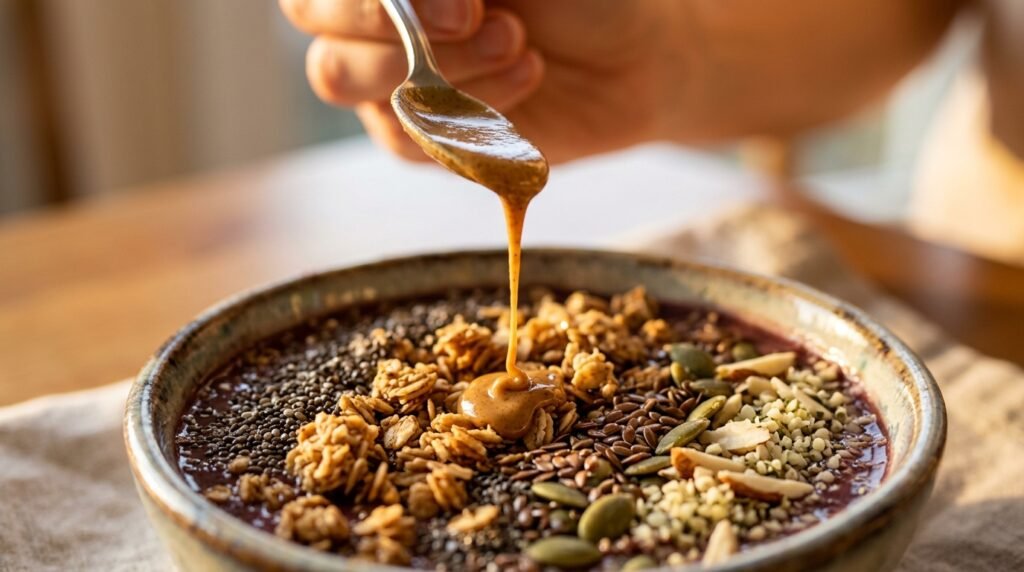
The difference between a “good” bowl and a “gourmet” bowl is the topping technique. You want to aim for a variety of textures: Crunchy, Chewy, and Fresh.
- The “Line” Technique: Instead of scattering toppings haphazardly, place them in neat, parallel lines or concentric circles. This creates a visual hierarchy.
- The Drizzle: Never just “plop” your nut butter. Melt it for 10 seconds in the microwave so it runs off the spoon in a thin, elegant stream.
- Temperature Play: The contrast between the freezing cold base and room-temperature nuts or warm, toasted granola is a sensory delight.
Troubleshooting Common Mistakes
“My blender is smoking!”
If your blender smells like it’s burning, you likely have an air pocket (cavitation) around the blade. Stop immediately. Stir the mixture manually to remove the air bubble, add exactly one tablespoon of liquid, and try again.
“It’s too sweet.”
If you overdid the fruit, balance it out with a pinch of sea salt or a teaspoon of lemon/lime juice. The acid and salt will neutralize the sugar overload.
“It’s melting too fast.”
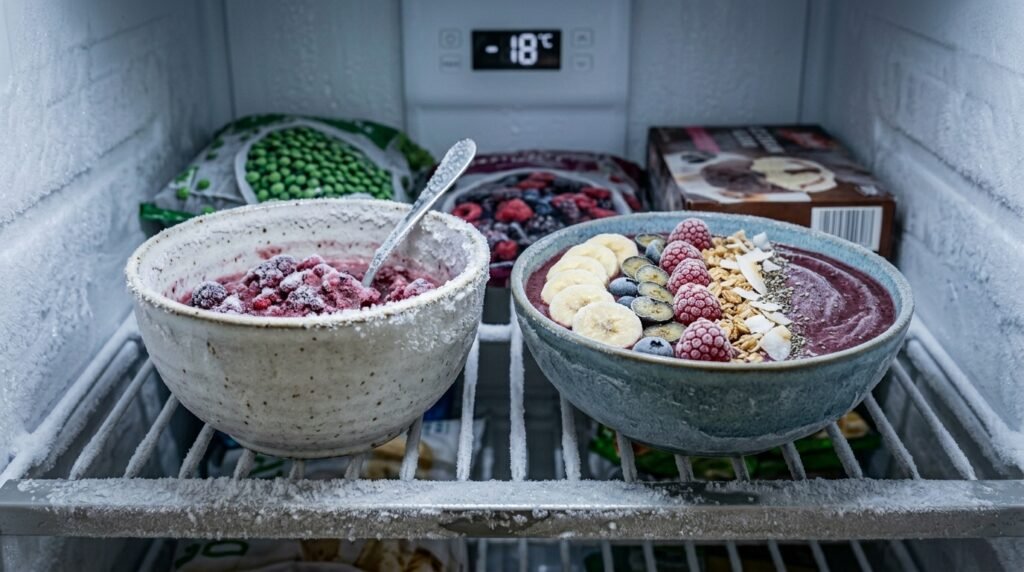
Pre-chill your bowl! Put your ceramic or coconut bowl in the freezer for 10 minutes before you start blending. This buys you an extra 5–7 minutes of “solid” time while you decorate.
Nutritional Strategy: Making it a Full Meal

While smoothie bowls are healthy, they can be “sugar bombs” if you only use fruit. To make a bowl that sustains you until lunch:
- Add Fiber: Ground flaxseeds or psyllium husk can be blended in without changing the flavor.
- Add Healthy Fats: Avocado or nut butters slow down the absorption of fructose (fruit sugar), preventing an insulin spike and subsequent crash.
- Add Protein: If you don’t like protein powder, try blending in 1/2 cup of Greek yogurt or silken tofu.
Smoothie Bowl: The Ultimate Guide to Creating Instagram-Worthy, Nutrient-Packed Breakfasts
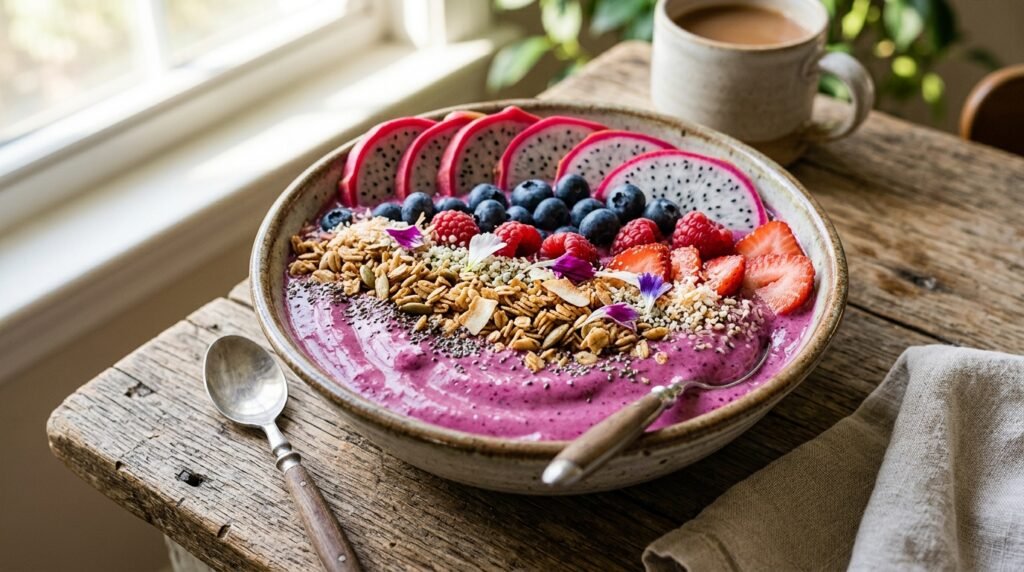
Why Smoothie Bowls Dominated Breakfast Culture in 2026
The smoothie bowl has transcended its status as a fleeting food trend to become a cornerstone of modern wellness culture. What began as a niche offering at Australian cafés has evolved into a global phenomenon that dominates social media feeds, restaurant menus, and home kitchens alike. But this isn’t merely about aesthetics—the smoothie bowl represents a fundamental shift in how we approach morning nutrition.
Unlike traditional smoothies consumed through straws, the smoothie bowl demands engagement. The thicker consistency, achieved through specific blending techniques and ingredient ratios, transforms breakfast into a mindful eating experience. You’re not gulping nutrients while commuting; you’re sitting down, appreciating textures, and savoring each spoonful topped with crunchy, chewy, and fresh elements.
The thick smoothie base serves as a canvas for nutritional density. By 2026, we’ve moved beyond basic banana-berry combinations. Today’s smoothie bowls incorporate adaptogenic mushrooms, collagen peptides, plant-based proteins, and superfood powders that deliver functional benefits beyond macronutrients. The visual appeal—those perfectly arranged smoothie bowl toppings—isn’t vanity; it’s behavioral psychology. We eat with our eyes first, and beautiful food increases satisfaction while reducing mindless overconsumption.
What makes the smoothie bowl particularly relevant now is its alignment with gut health science and blood sugar management. The thick texture requires chewing, which initiates digestive enzyme production. The fiber-rich bases and toppings slow glucose absorption compared to liquid smoothies. For the intermittent fasting crowd, smoothie bowls break fasts gently while providing sustained energy.
This comprehensive guide will teach you the science of achieving perfect thick smoothie consistency, explore flavor combinations that transcend the basic berry blend, and reveal topping strategies that maximize both nutrition and visual impact. Whether you’re a smoothie bowl novice or looking to elevate your existing practice, this is your definitive resource.
2026 Comparison Table: Smoothie Bowl Styles
Table
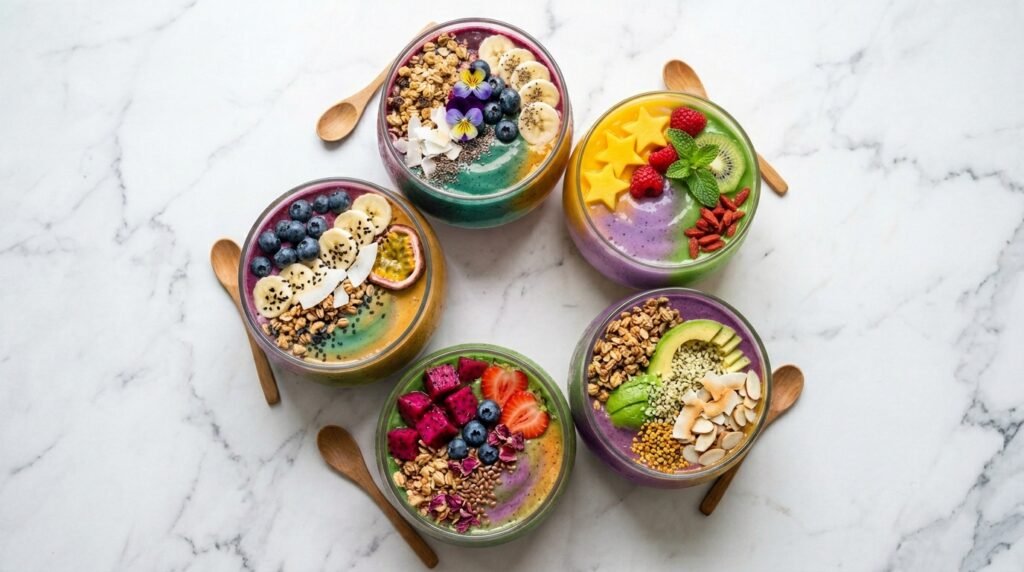
| Style | Base Thickness | Primary Texture | Best For | Key Ingredients |
|---|---|---|---|---|
| Acai Bowl | Very Thick | Ice cream-like | Antioxidant boost | Frozen acai, banana, coconut water |
| Green Goddess | Medium-Thick | Creamy | Detox/alkalizing | Spinach, avocado, mango, ginger |
| Tropical Protein | Thick | Pudding-like | Post-workout | Pineapple, protein powder, coconut milk |
| Chocolate Peanut Butter | Dense | Mousse-like | Satiety/cravings | Cacao, banana, nut butter, oats |
| Berry Antioxidant | Medium | Soft-serve | Skin health | Mixed berries, chia seeds, almond milk |
The Science of Thick Smoothie Consistency
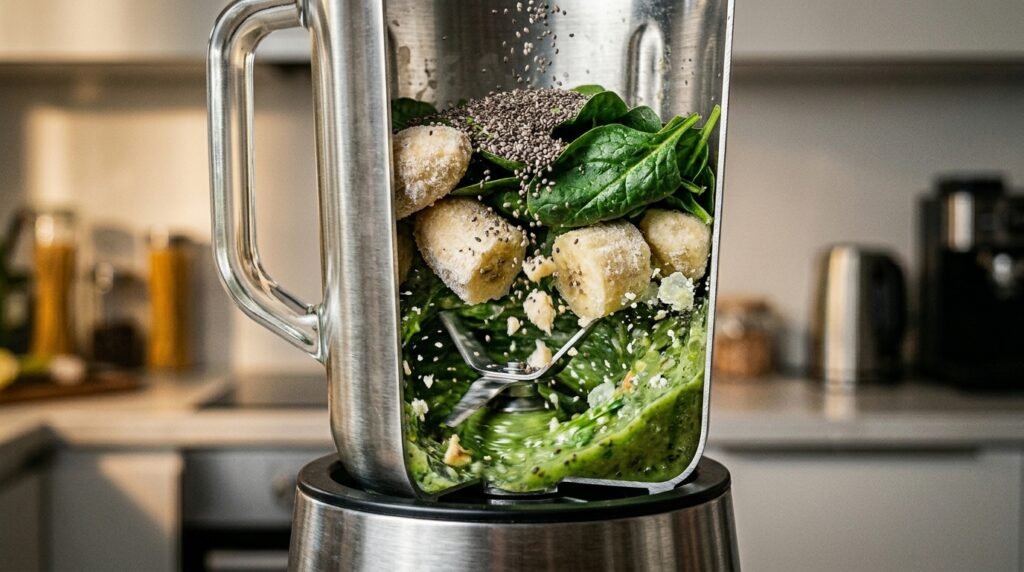
Achieving spoonable thickness isn’t accidental—it’s culinary physics. The difference between a drinkable smoothie and a proper smoothie bowl lies in understanding water content, binding agents, and temperature control.
The Frozen Fruit Foundation
Frozen bananas remain the gold standard for smoothie bowl bases. Their high pectin content creates natural creaminess when blended, while freezing converts starches to sugars that resist complete thawing. Use bananas with brown spots—higher sugar content means better texture and flavor. Freeze in chunks, not whole, for easier blending.
Frozen cauliflower has emerged as a game-changer for low-sugar smoothie bowls. When frozen and blended, it mimics the creaminess of banana without the glycemic impact. Combined with avocado, it creates bases that stay thick for hours without browning or separating.
Binding Agents and Thickeners
Chia seeds and ground flaxseed absorb liquid and expand, creating gel-like structures that stabilize smoothie bowls. Add 1-2 tablespoons to your base before blending, or soak them in your liquid for 10 minutes prior. Psyllium husk offers even more dramatic thickening—use sparingly (1 teaspoon) to avoid gumminess.
Plant-based yogurts (coconut, almond, or cashew) contribute tang and thickness simultaneously. Greek yogurt remains superior for dairy consumers, providing protein density that keeps you full. For vegan smoothie bowls, silken tofu blends invisibly while adding complete protein.
Liquid Ratios: Less Is More
The cardinal sin of smoothie bowl creation is over-liquidating. Start with ¼ cup of liquid per 2 cups of frozen fruit. You can always add more, but you cannot remove it. Use a tamper tool (that plastic plunger with high-speed blenders) to push ingredients into blades without adding liquid. The result should require effort to blend—if it’s spinning freely, it’s too thin.
Coconut water provides electrolytes without excessive sweetness. Nut milks add creaminess but choose unsweetened varieties. For tropical smoothie bowls, small amounts of pineapple or orange juice amplify flavor without drowning the base.
Temperature Control
Blend in pulses to prevent overheating. Friction from high-speed blades melts frozen ingredients, thinning your base. If your blender warms up, pause and let it cool, or add more frozen fruit to compensate. The ideal serving temperature is just below freezing—thick enough to support toppings without collapsing.
Flavor Profiles Beyond Basic Berry
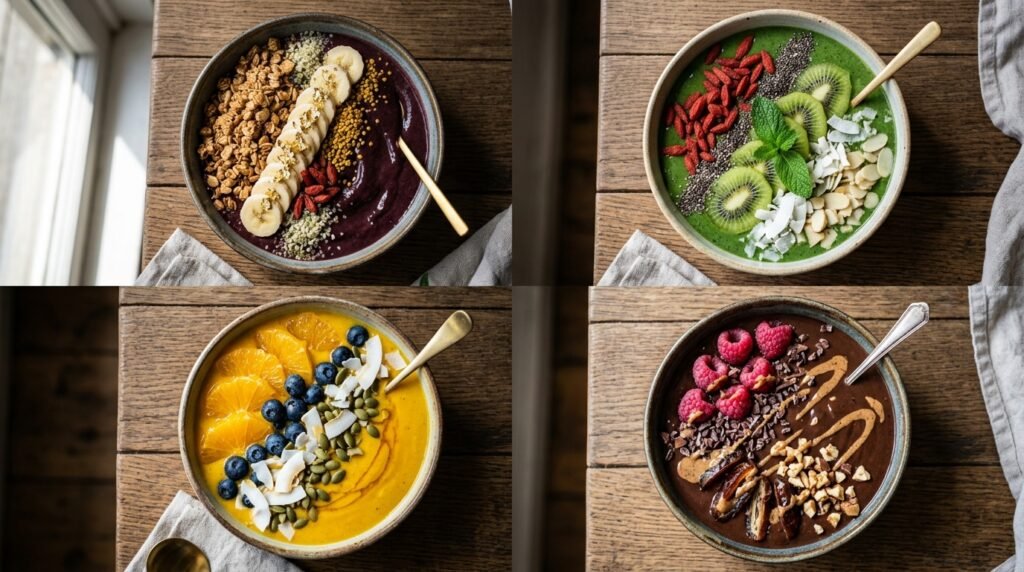
The smoothie bowl’s potential extends far beyond strawberry-banana. These sophisticated combinations leverage functional ingredients for targeted health outcomes.
Adaptogenic Energy Bowl
Base: Frozen banana, frozen cauliflower, maca powder, ashwagandha, almond butter, espresso or cold brew concentrate, coconut milk
Toppings: Cacao nibs, sliced almonds, coconut flakes, hemp seeds
Benefits:Maca supports adrenal function and sustained energy without caffeine jitters. Ashwagandha reduces cortisol. The coffee component provides immediate alertness while adaptogens prevent crashes.
Gut-Healing Green Bowl
Base: Frozen mango, avocado, fresh spinach, kefir or coconut yogurt, spirulina, fresh ginger, lime juice, minimal water
Toppings:Fermented vegetables (radish, carrots), pumpkin seeds, microgreens, drizzle of tahini
Benefits:Kefir delivers probiotics; spirulina offers complete protein and chlorophyll. Ginger stimulates digestive enzymes. The savory profile suits those who find sweet breakfasts triggering.
Anti-Inflammatory Golden Bowl
Base: Frozen pineapple, frozen peaches, turmeric, fresh ginger, black pepper (enhances curcumin absorption), coconut milk, collagen peptides or plant protein
Toppings: Toasted coconut, goji berries, sliced kiwi, crushed walnuts
Benefits:Turmeric’s curcumin requires fat (coconut milk) and pepper for bioavailability. Collagen supports joint and skin health. Pineapple’s bromelain aids protein digestion.
Chocolate Detox Bowl
Base: Frozen banana, frozen zucchini (adds volume without flavor), raw cacao powder, chlorella or spirulina, dates, almond milk, plant protein
Toppings: Fresh raspberries, cacao nibs, sliced almonds, edible flowers
Benefits:Raw cacao provides magnesium and antioxidants without sugar crashes. Chlorella binds heavy metals. The deep green hidden in chocolate color delivers nutrients covertly.
The Art of Smoothie Bowl Toppings
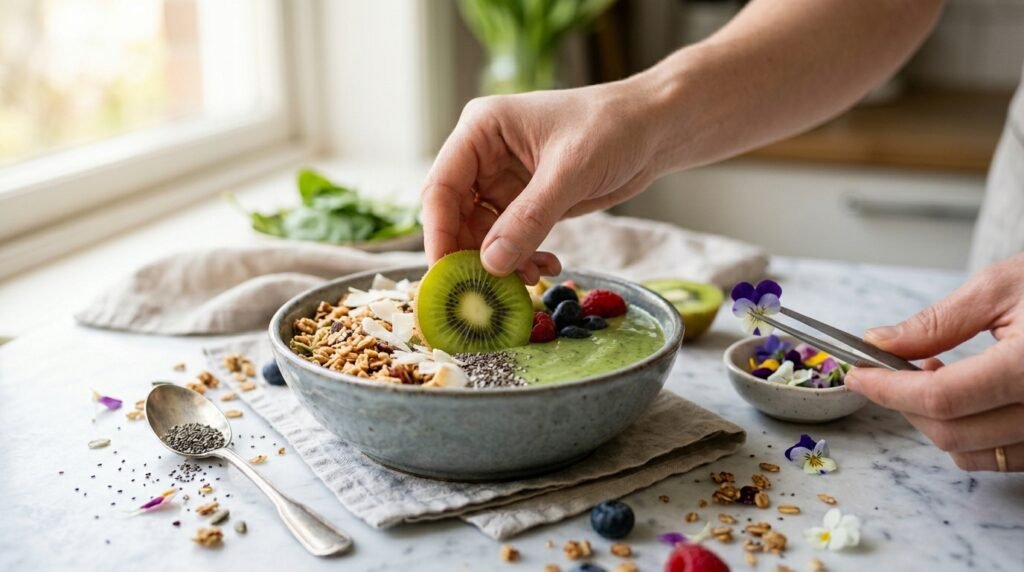
Toppings aren’t merely decorative—they’re textural counterpoints and nutritional amplifiers. The strategic layering of smoothie bowl toppings determines both satiety and visual impact.
Crunch Elements
Granola remains essential, but choose wisely. Low-sugar varieties with nuts and seeds provide lasting energy. Homemade granola allows control over sweeteners—use maple syrup or dates rather than refined sugar. Cluster-heavy textures photograph better and provide satisfying bites.
Seeds offer crunch without bulk. Pumpkin seeds (pepitas) provide zinc and magnesium. Hemp hearts deliver complete protein and omega-3s with subtle crunch. Chia seeds soaked briefly offer gel-burst texture.
Cacao nibs contribute bitterness that balances sweet bases, plus antioxidants and theobromine for mood elevation. Coconut flakes—toasted or raw—add tropical sweetness and chew resistance.
Fresh Fruit Architecture
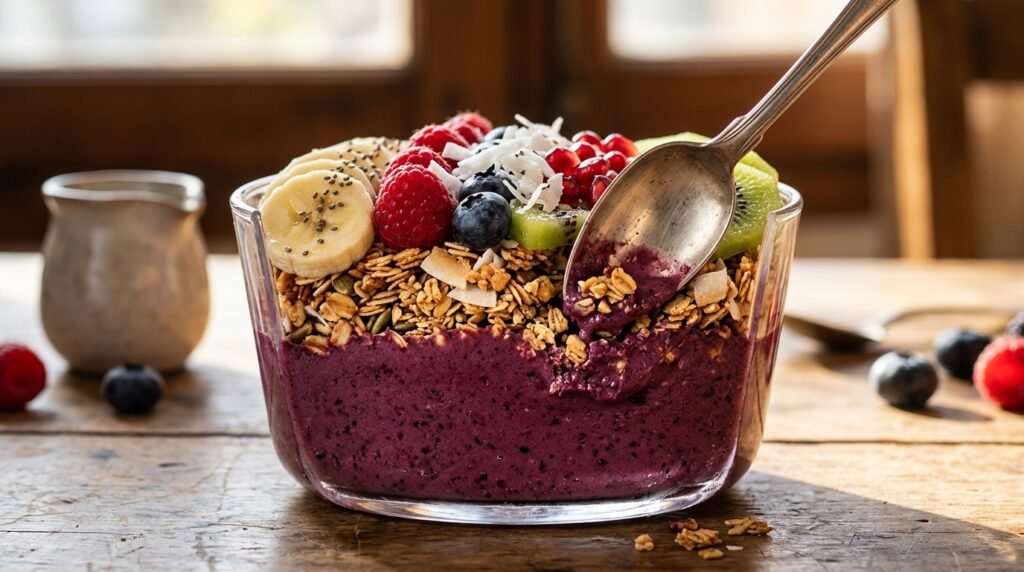
Sliced fruit creates the visual impact that makes smoothie bowls shareable. Dragon fruit (pitaya) offers stunning magenta contrast. Kiwi slices provide acidic brightness and geometric patterns. Figs, when in season, add sophisticated sweetness and texture variation.
Berries should be fresh, not frozen, to prevent bleeding into the base. Arrange raspberries and blueberries in clusters rather than scattering—this creates intentional negative space. Pomegranate arils add jewel-like bursts of juice and crunch.
Citrus segments (orange, grapefruit, blood orange) offer acid balance and vibrant color. Remove pith completely for clean appearance and texture.
Nut Butter Drizzles
Almond butter, cashew butter, and tahini create visual flow and healthy fat content. Warm nut butter slightly for drizzling consistency. Use a spoon to create zigzag patterns or concentric circles. Seed butters (sunflower, pumpkin) suit nut-free diets while providing similar effects.
Microgreens and Herbs
Edible flowers (pansies, nasturtiums, violas) elevate smoothie bowls to art. Microgreens (basil, cilantro, pea shoots) add unexpected savory notes and nutrient density. Mint leaves provide aromatic freshness and color contrast.
The Rule of Thirds
Apply photographic composition to your bowl. Divide mentally into thirds and place dominant elements (large fruit slices, granola clusters) at intersection points. Create height—stack elements rather than spreading flat. Leave some base visible as “negative space” that highlights the colorful toppings.
2026 Buying Guide: Essential Equipment for Smoothie Bowl Mastery

Creating restaurant-quality smoothie bowls at home requires specific tools. Here’s what matters:
Blender Power
High-speed blenders (Vitamix, Blendtec, Ninja) process frozen ingredients without liquid dilution. Look for:
- Tamper tool included for pushing ingredients without stopping
- Variable speed control for texture precision
- Pulse function for breaking up frozen chunks initially
- Thermal protection to prevent motor burnout during thick blends
Personal blenders (Nutribullet, Magic Bullet) work for single servings but struggle with thick bases. They’re acceptable for beginners but limiting for serious smoothie bowl creation.
Bowl Selection
Wide, shallow bowls (1.5-2 inch depth, 6-8 inch diameter) provide surface area for topping arrangement. White ceramic offers neutral background that makes colors pop. Coconut bowls align with tropical aesthetic but require immediate consumption—porous material absorbs moisture and softens bases quickly.
Glass bowls allow viewing base consistency from sides but show condensation. Wooden bowls (acacia, olive) provide organic warmth but can harbor bacteria if not properly sealed.
Prep Tools
Cookie scoops (ice cream disher) create perfect granola mounds. Offset spatulas spread nut butter drizzles with control. Kitchen tweezers place microgreens and edible flowers precisely. Mandoline slicers create uniform fruit discs for geometric patterns.
Storage Solutions
Silicone freezer trays pre-portion frozen fruit for consistent blending. Airtight containers store homemade granola for 2-3 weeks. Glass meal prep containers with compartments separate wet and dry toppings for assemble-later smoothie bowls.
Nutrition Science: Why Smoothie Bowls Beat Traditional Smoothies
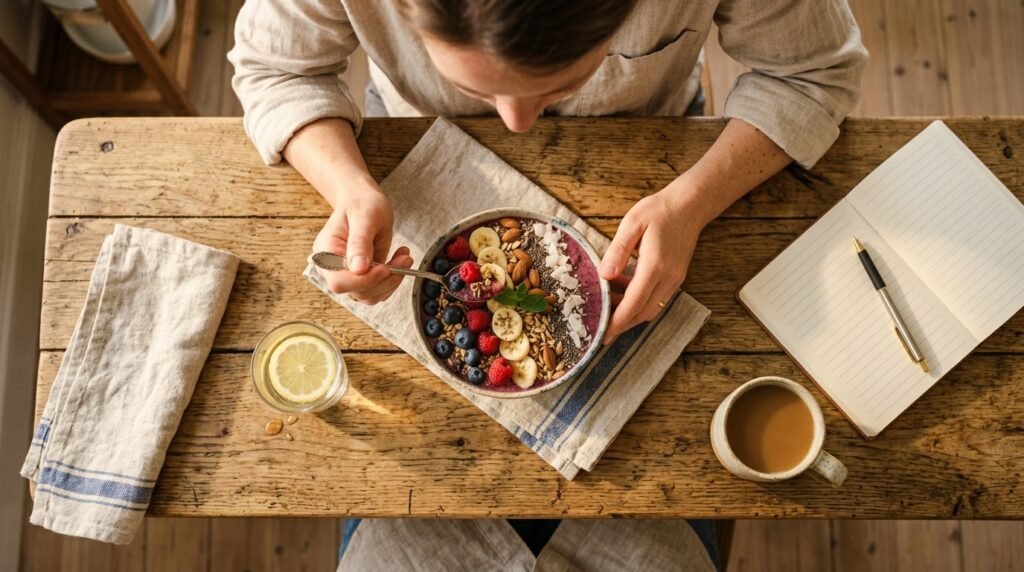
The smoothie bowl format isn’t arbitrary—it leverages physiological mechanisms that liquid smoothies cannot replicate.
The Chewing Factor
Mastication triggers cephalic phase digestion—salivary amylase begins carbohydrate breakdown, and gastric acid production initiates. Liquid bypass skips this preparatory phase, potentially reducing nutrient absorption and satiety signaling. Smoothie bowls require chewing, engaging the full digestive cascade.
Satiety and Blood Sugar
Research consistently shows that thicker textures increase perceived fullness. The viscosity of smoothie bowl bases slows consumption rate, allowing leptin (satiety hormone) signaling to reach the brain before overconsumption occurs. Toppings add fiber, fat, and protein that further moderate glycemic response compared to fruit-sugar-heavy liquid smoothies.
Nutrient Density vs. Calorie Density
Smoothie bowls can become calorie bombs if unchecked. The difference between a 400-calorie nourishing meal and a 700-calorie dessert lies in ingredient selection:
Smart additions:Vegetables (cauliflower, zucchini, spinach), protein powder, healthy fats (avocado, nuts, seeds), fiber (chia, flax, oats)
Hidden pitfalls: Excessive nut butters, sweetened yogurts, dried fruit overload, granola with added sugars, juice-based liquids
The Mindful Eating Advantage
The smoothie bowl ritual—preparation, photography (if desired), seated consumption—interrupts distracted eating patterns. This aligns with intuitive eating principles and reduces the likelihood of compensatory overeating later in the day.
Frequently Asked Questions
- Why does my smoothie bowl melt so quickly?
Temperature and ingredient ratios. Ensure your base is frozen solid—blend just before serving, not in advance. Use more frozen fruit and less liquid. Pre-chill your bowl in the freezer for 10 minutes. Avoid warm toppings (toast nuts separately and cool before adding). Thick smoothie consistency requires the base to be nearly too thick to blend.
Absolutely. Frozen mango, pineapple, or peaches provide similar creaminess. Frozen cauliflower plus avocado creates neutral-flavored thickness without sugar. Sweet potato (cooked and frozen) offers unexpected creaminess and complex carbohydrates. For low-carb smoothie bowls, combine cauliflower, zucchini, protein powder, and nut butter.
How do I meal prep smoothie bowls?
Component separation. Pre-blend bases and freeze in silicone molds or ice cube trays. Thaw slightly and re-blend with minimal liquid when ready. Store dry toppings in separate containers. Fresh fruit toppings should be cut morning-of. Granola and nuts keep for weeks in airtight containers.
Are smoothie bowls actually healthy?
Context-dependent. A smoothie bowl with balanced macronutrients (protein, fat, fiber) and controlled portions supports health goals. However, bowls loaded with dried fruit, excessive granola, and sweetened nut milks can exceed calorie needs while providing less satiety than whole food meals. Treat acai bowls from juice shops as desserts—they often contain 60+ grams of sugar.
Why are my toppings sinking?
Base too thin or toppings too heavy. Achieve spoonable thickness that supports weight. Add light toppings first (seeds, coconut), then heavier items (granola clusters, nut butter). Place large fruit slices strategically rather than randomly. Work quickly—bases soften rapidly, especially in warm environments.
Final Verdict
The smoothie bowl represents more than breakfast aesthetics—it’s a nutritional strategy that prioritizes satisfaction, digestion, and mindful consumption over convenience. Mastering thick smoothie consistency unlocks creative possibilities that transcend the basic fruit blend. Strategic smoothie bowl toppings transform simple ingredients into meals that nourish visually and physically.
Whether you pursue adaptogenic functional benefits, gut health optimization, or simply crave Instagram-worthy mornings, the smoothie bowl format delivers. The equipment investment pays dividends in daily wellness rituals. The flavor combinations are limited only by your freezer contents and imagination.
Start with frozen banana mastery. Experiment with vegetable additions. Develop your signature topping style. The perfect smoothie bowl awaits—thick, nourishing, and undeniably yours.