
Transitioning a living room for the fall season is a strategic process of layering. Unlike a complete renovation, seasonal styling focuses on sensory shifts—replacing cool, smooth surfaces with materials that offer tactile warmth and visual depth. A professional-grade fall aesthetic is built on the principles of “visual weight,” where deeper colors and heavier fabrics are used to ground the room as the external temperature drops.
By focusing on a palette of organic earth tones and a variety of fabric grains, you can create a space that feels both seasonally appropriate and architecturally curated.
1. Establishing a Warm Tonal Foundation
The transition to fall begins with the color palette. Professional decorators move away from “high-contrast” whites and instead utilize a “tonal” approach. This involves layering varying shades of a single warm hue—such as rust, burnt orange, or deep amber.
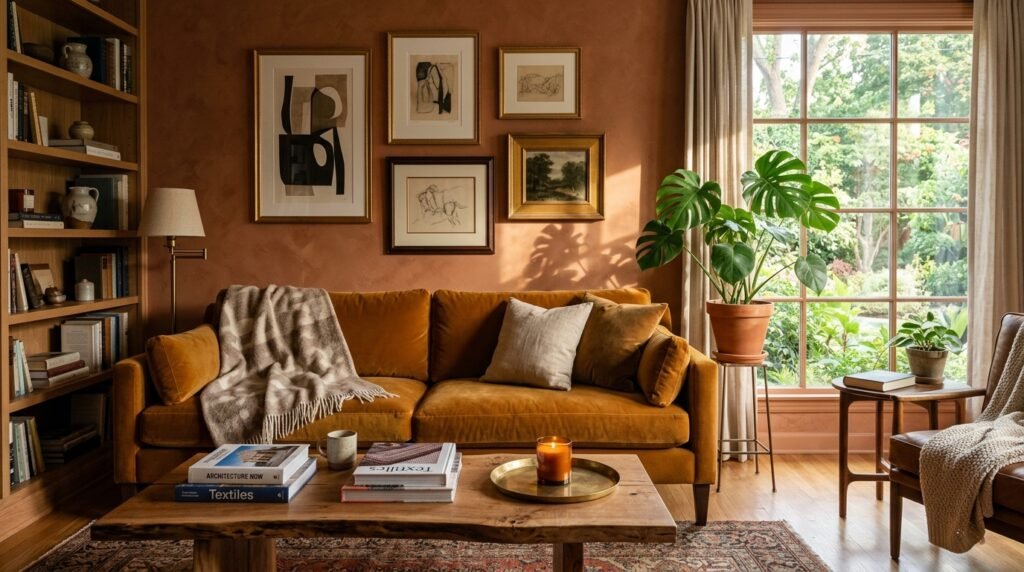
These colors are psychologically associated with comfort and heat. When applied to large-scale items like a sofa or a feature wall, they provide a visual “anchor” for the room. The goal is to create a cohesive environment where the colors flow into one another, mimicking the natural gradient of autumn foliage.
2. Layering Textiles: The Rule of Three
Texture is the primary driver of “coziness.” To achieve a professional look, you must mix at least three different fabric weights. A common combination includes a chunky wool knit (heavy), a velvet cushion (medium), and a linen or cotton throw (light).
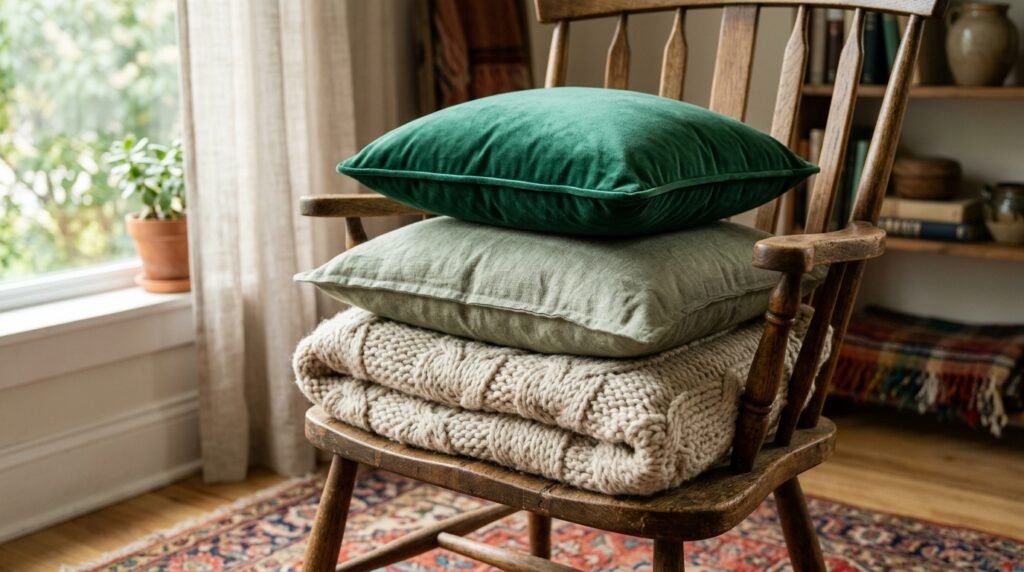
The contrast between these materials creates a sense of luxury. A smooth leather sofa, for example, feels significantly warmer when paired with a highly textured shearling or faux-fur rug. This “tactile contrast” ensures the room feels physically inviting and visually complex.
3. Introducing Earth-Inspired Materials
Fall decor should feel grounded in nature. This is achieved through the use of organic materials like dark wood, unpolished brass, and handmade ceramics. A matte-finish oak or walnut coffee table provides a solid, earthy base that complements the soft textiles of the seating area.
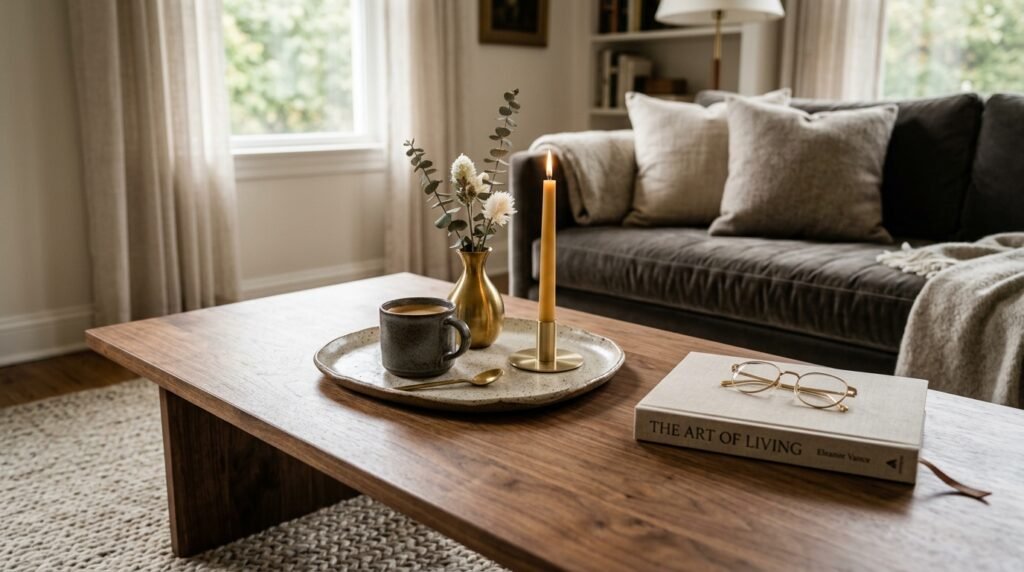
Metals like brass or copper offer a “warm” reflection compared to the “cool” reflection of chrome or silver. Incorporating these through small accents—like a tray, a vase, or candle holders—adds a subtle glint that mimics the low, golden light of the autumn sun.
4. Strategic “Golden Hour” Lighting
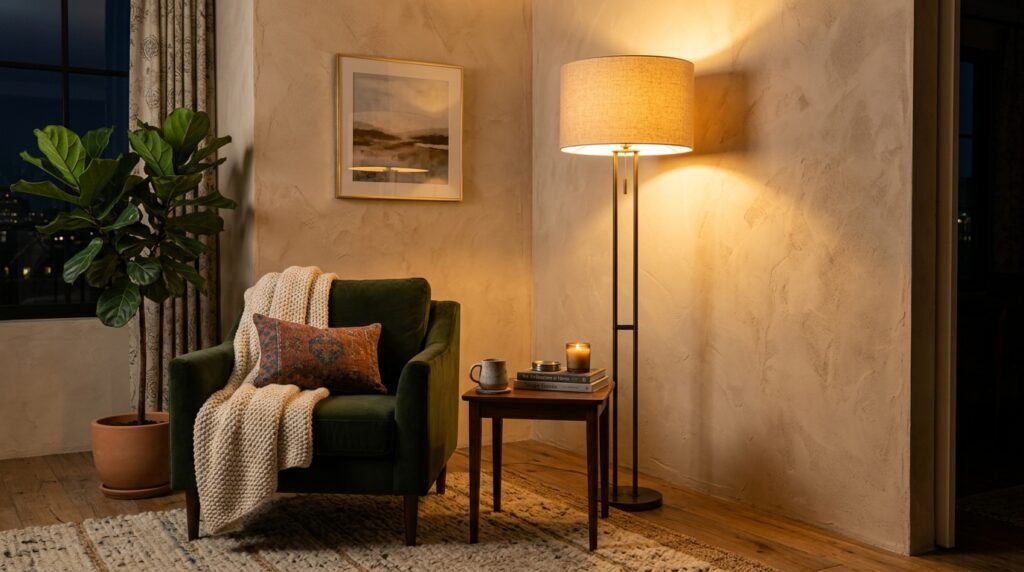
As the days shorten, lighting becomes the most critical element of the room. To maintain a cozy atmosphere, avoid all “cool-white” bulbs. Use “warm-white” LEDs (2700K) to create a consistent golden-hour glow.
Layered lighting is essential. Instead of a single overhead source, use a combination of floor lamps, table lamps, and even battery-operated candles placed on bookshelves. This creates “pools of light” that draw people into specific areas of the room, making a large living space feel more intimate and focused.
5. Incorporating Dried Botanicals and Foraged Elements
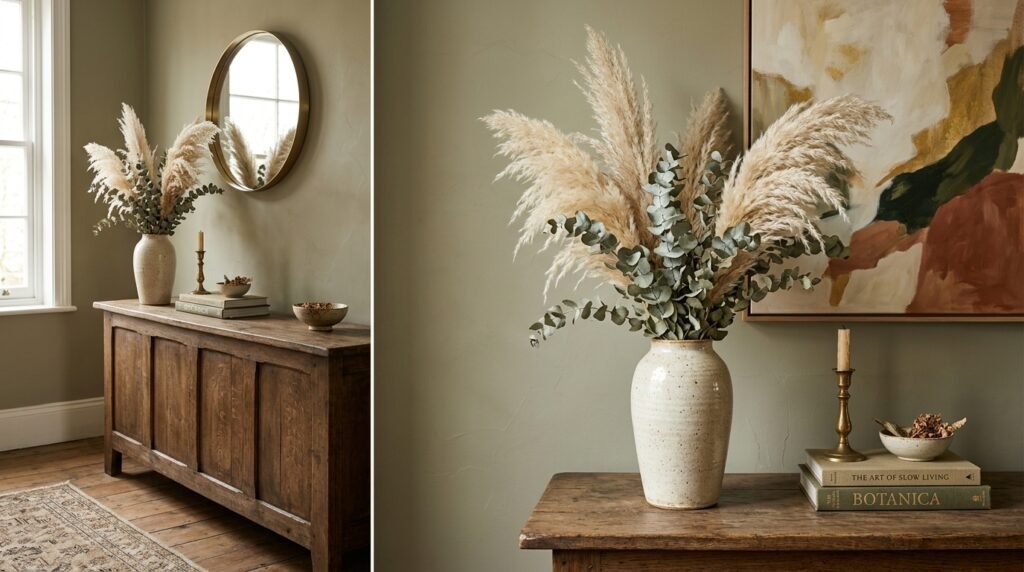
Fresh summer flowers can be replaced with dried botanicals to reflect the season’s shift. Elements like pampas grass, dried eucalyptus, or even simple branches foraged from the outdoors provide an architectural element to the room.
These items introduce “vertical interest” and organic shapes that break up the straight lines of furniture. Because they are preserved, they also offer a different texture—matte and slightly brittle—that reinforces the seasonal theme of the “harvest.”
6. Zoning with High-Pile Area Rugs
Flooring significantly impacts the perceived temperature of a room. A high-pile or “shag” wool rug provides both physical insulation and acoustic softening. In a living room, the rug should be large enough to “ground” all the primary furniture pieces, creating a specific “island” of comfort.
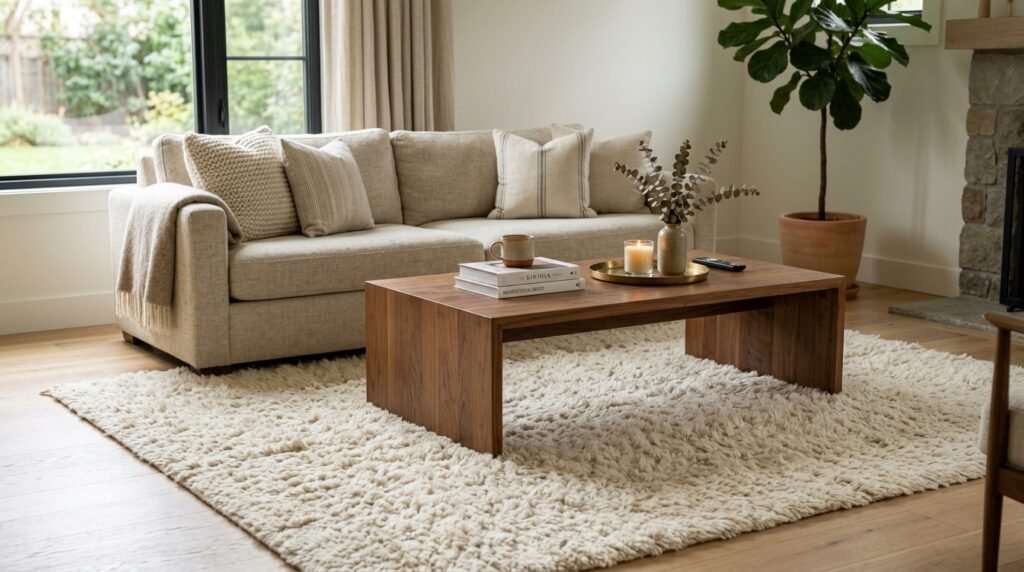
Neutral-toned rugs with subtle geometric patterns or high-texture weaves allow the warmer tones of the furniture and accessories to stand out. The rug acts as the “tactile floor,” ensuring that the first physical contact in the room is one of softness.
7. The Visual Warmth of a “Hearth” Centerpiece
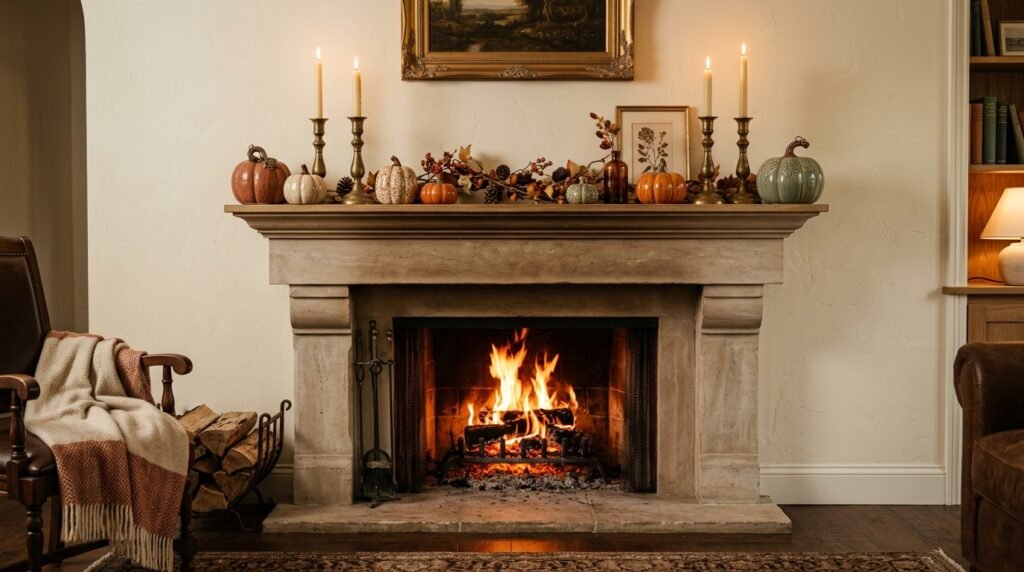
If your living room has a fireplace, it should be the seasonal focal point. If not, you can create a “pseudo-hearth” on a sideboard or media console. Arrange items of varying heights—such as brass candlesticks, small matte-finished ceramic vessels, and a few curated books.
This grouping creates a visual destination in the room. By using warm-toned accessories, you simulate the focal energy of a fireplace, providing a central point for the “warm and cozy” aesthetic to radiate from.
8. Enhancing Atmosphere Through Scent and Sound
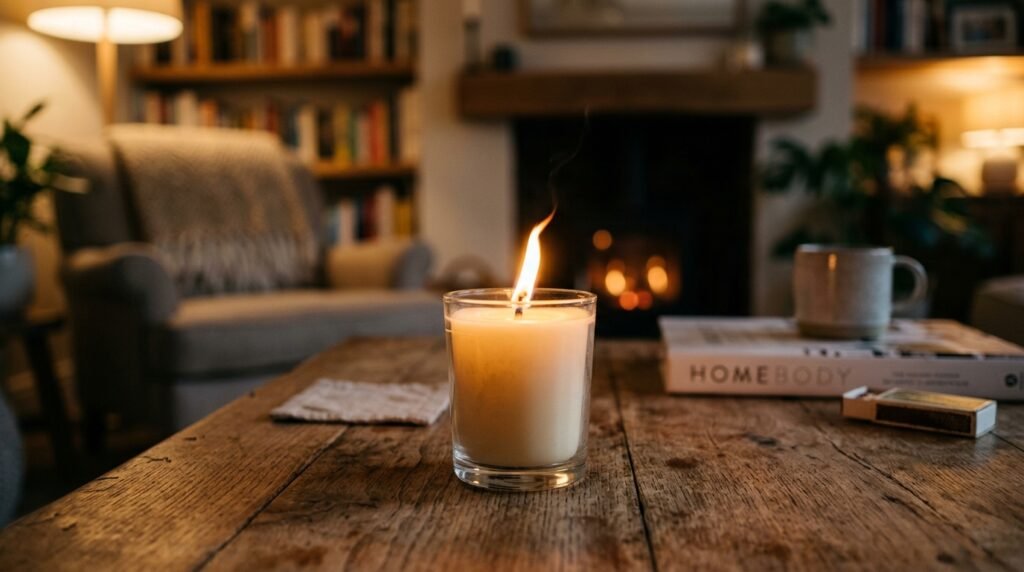
A high-performance living room engages the non-visual senses. Scent is a powerful tool for establishing a mood. Natural scents like cedarwood, clove, and sandalwood are grounded and seasonally appropriate.
Using a high-quality soy candle or an essential oil diffuser adds a “clean” scent layer that complements the visual warmth. Additionally, consider the “sound” of the room—heavy curtains and rugs help dampen echoes, creating a “hushed” environment that feels significantly more private and cozy.
9. Minimalist Seasonal Curation
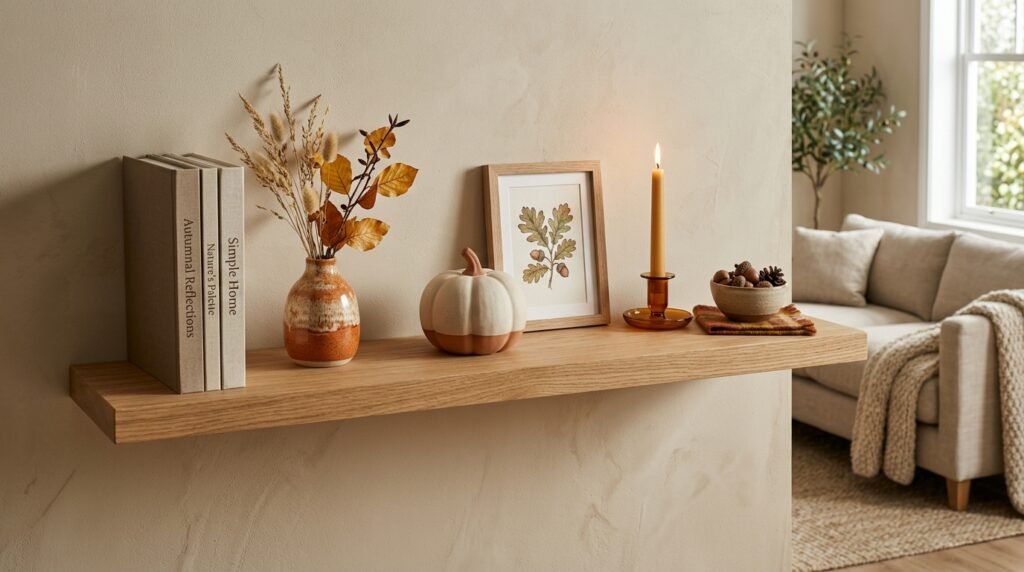
A common mistake in seasonal decorating is over-cluttering with “thematic” items. A professional approach involves curation. Choose three to five high-quality fall items—a specific vase, a particular throw, or a single piece of art—and integrate them into your existing decor.
By maintaining a clean, minimalist layout, you ensure that the “fall” elements feel like an intentional design choice rather than a temporary distraction. This prevents the room from feeling “messy” and keeps the focus on the high-quality textures you’ve introduced.
10. Cost & Budget Considerations
Creating a cozy fall living room can be achieved effectively by prioritizing “soft goods” over structural changes:
- Textile Swaps: Buying two high-quality velvet pillow covers and one heavy wool throw ($60–$120) provides the most significant visual and tactile impact.
- Lighting Adjustments: Swapping bulbs to 2700K LEDs ($20) immediately changes the room’s atmosphere.
- Foraged Decor: Using branches, pinecones, or dried grasses from your own environment costs $0 but provides a high-end, organic look.
Common Mistakes to Avoid
- Over-reliance on “Bright Orange”: Too much bright orange can look juvenile. Use “burnt” or “muted” oranges (like terracotta or ochre) for a more sophisticated, professional feel.
- Ignoring the “Big Light”: Never use your main overhead light when trying to create a cozy mood; it flattens textures and creates a cold environment.
- Mismatched Undertones: Ensure your “warm” tones share the same base. For example, don’t mix a “cool” grey throw with a “warm” terracotta pillow; the contrast will feel disjointed rather than cozy.
FAQ
How can I make my room feel fall-ready without changing the furniture?
Focus entirely on “layers.” Add a thick rug over your existing floor, drape a heavy knit blanket over the sofa, and swap your light summer curtains for a heavier fabric like velvet or linen.
What is the best way to use candles safely?
If you have pets or children, use high-quality LED candles with “flicker” technology. They provide the same warm visual glow without the fire risk.
Can I use fall decor in a modern, minimalist home?
Yes. Stick to a monochromatic palette—for example, all cream and beige but in very heavy, varied textures. This feels “seasonal” without breaking the minimalist aesthetic of the home.