The shift toward warm wood cabinetry represents a move away from the clinical feel of all-white kitchens toward a design philosophy rooted in “biophilic warmth.” Utilizing natural timber grains creates an environment that is both architecturally significant and emotionally grounding. To achieve a professional-grade, cozy aesthetic, the design must balance the organic texture of the wood with clean lines and strategic lighting.
1. Selecting the Ideal Wood Species: Oak, Walnut, and Ash
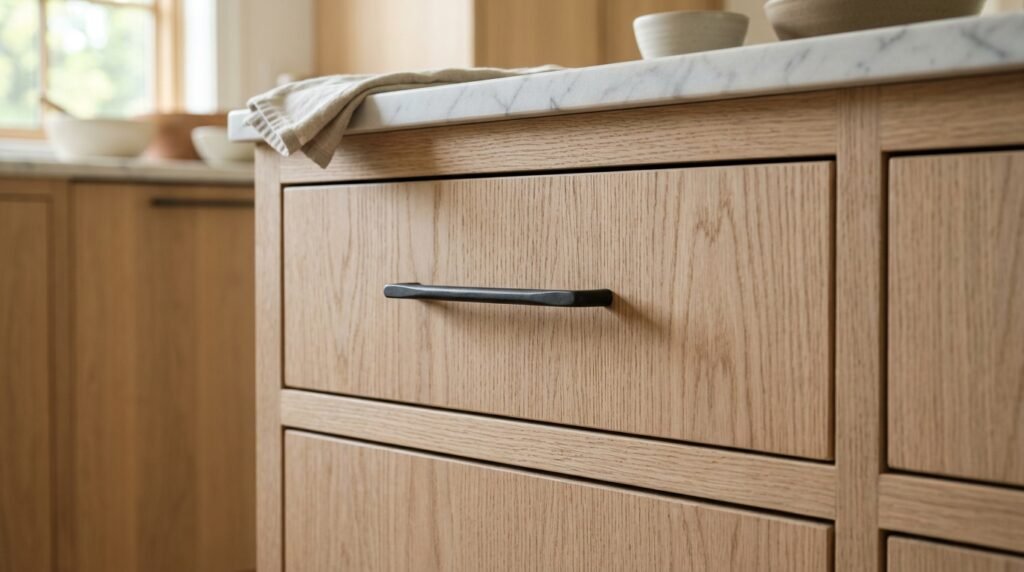
The species of wood determines the kitchen’s “temperature.” White Oak is currently the industry standard for a modern-natural look due to its neutral undertones and tight, linear grain. For a deeper, more dramatic cozy aesthetic, American Walnut offers a rich chocolate hue. Avoid high-gloss finishes; a matte or “honed” sealant preserves the wood’s tactile quality and prevents unwanted glare.
2. Full-Height Wood Cabinetry for a Seamless Look
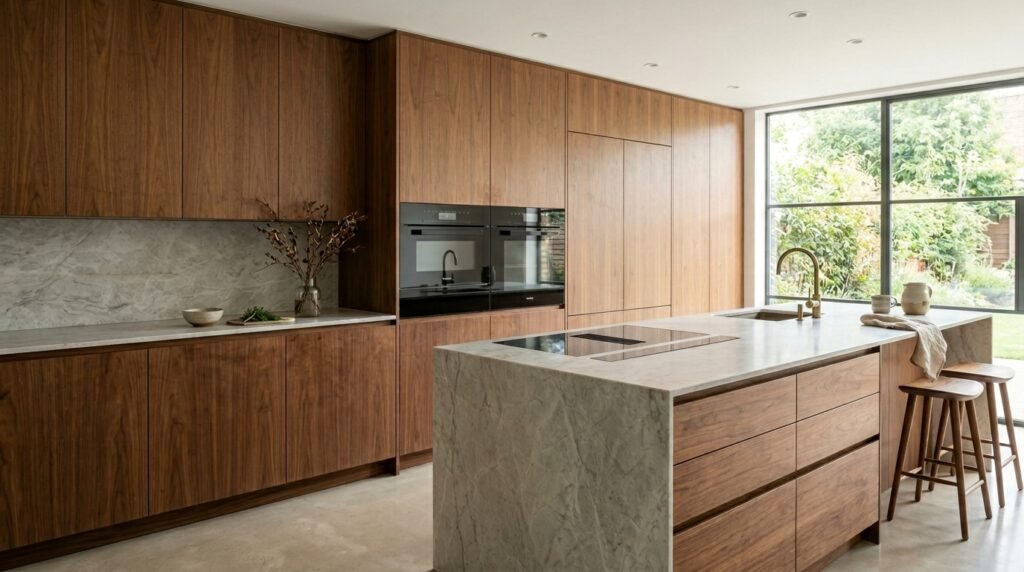
Extending wood cabinetry from the floor to the ceiling creates a “monolithic” effect that makes a room feel more substantial. This design choice eliminates the visual clutter of soffits or painted wall gaps, wrapping the kitchen in a consistent texture. This “wood-wrapped” approach is a hallmark of high-performance luxury design, providing a quiet, library-like atmosphere.
3. Pairing Wood with Creamy Off-White Tones
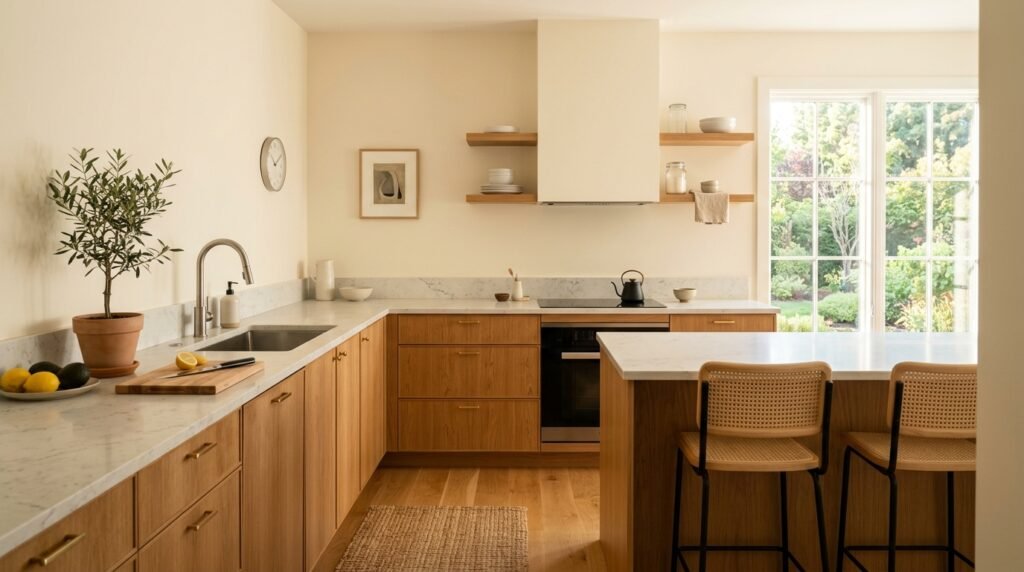
To prevent a wood-heavy kitchen from feeling too dark or “heavy,” pair it with cream or oatmeal tones. Unlike stark white, which can create a harsh contrast, cream shares a warm base with the wood. This “low-contrast” palette is essential for a soft, inviting aesthetic that feels balanced and airy during daylight hours.
4. Integrating Natural Stone: Taj Mahal and Travertine
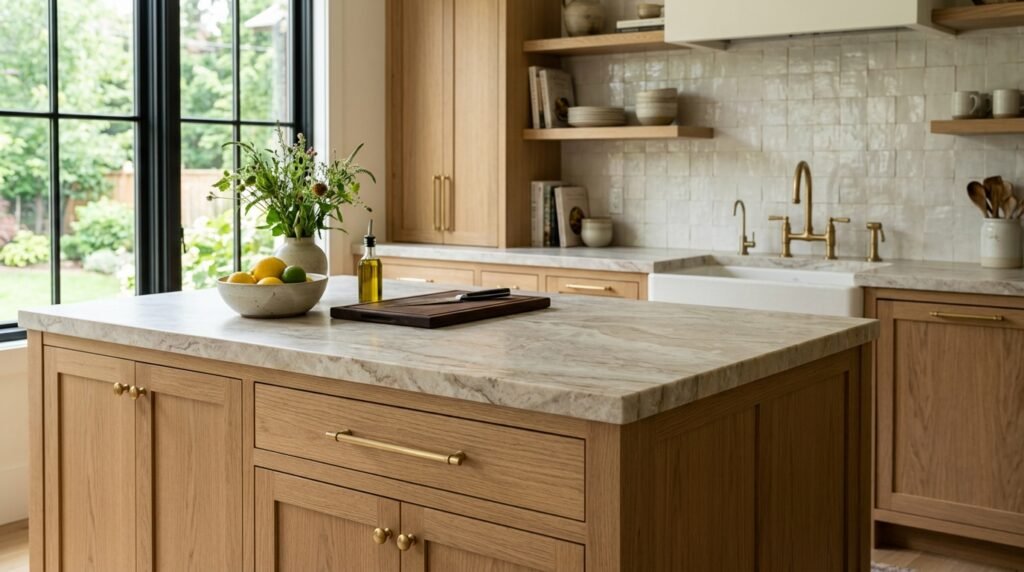
Natural stone is the most effective “partner” material for warm wood. Taj Mahal Quartzite or Honed Travertine are excellent choices because they offer an earthy, textured surface that mimics the organic origin of the cabinetry. The cool touch of the stone provides a sensory balance to the visual warmth of the timber.
5. The Vertical Interest of Tambour and Slatted Details
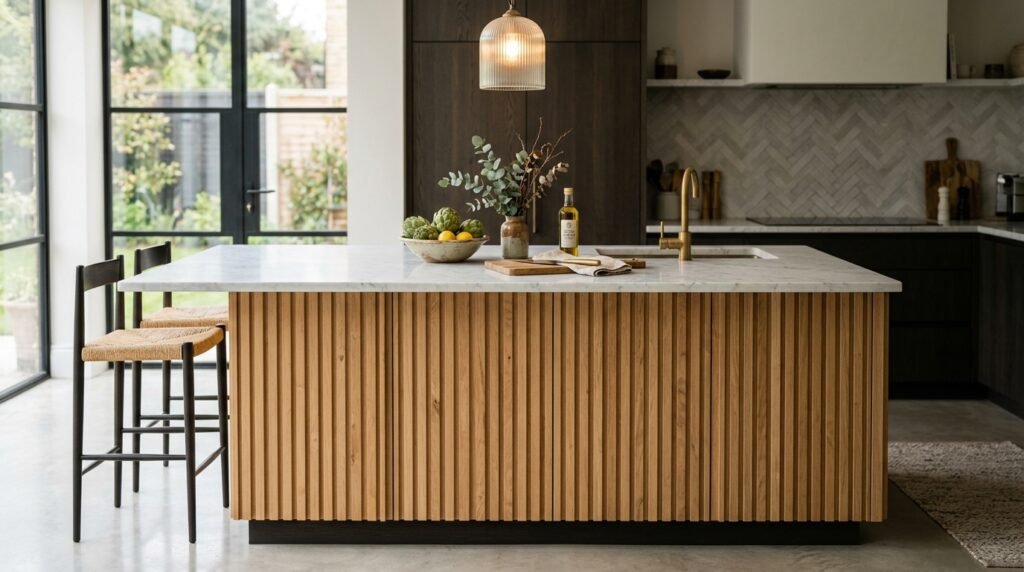
Adding vertical wood slats (tambour) to an island base or a specific cabinet section introduces architectural rhythm. These slats create a play of light and shadow that adds depth to the room without requiring additional colors or materials. This detail is particularly effective in modern-minimalist kitchens where “texture is the art.”
6. Strategic Warm Lighting: The 2700K Standard
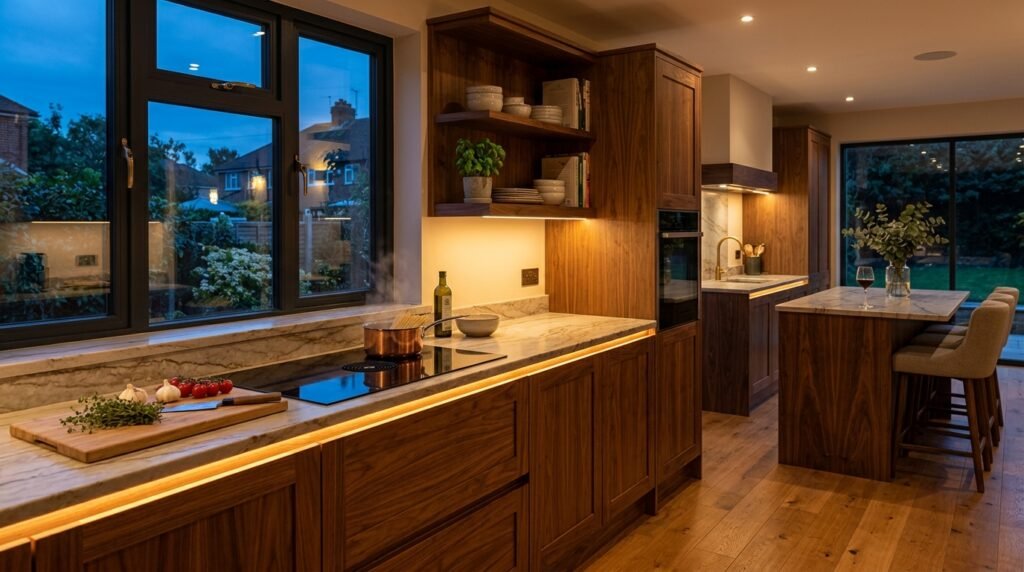
Lighting is the most critical technical factor in a wood kitchen. Cool-toned bulbs (4000K+) will make warm wood look “muddy” or grey. Using 2700K Warm White bulbs enhances the gold and amber tones within the grain, creating a “golden hour” glow that is essential for a cozy evening environment.
7. Open Shelving for Tactile Organization
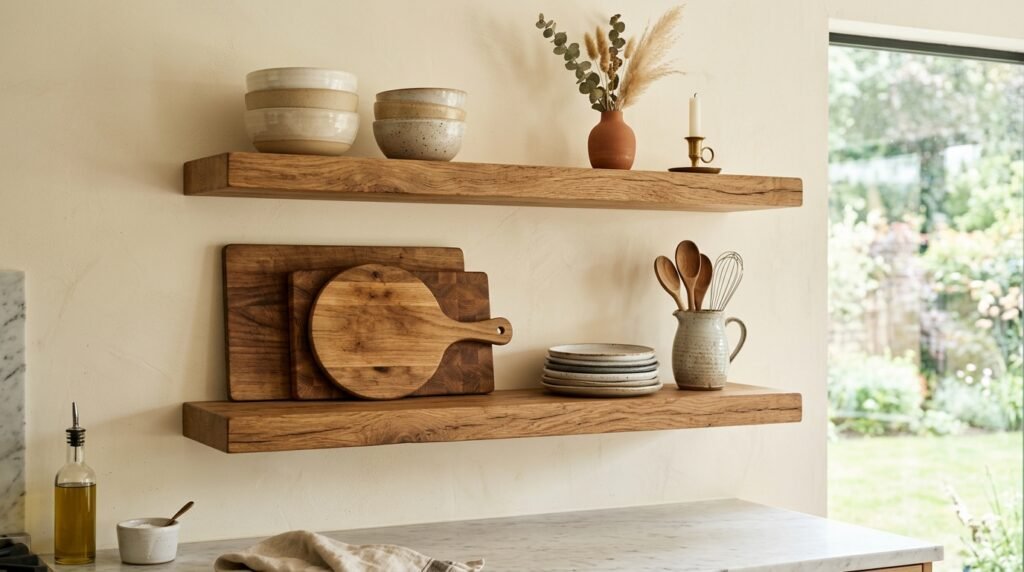
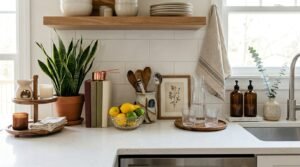
Replacing a portion of upper cabinets with thick, floating wood shelves creates a “visual break.” This allows for the display of functional ceramics, stoneware, and glass, which adds a layer of “lived-in” character. Open shelving makes the kitchen feel less like a showroom and more like a curated, working sanctuary.
8. Hardware Selection: Antique Brass and Bronze
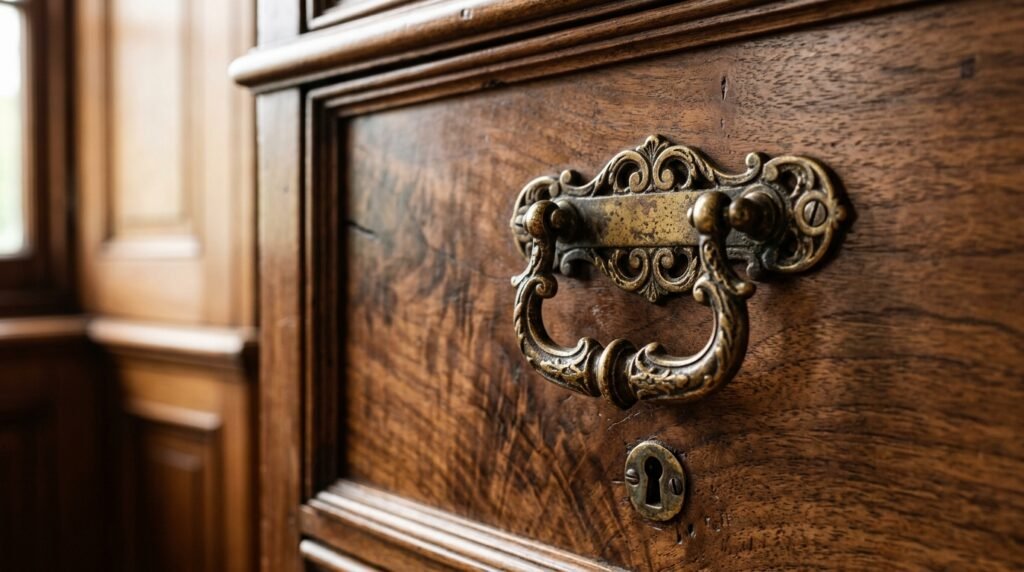
Hardware should act as a subtle accent rather than a distraction. Antique Brass or Oil-Rubbed Bronze are the preferred finishes for warm wood. These “living” metals share a warm undertone with the timber and develop a patina over time, aligning with the “natural and aging” philosophy of the cozy aesthetic.
9. Biophilic Design: The Living Kitchen
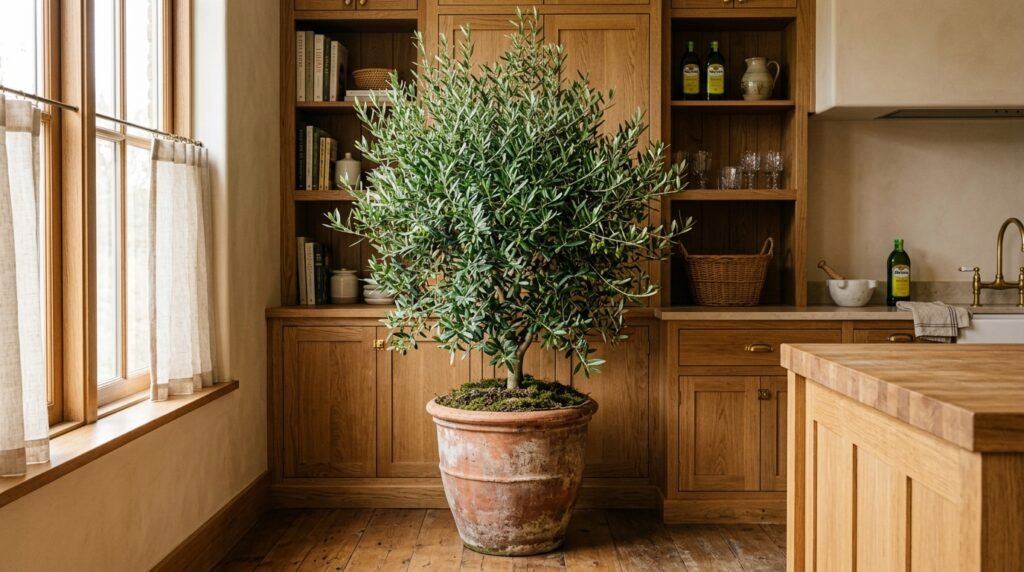
The presence of greenery is the final step in a natural kitchen aesthetic. The vibrant green of an olive tree or a trailing pothos provides a direct contrast to the brown and tan tones of the wood. This “living” element softens the hard lines of the cabinetry and reinforces the kitchen’s connection to the outdoors.
10. Incorporating Woven Textures: Jute and Seagrass
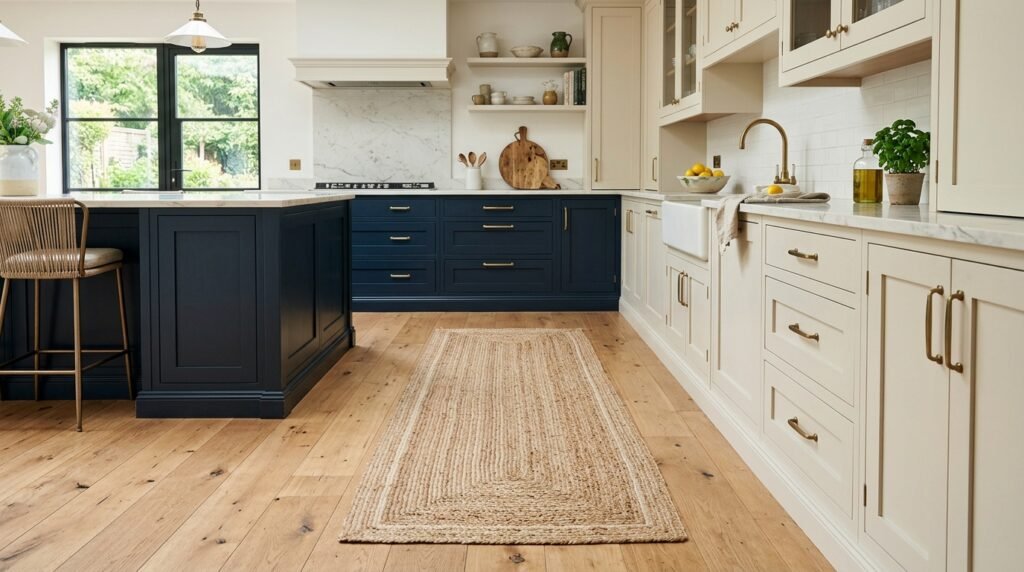
To ground the wood cabinetry, use woven floor coverings like jute or seagrass runners. These materials provide a different type of “organic” texture underfoot. They are durable, easy to clean, and offer a rustic-modern feel that bridges the gap between high-end design and farmhouse comfort.
11. Furniture-Style Islands for a Custom Feel
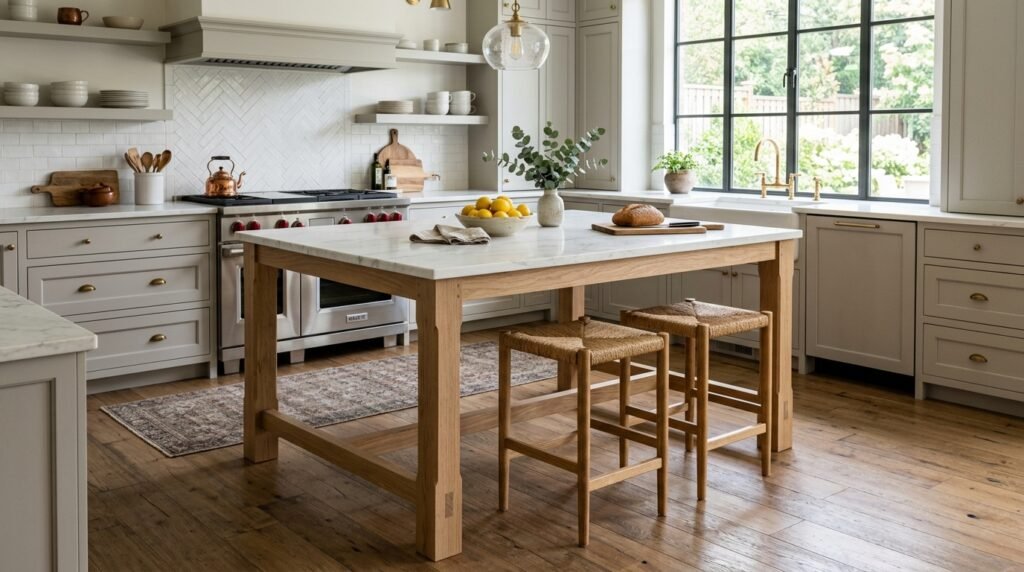
Treating the kitchen island as a piece of furniture—using legs instead of a solid plinth base—creates a sense of “airiness.” This allows for better light flow across the floor and prevents the wood tones from feeling overwhelming. A furniture-style island makes the kitchen feel more like a continuation of the living space.
12. Matte Black Accents for Grounding
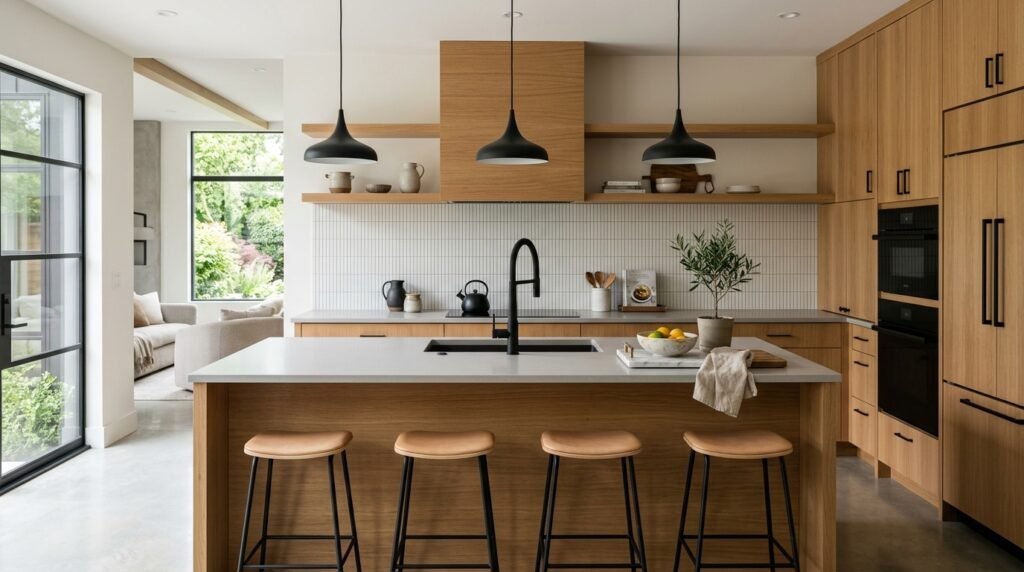
While the goal is a warm, natural look, a few “grounding” elements in matte black can prevent the room from looking too rustic. A matte black faucet or pendant light provides a sharp, modern frame that makes the wood grain look more intentional and “designed.”
13. The “Cutter-Free” Countertop Strategy
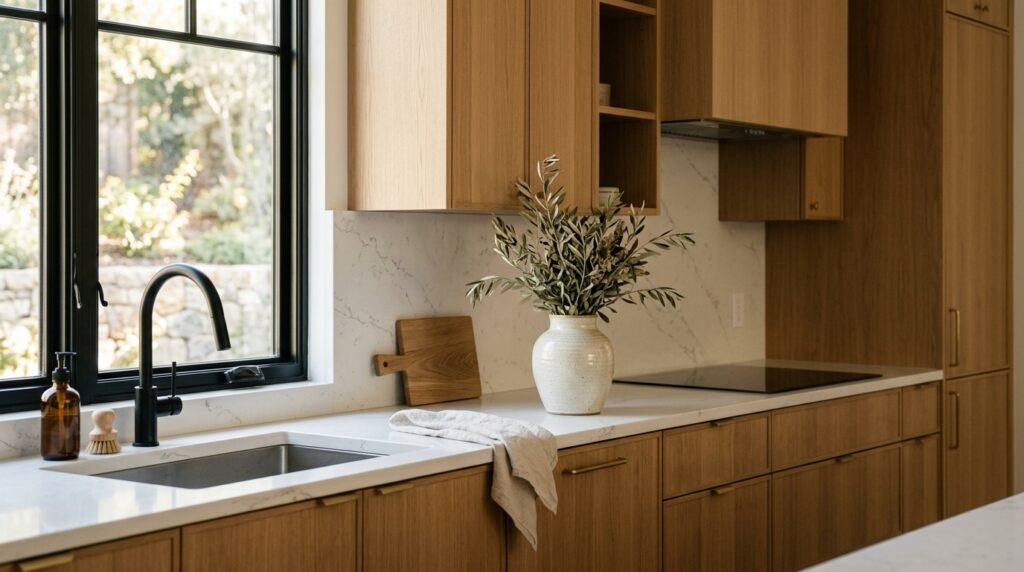
In a wood-focused kitchen, the grain is the focal point. To allow the beauty of the timber to be seen, maintain a strict “minimalist” approach to countertops. By removing appliances and clutter, you allow the eye to rest on the natural patterns of the wood and stone, resulting in a calmer, more restorative environment.
14. Integrated Appliances for Visual Continuity

To maintain the “cozy natural” aesthetic, appliances should be integrated behind wood panels. Seeing a large block of stainless steel can disrupt the “organic” flow of a wood kitchen. Integrated panels ensure that the warmth of the timber remains the dominant visual force in the room.
15. Sourcing Vintage and Handmade Accessories
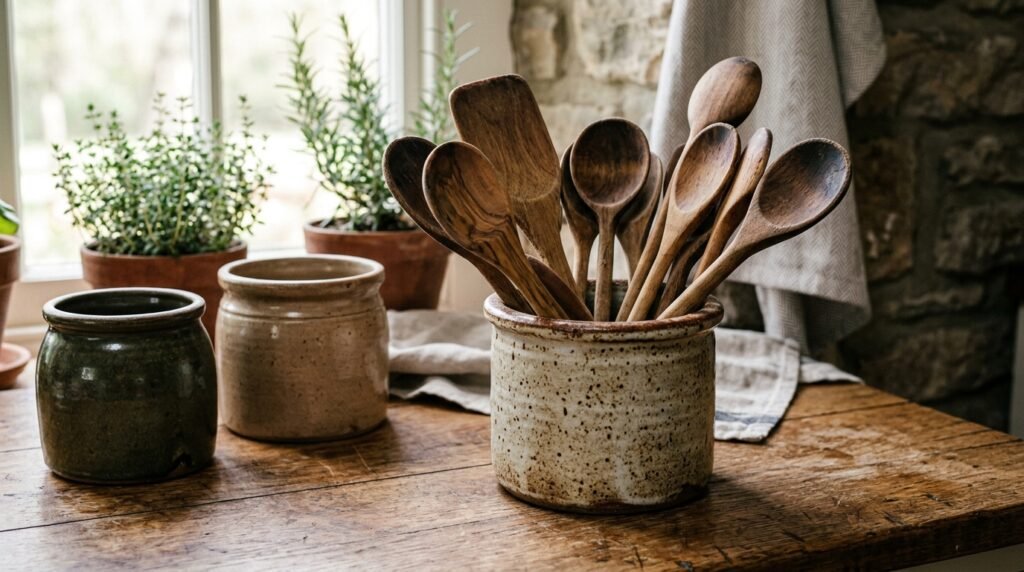
The final layer of a cozy kitchen comes from “soulful” objects. Hand-thrown ceramic canisters, vintage wooden dough bowls, and linen tea towels provide a sense of history. These items suggest that the kitchen has been curated over time, adding to the “lived-in” and authentic cottage-like atmosphere.
Cost & Maintenance Considerations
- Finishing: Always specify a high-quality polyurethane or UV-oil finish to protect against water and grease while maintaining a “raw” wood look.
- Budgeting: If full-wood cabinetry is outside the budget, use wood for the lower cabinets and island, and use a cost-effective cream paint for the upper cabinets.
- Longevity: Unlike painted cabinets which may chip, stained or natural wood ages gracefully and can be sanded and refinished after 10-15 years.
FAQ
Will a wood kitchen make my house look dated?
No. The modern wood kitchen relies on “flat-panel” or “slim-shaker” designs and light-to-mid tones like White Oak, which are vastly different from the orange-toned oak cabinets of the 1990s.
What floor goes best with wood cabinets?
Aim for a slight contrast. If you have dark walnut cabinets, use a lighter oak floor. If you have light oak cabinets, consider a darker wood or a neutral stone tile like slate or limestone.
How do I clean natural wood cabinets?
Use a damp (not wet) microfiber cloth with a mild, pH-neutral soap. Avoid harsh chemicals or abrasive sponges, as these can strip the matte sealant and damage the grain.