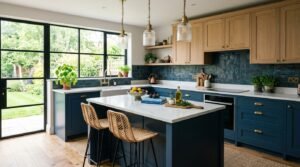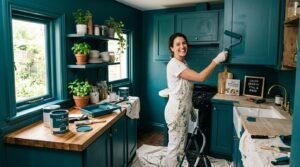
The dark cottagecore aesthetic—often referred to as “Crowcore” or “Moody Woods”—is a sophisticated evolution of the traditional cottage style. While standard cottagecore focuses on bright whites and pastels, the dark variant embraces the shadows, utilizing deep pigments, reclaimed wood, and antique textures to create a space that feels centuries old.
In a kitchen, this style prioritizes a lived-in atmosphere over clinical perfection. It is characterized by a blend of botanical elements, vintage utility, and a color palette inspired by a forest at twilight.
1. Selecting a Saturated Earth-Tone Palette
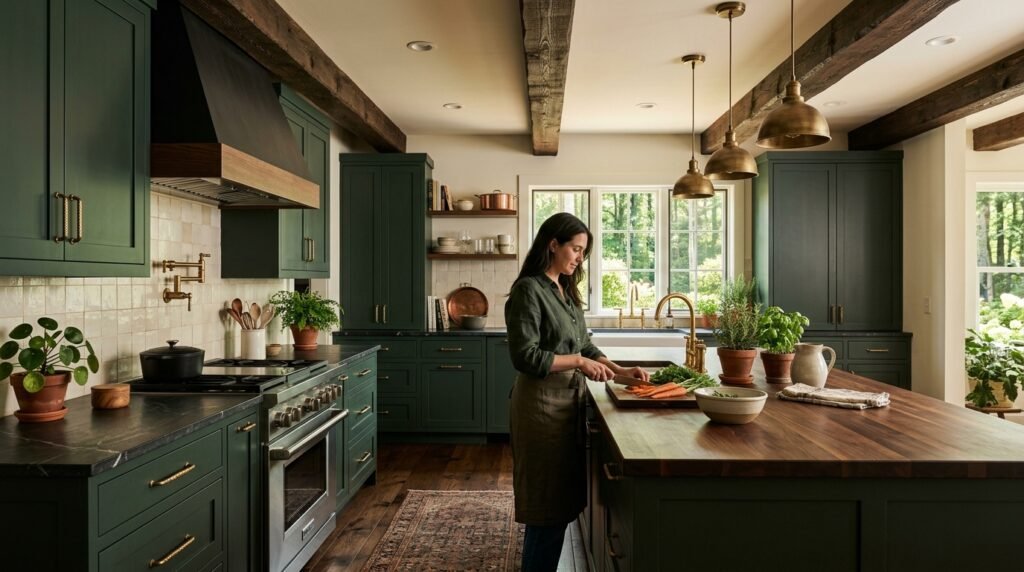
The foundation of a dark cottagecore kitchen is a deep, nature-inspired base. Instead of black, designers utilize “near-black” greens, bruised purples, or charcoal greys with brown undertones. These colors create a “nesting” effect, making the kitchen feel enclosed and secure.
To maintain the vintage feel, the paint should be applied in a matte or eggshell finish. Reflective surfaces look too modern for this aesthetic. Painting the baseboards and window trim the same dark color as the cabinets—a technique known as color drenching—enhances the moody, historical atmosphere.
2. Incorporating Aged Wood and Butcher Block
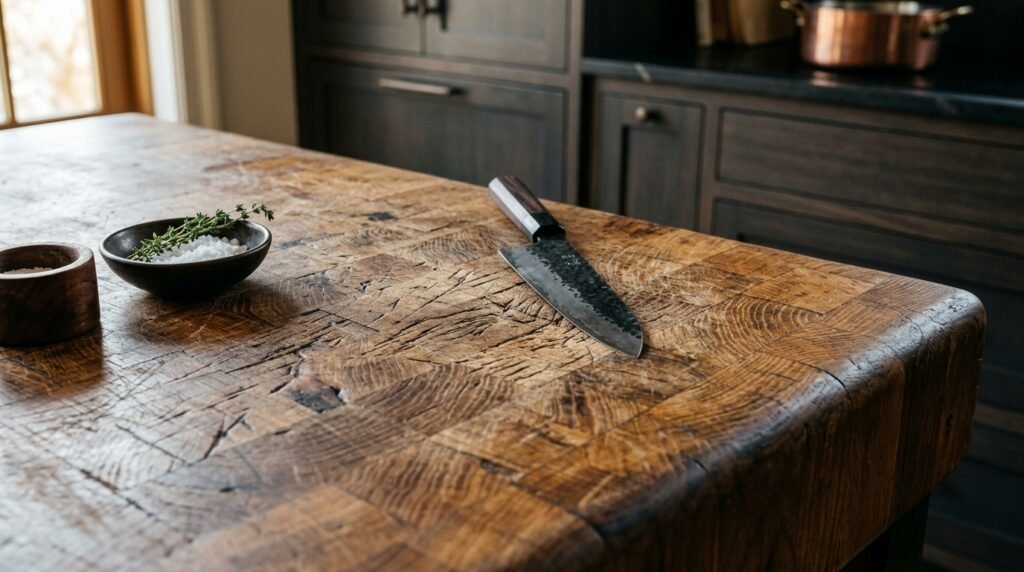
Wood is the essential balancing element in a dark kitchen. For the cottagecore aesthetic, the wood should look aged rather than new. Wide-plank flooring in a dark walnut finish or exposed ceiling beams provide the structural “bones” of the look.
For countertops, a thick butcher block with a deep oil finish adds an organic warmth that stone cannot replicate. In a dark cottagecore setting, the “imperfections”—such as slight wear or a varied grain—are celebrated as part of the vintage charm, grounding the room in a sense of history.
3. The Utility of Open Shelving and Peg Rails
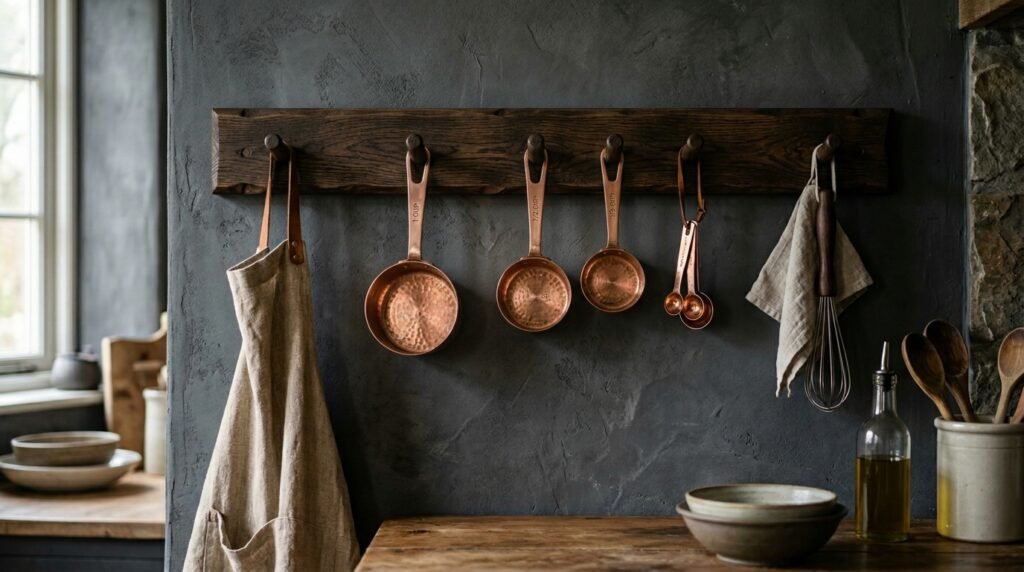
Dark cottagecore leans heavily into “functional decor.” Instead of hiding everything behind cabinet doors, use open shelving made from reclaimed wood or simple shaker-style peg rails. This allows for the display of vintage kitchenware, which acts as the primary ornamentation for the room.
Hanging dried herbs, copper pots, and wooden spoons creates a layered, “working kitchen” feel. This approach moves away from minimalist trends and embraces a curated clutter that feels cozy and intentional.
4. Vintage Brass and Weathered Copper Hardware
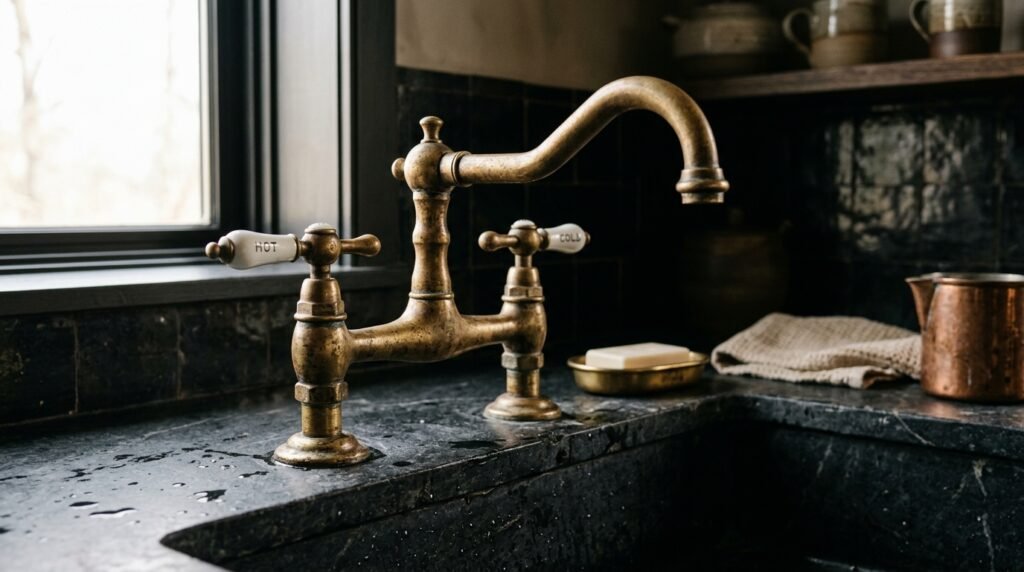
Hardware is a critical detail for achieving a vintage feel. Avoid polished chrome or stainless steel. Instead, use “living finishes” like unlacquered brass or weathered copper. These materials will patina over time, darkening in some areas and brightening in others based on use.
A bridge-style faucet or heavy “cup” pulls on drawers reinforce the Victorian or farmhouse origins of the cottagecore style. These warm metals provide a necessary “glint” against dark green or charcoal cabinets, preventing the space from looking too flat.
5. Botanical Elements and “Forest-Floor” Decor
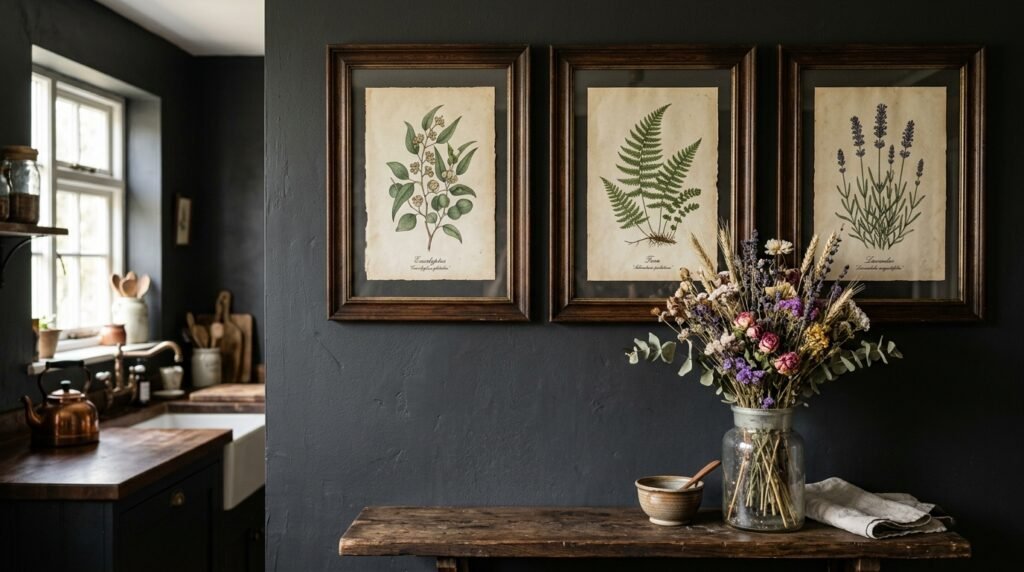
Cottagecore is rooted in a love for nature. In the “dark” version of this style, the botanical elements should feel slightly more rugged or scientific. Think framed pressed ferns, jars of dried mushrooms, or vintage botanical posters with dark backgrounds.
Introduce living plants that thrive in lower light, such as Ivy or Pothos, and allow them to trail down from high shelves. The presence of greenery against dark walls creates a vibrant, life-filled contrast that is central to the “woodsman” aesthetic.
6. Lighting: The “Candelabra” Effect
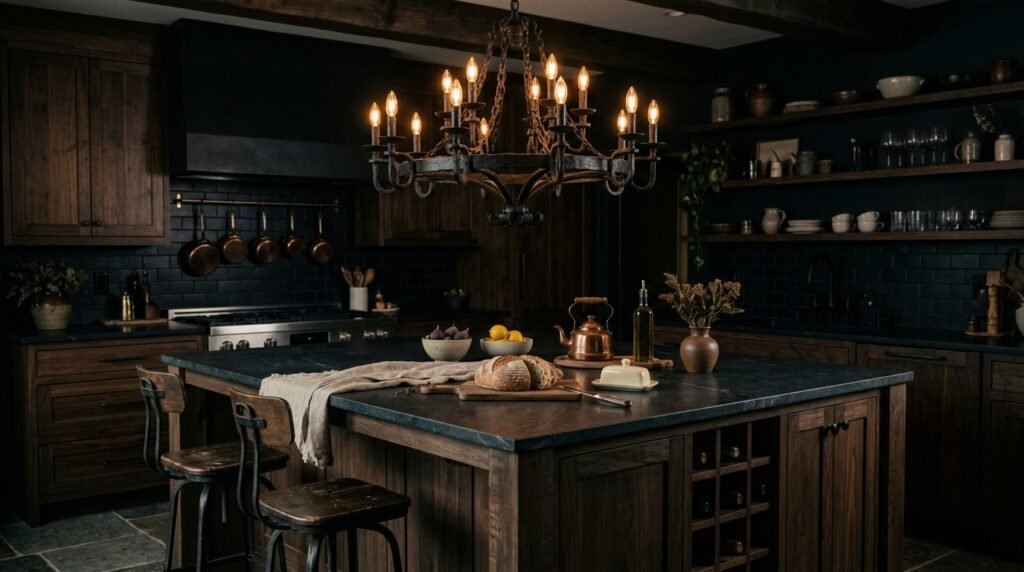
Lighting in a dark cottagecore kitchen must be soft and localized. Avoid recessed “pot lights” which can look too clinical. Instead, use light fixtures that look like they could have held candles—iron chandeliers, pleated fabric sconces, or shaded “banker” lamps on the countertop.
Use “extra warm” bulbs (2200K to 2700K) to mimic the glow of a fire. This amber-toned light enhances the red and yellow tones in the wood and brass, making the kitchen feel warm and inviting after the sun goes down.
7. Textiles: Linen, Gingham, and Moody Florals
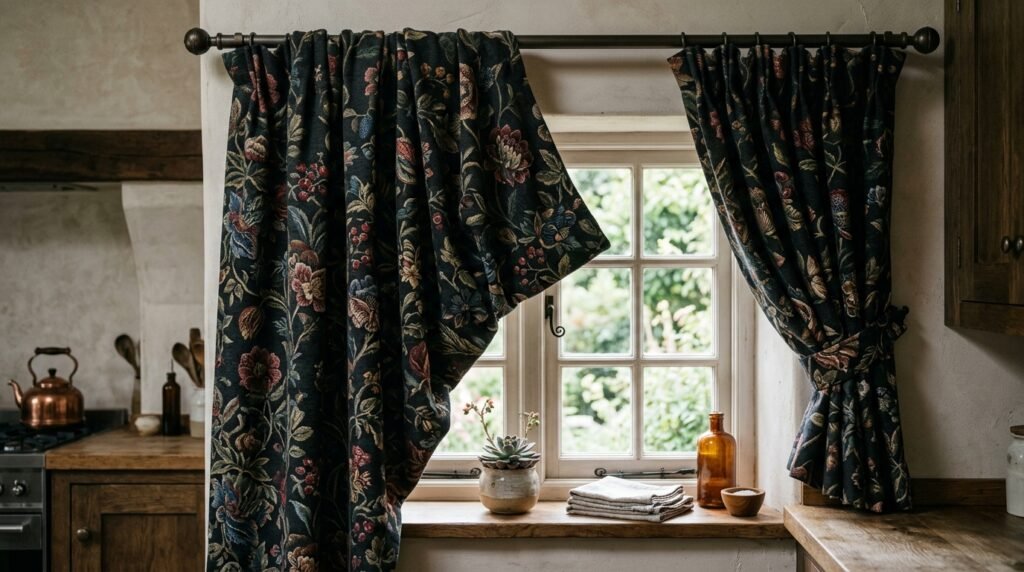
Soft goods are essential for dampening sound and adding softness to a room full of hard surfaces. For dark cottagecore, look for textiles in deep shades: forest green gingham, burgundy linens, or “moody” floral prints with black or navy backgrounds.
A heavy linen curtain used in place of a lower cabinet door—known as a “sink skirt”—is a classic vintage cottage touch that adds immediate charm and hides modern appliances or cleaning supplies.
8. Sourcing Antique and “Found” Objects
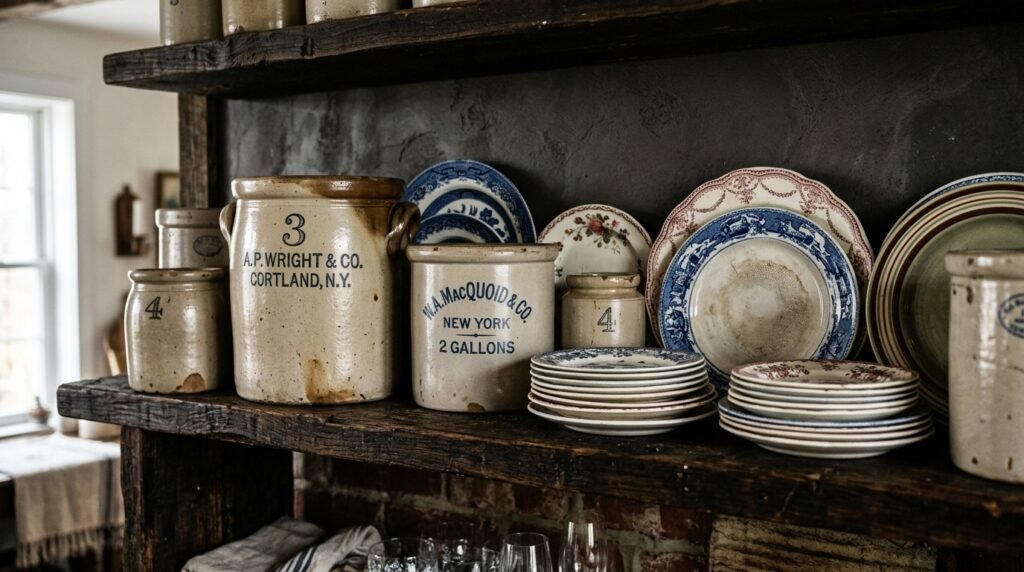
The authenticity of this style comes from “the hunt.” A dark cottagecore kitchen should feel as though it was furnished over decades. Incorporate mismatched stoneware crocks for utensil storage, antique scales, and hand-thrown ceramics.
Sourcing items from thrift stores and antique malls ensures that your kitchen doesn’t look like a carbon copy of a showroom. These “found” objects provide the “Expertise” signal in design—showing a curated, personal knowledge of vintage aesthetics.
9. Creating a “Hearth” Focal Point
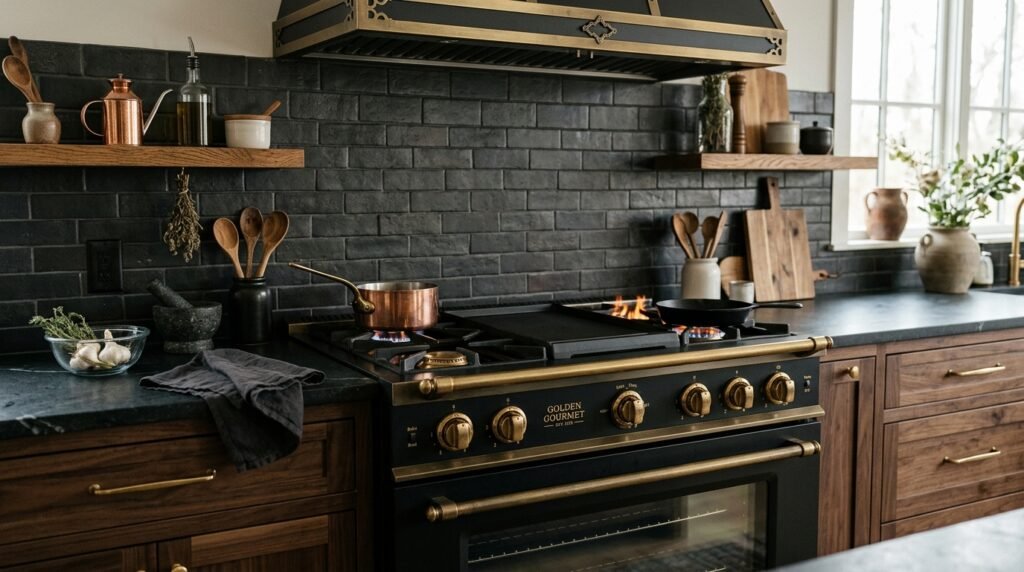
In traditional cottage design, the stove or fireplace was the center of the home. You can replicate this by making your range a focal point. A black or deep green vintage-style range with brass knobs acts as a piece of functional furniture.
Surround the cooking area with dark stone or handmade “Zellige” tiles. The slight variations in the tile color and the glossy finish will reflect the stovetop light, creating a glowing “hearth” that serves as the heart of the kitchen.
10. Cost & Budget Considerations
Achieving a dark cottagecore look is highly compatible with a DIY budget because it relies on “character” rather than “newness.”
- Paint Power: A few gallons of deep forest green or charcoal paint can transform standard cabinets for under $200.
- Thrifted Decor: Hardware and decorative objects can be found at antique markets for a fraction of the cost of new “designer” items.
- Wood Staining: If you have light wood elements, a dark walnut stain can immediately bring them into the dark cottagecore palette for very little cost.
Common Mistakes to Avoid
- Over-Minimalizing: Cottagecore is a “maximalist” style. A bare dark kitchen can feel cold; don’t be afraid to display your tools and plants.
- Cool Lighting: Never use “Daylight” bulbs. They will turn your beautiful deep green cabinets into a muddy, sickly grey.
- Modern Appliances: If you have a bright stainless steel fridge, it may clash. Consider using “appliance magnets” that look like wood or simply draping a linen towel over the handle to soften the look.
FAQ
Is a dark kitchen hard to keep clean?
Dark matte cabinets can show flour dust or water spots. However, the cottagecore aesthetic is “perfectly imperfect,” meaning a little lived-in wear actually adds to the vintage feel.
How do I keep the room from feeling like a cave?
Layer your lighting. Ensure you have bright task lighting under the cabinets for cooking, but keep your ambient lighting soft and warm.
Can I do this in a rental?
Yes. Use “peel and stick” dark backsplashes, swap out your cabinet handles for vintage brass ones (keep the old ones to swap back), and use rugs and textiles to cover modern flooring.