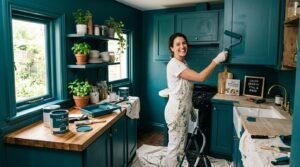
The shift toward dark, saturated kitchen palettes marks a departure from standard neutral designs. A moody blue kitchen, when executed with a focus on material contrast and lighting layers, creates a high-end, architectural feel. The objective is to use deep tones to add depth without making the space feel enclosed or dark.
Successful dark kitchen design relies on the “cocoon effect”—using color to create a sense of permanence and quality. This guide outlines the practical steps for integrating deep blues into a functional kitchen environment.
1. Selecting Navy and Midnight Cabinet Pigments
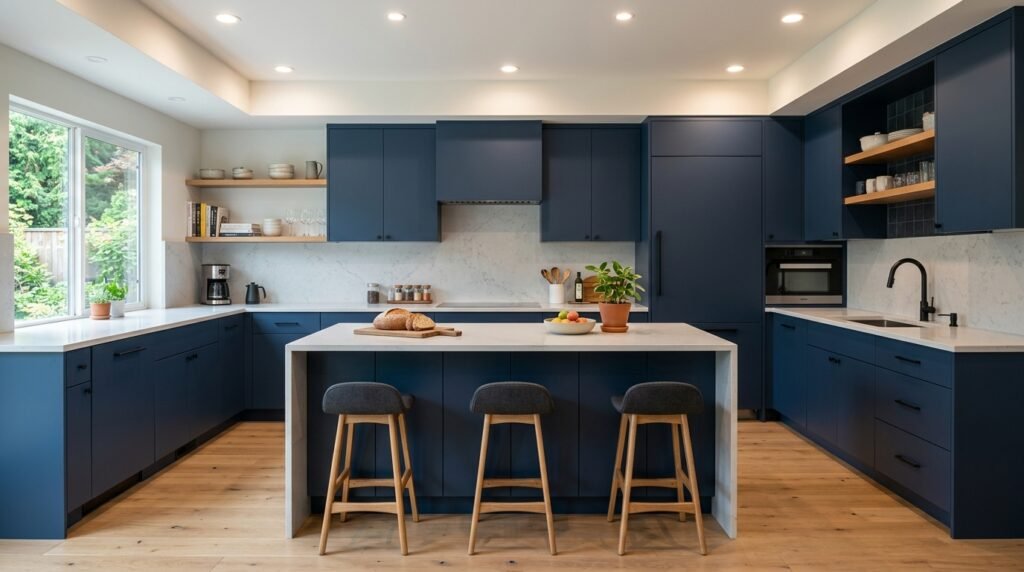
The specific shade of blue defines the room’s temperature. Professional designers often select navy or charcoal-blue with grey undertones to ensure the color remains sophisticated under different lighting conditions. A matte finish is generally preferred over high-gloss; matte surfaces absorb light and hide fingerprints more effectively, contributing to a modern, understated aesthetic.
Applying a consistent color across all cabinetry—including the island and pantry—creates a unified visual field. This technique simplifies the room’s geometry and allows the hardware and countertops to serve as the primary focal points.
2. Incorporating Natural Wood for Visual Warmth
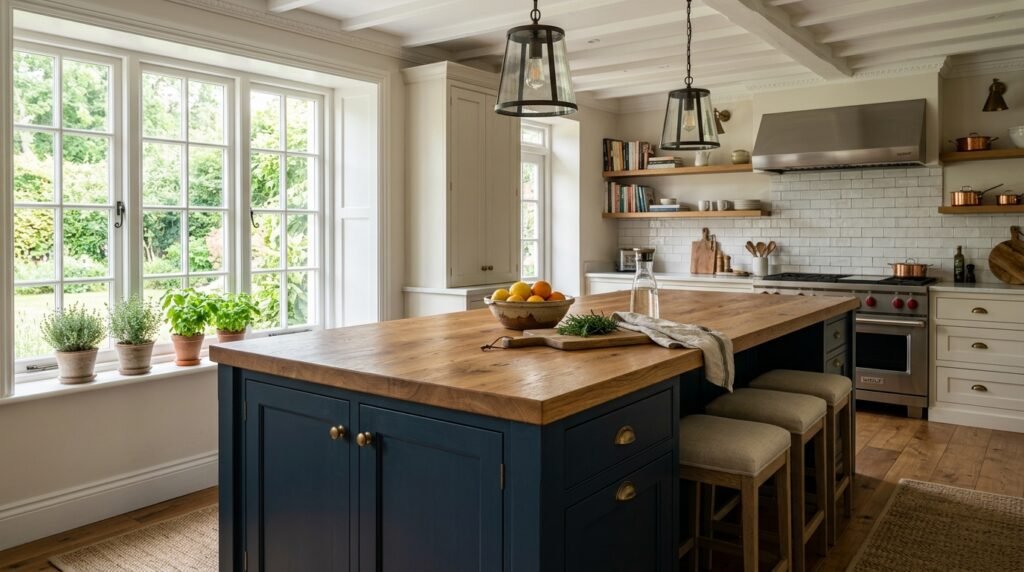
Because blue is a cool-toned color, it requires a “warm” counter-element to prevent the kitchen from feeling clinical. Natural wood is the most effective material for this purpose. Integrating oak, walnut, or reclaimed timber through flooring, open shelving, or a dedicated butcher-block island provides an organic balance to the dark cabinetry.
The contrast between the smooth, painted finish of the cabinets and the textured, porous nature of wood adds necessary tactile variety. This combination is a staple of modern design, ensuring the kitchen feels grounded and approachable.
3. High-Contrast Countertop Materials

Countertops offer the largest opportunity for contrast in a moody kitchen. Light-colored stones, such as white marble or quartz with subtle grey veining, provide a “bright” surface that reflects light back into the room. This prevents the dark cabinets from absorbing all the available light.
For a more monochromatic, “dramatic” look, dark soapstone or honed black granite can be used. These materials maintain the moody aesthetic while offering a different texture. Soapstone, in particular, is valued for its matte appearance and its ability to develop a natural patina over time.
4. Hardware Selection: Brass and Bronze Accents
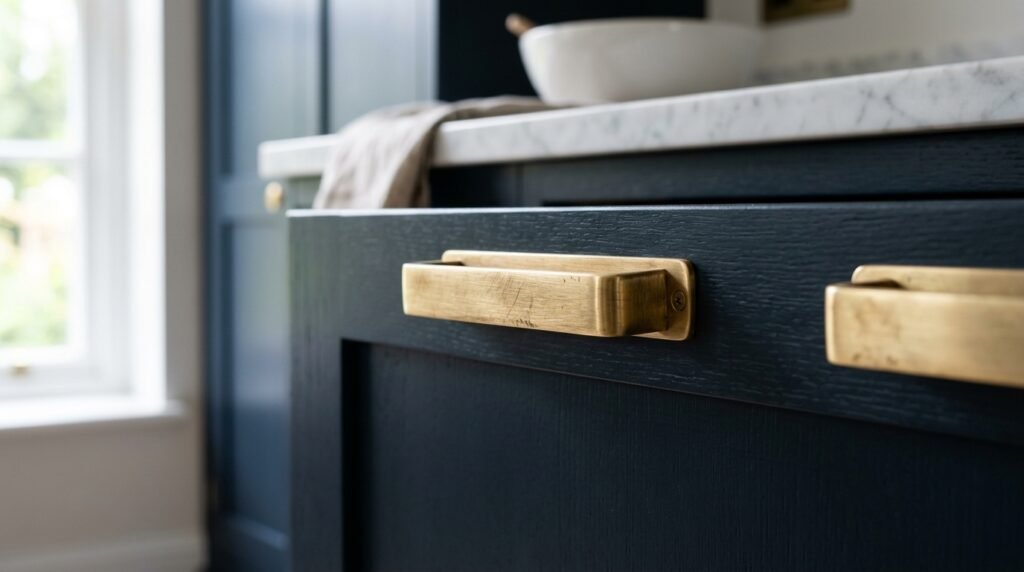
Hardware serves as the “jewelry” of the kitchen. In a deep blue setting, warm metals like brushed brass, antique gold, or oil-rubbed bronze provide a significant visual lift. These metals stand out sharply against dark backgrounds, highlighting the craftsmanship of the cabinetry.
Choosing hardware with a substantial weight and a simple, ergonomic design reinforces the high-end feel of the kitchen. Consistency is key; ensuring the faucet, cabinet pulls, and lighting accents share the same metal finish creates a professional, curated look.
5. Strategic Lighting Layers: Task and Ambient
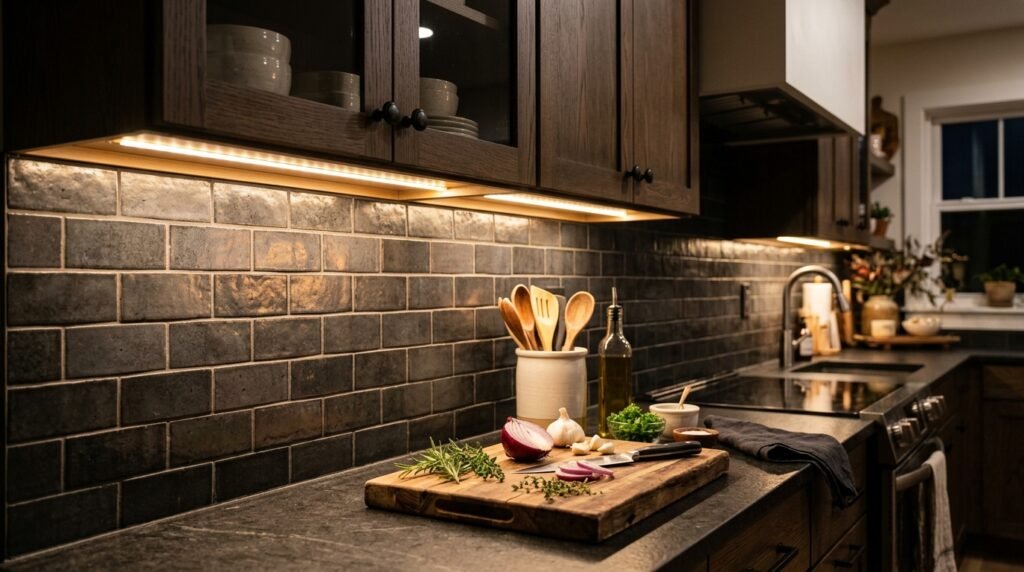
Dark kitchens require more intentional lighting than white kitchens. Relying on a single ceiling light will create unwanted shadows. A professional lighting plan includes three distinct layers: task lighting (under-cabinet LEDs), ambient lighting (recessed ceiling lights), and accent lighting (pendants or wall sconces).
Using “warm white” bulbs (2700K to 3000K) is essential. This color temperature enhances the richness of the blue and the warmth of the wood. Dimmers should be installed on all circuits to allow for the adjustment of the mood based on the time of day and the activity in the kitchen.
6. Backsplash Texture: Zellige and Natural Stone
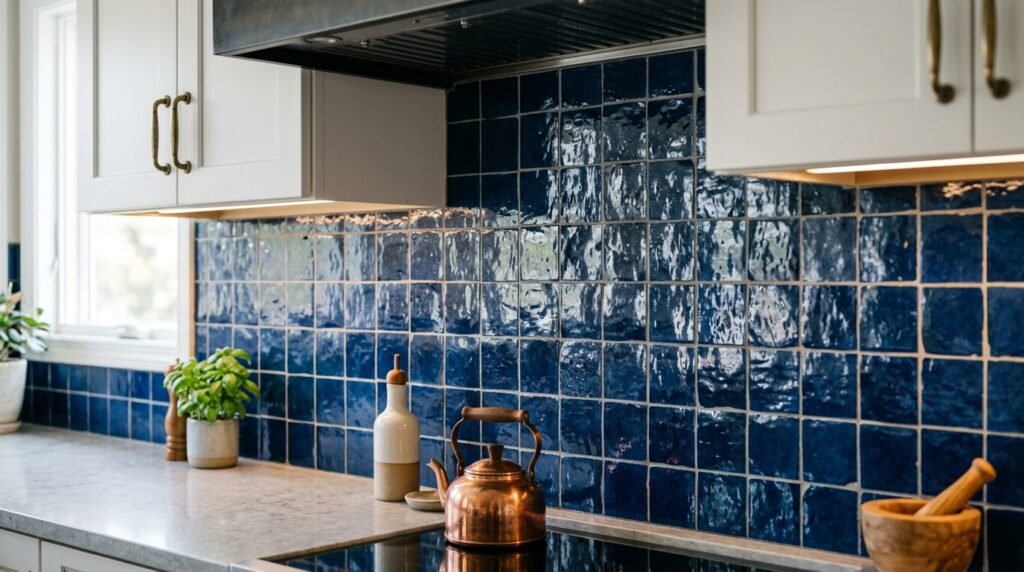
The backsplash is an area where texture can take precedence over color. Using a tile in a similar shade to the cabinets—but with a different finish—adds depth without introducing new colors. Zellige tiles are a popular choice because their handmade, irregular surfaces reflect light in various directions, adding a shimmering quality to the dark walls.
Alternatively, extending the countertop material up the wall (a slab backsplash) creates a seamless, modern look. This reduces the number of visual “seams” in the kitchen, contributing to a cleaner, more architectural aesthetic.
7. Open Shelving as a Visual Break
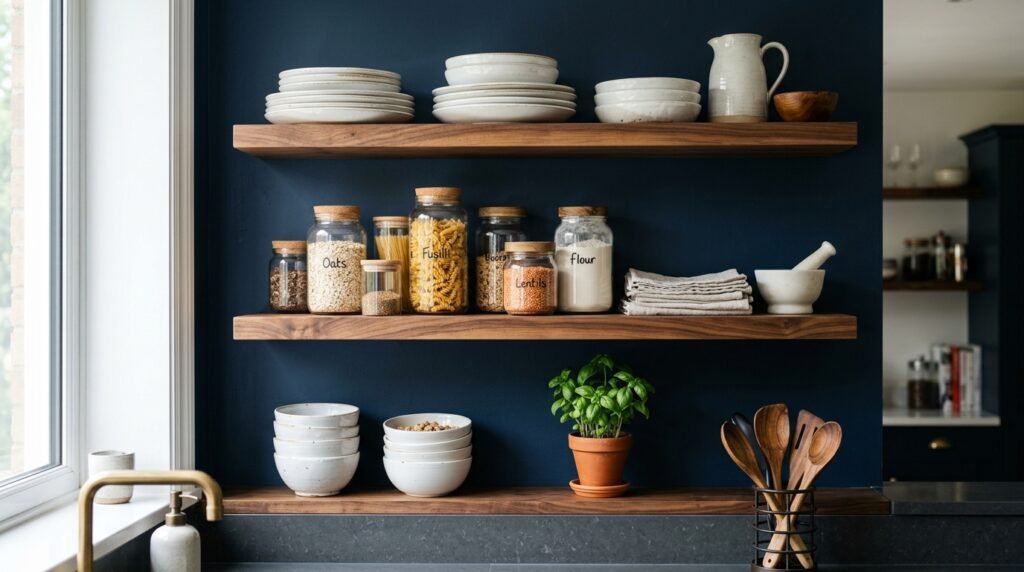
Replacing a section of upper cabinets with open shelving can prevent a dark kitchen from feeling top-heavy. Wood shelves provide an opportunity to introduce more warmth and to display functional items like glassware or white ceramics.
This “visual break” makes the kitchen feel more open and less like a solid wall of color. It also allows for easier access to frequently used items, combining style with daily utility.
8. Integrated Appliances and Minimalist Lines
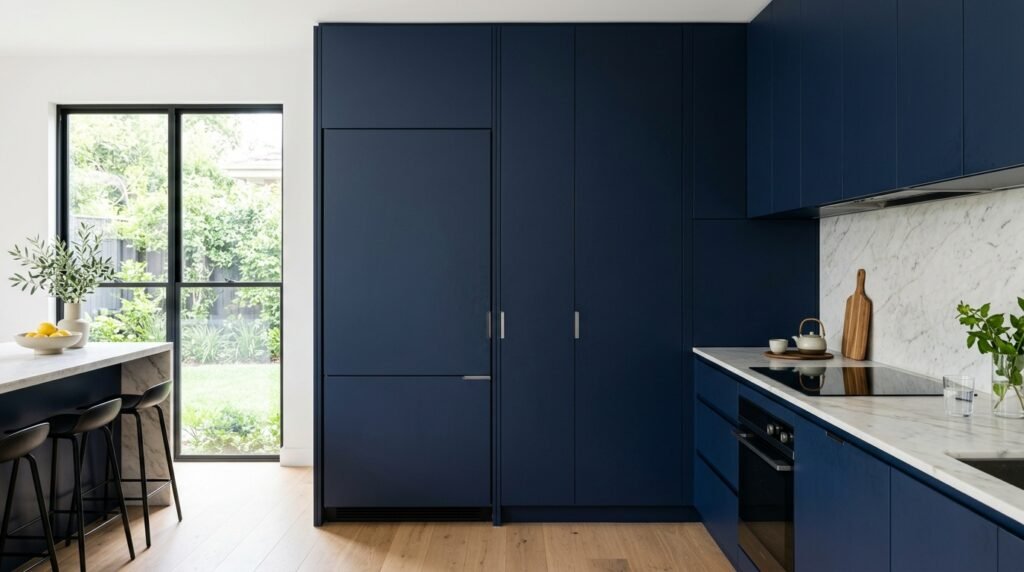
To maintain a high-end, moody aesthetic, many designers choose integrated appliances. By using cabinet panels to cover the refrigerator and dishwasher, the “blue” of the kitchen remains uninterrupted by large blocks of stainless steel.
This creates a monolithic look that is common in luxury kitchen design. If integration isn’t an option, choosing black stainless steel or matte black appliances can help them blend more naturally into the dark color scheme.
9. Flooring Choices: Grounding the Color Palette
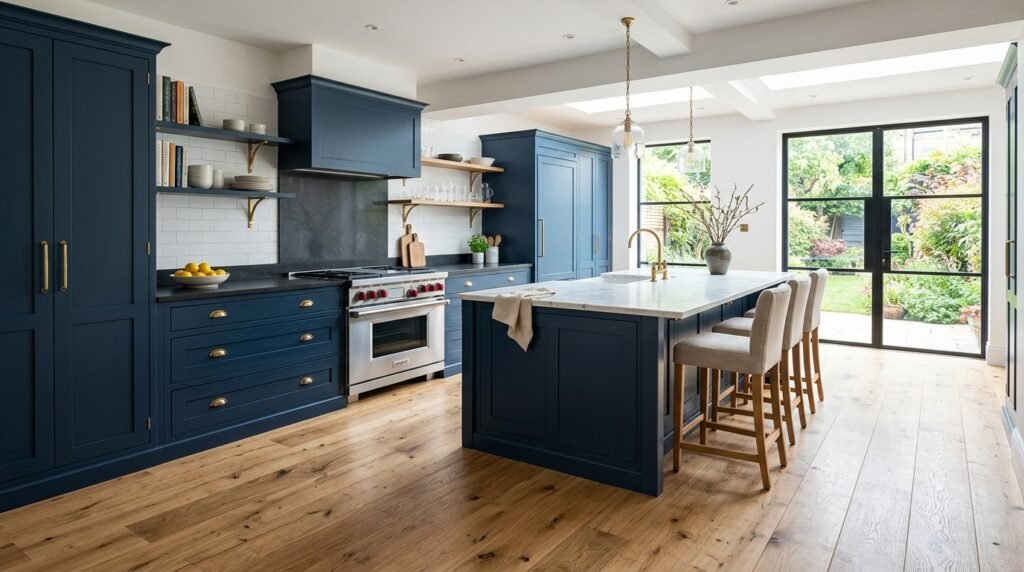
The floor is the anchor of the kitchen. Medium-toned wood floors are the most common pairing for navy blue cabinets as they provide a natural, neutral base. If you prefer tile, large-format slate or charcoal grey stone tiles work well to maintain the moody, grounded feel.
Avoid very light-colored tiles, which can create a “floating” effect for the cabinets. A floor that shares a similar visual “weight” with the cabinetry ensures the room feels balanced and cohesive.
10. Cost and Budget Considerations
Upgrading to a moody blue kitchen can be managed through different budget levels:
- Cabinet Refinishing: Painting existing high-quality cabinets is the most cost-effective way to achieve this look ($1,000–$3,000).
- Hardware Upgrades: High-quality brass pulls can cost between $10 and $25 each, totaling $300–$600 for a standard kitchen.
- Lighting: Installing under-cabinet LED kits is a low-cost upgrade ($100–$300) that significantly improves the functionality and mood of a dark kitchen.
Common Mistakes to Avoid
- Poor Lighting: Dark colors absorb light. Without a proper layered lighting plan, the kitchen will feel dark rather than “moody.”
- Overcomplicating the Palette: Stick to one primary blue and one or two accent materials (like wood and brass). Too many different materials can make the room look cluttered.
- Ignoring the Ceiling: In a dark kitchen, a stark white ceiling can create a harsh contrast. Consider painting the ceiling a very light grey or a “muted” white to soften the transition.
FAQ
Do moody blue kitchens show more dirt?
Dark matte finishes can show water spots and oils from fingerprints more than lighter colors. It is important to use high-quality, “scuff-resistant” cabinet paint and to use handles or pulls to minimize direct contact with the cabinet faces.
What color should the walls be?
You can either “color drench” the room by painting the walls the same blue as the cabinets for maximum drama, or use a warm neutral like “greige” or off-white to provide a soft contrast.
Will a dark blue kitchen go out of style?
Navy blue is considered a “new neutral” in interior design. Unlike trendier colors, deep blue has a historical precedent in cabinetry and remains a staple of high-end, timeless design.