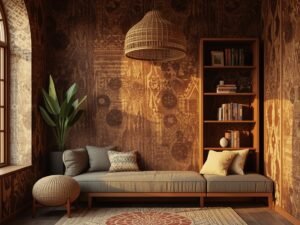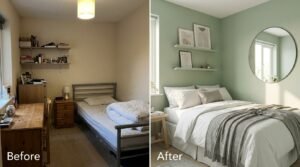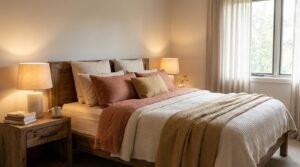
A gathered valance is a fundamental element of the “Modern Farmhouse” and “Cottage” aesthetics. Its primary function is to soften the hard architectural lines of a window frame while introducing a sense of “lived-in” history. Unlike flat or tailored valances, the gathered style relies on a “fullness ratio” to create soft, undulating pleats that provide a room with acoustic dampening and visual warmth.
To achieve a professional-grade look that avoids appearing dated, the focus must remain on high-quality natural textiles and intentional hardware selection.
1. Material Selection: The Linen and Grain Sack Aesthetic
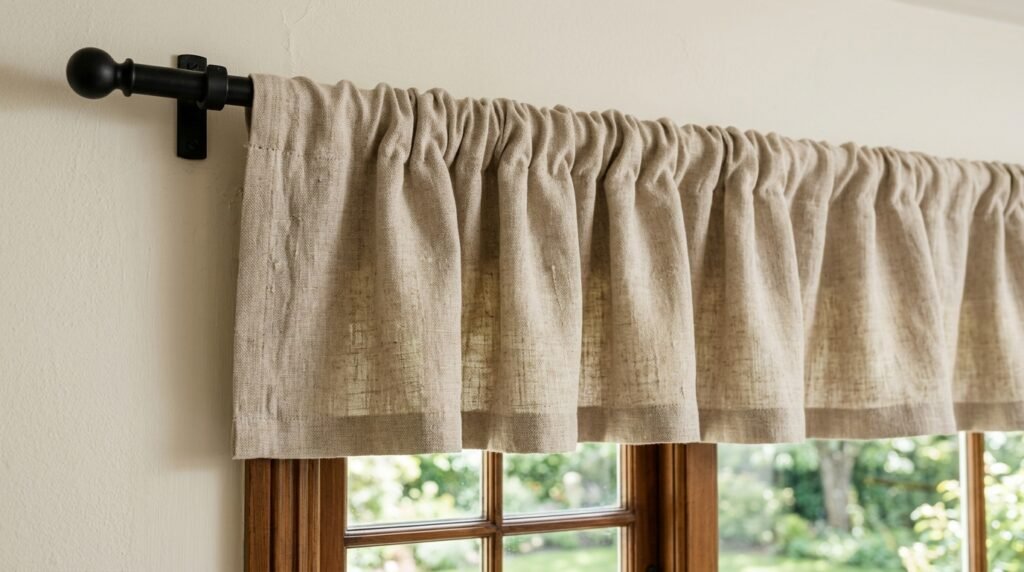
For an authentic farmhouse feel, prioritize “material honesty.” Avoid synthetic sheers. Instead, use:
- Heavy Linen: Provides a structured, weighted gather that looks expensive and organic.
- Grain Sack Fabric: A durable, textured cotton that often features a central stripe; it is the definitive “utility-chic” farmhouse textile.
- Cotton Duck: A sturdy, matte fabric that holds its shape well, creating crisp, clean folds.
2. The Rule of Fullness: Calculating the Gather
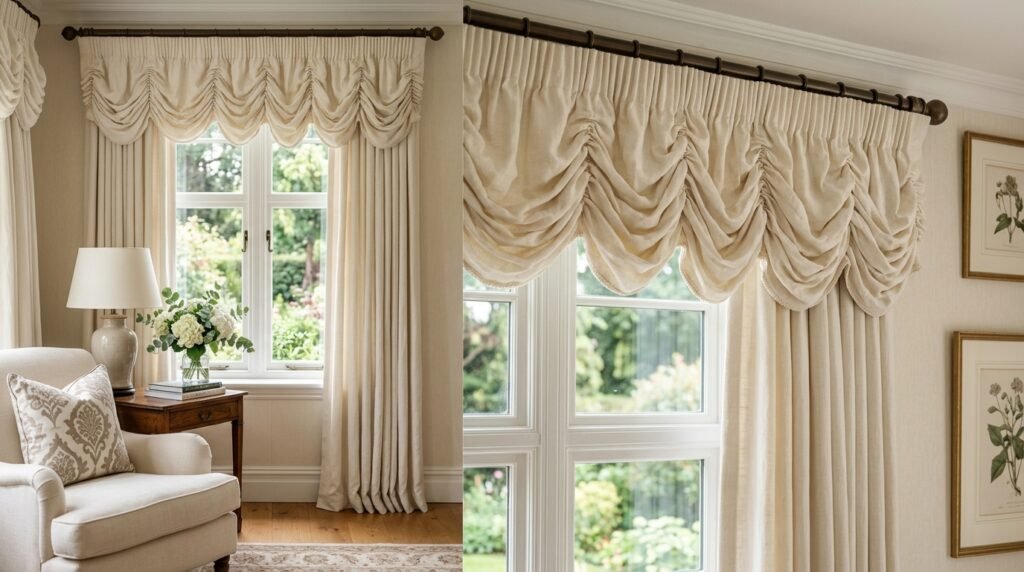
The difference between a “custom” and a “budget” look is the amount of fabric used. A professional farmhouse valance requires a 2.5x or 3x fullness ratio.
- The Logic: If your window is 30 inches wide, your fabric panel should be 75 to 90 inches wide.
- The Result: This density ensures the “gathers” are tight and deep, preventing the valance from looking like a flat strip of cloth.
3. High-Contrast Patterning: Gingham and Ticking Stripes
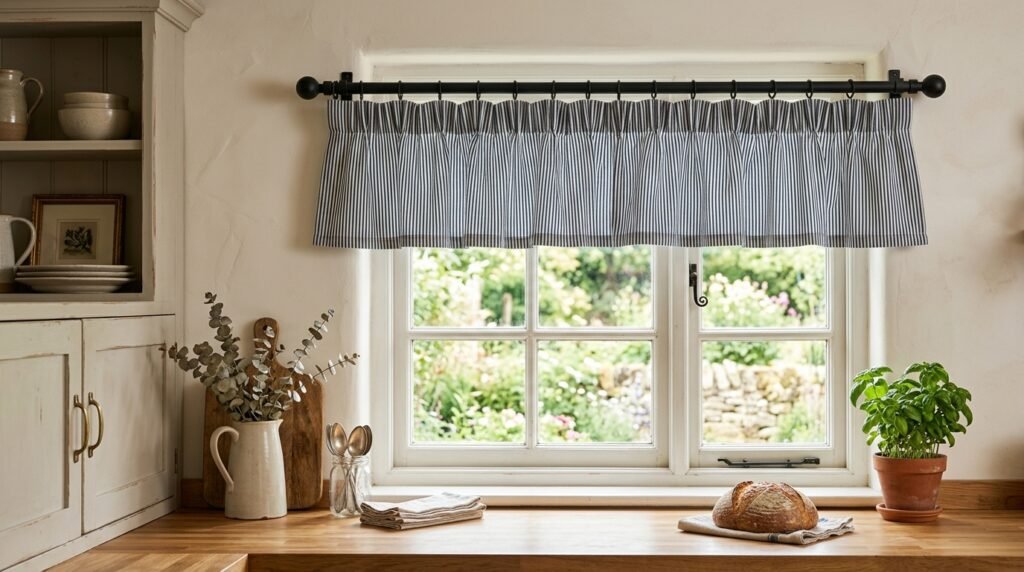
Patterned valances serve as a visual anchor in a neutral room. To stay within the farmhouse palette, stick to:
- Ticking Stripes: Classic, narrow vertical lines that elongate the window’s appearance.
- Buffalo Check: A larger-scale gingham (2-3 inches) that provides a bold, graphic “pop” against white or wood-toned walls.
- Pinstripe Linen: A subtle, sophisticated option for those who prefer a more “Modern” Farmhouse approach.
4. Hardware Selection: Wrought Iron and Natural Wood
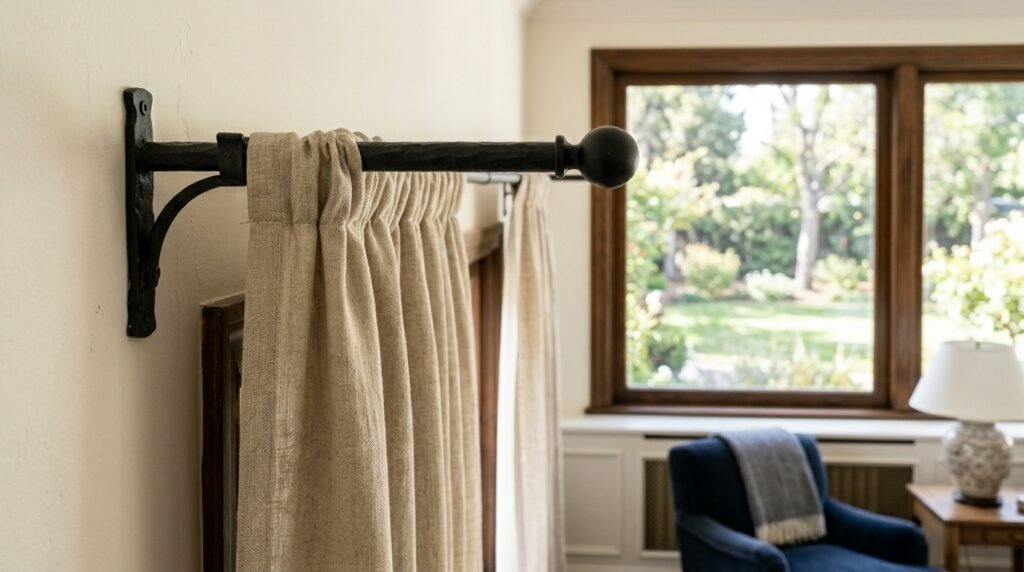
The hardware should provide a “grounding” element to the soft fabric.
- Black Wrought Iron: Provides a sharp, industrial contrast that defines the top of the window.
- Raw Wood Rods: Complements the “natural” side of farmhouse decor, working best with linen or cream fabrics.
- The Rod Pocket: For the most traditional farmhouse look, the rod should be threaded through a pocket in the fabric, creating a “ruffled” header at the top.
5. Incorporating Edge Details: Ruffles and Burlap Trim
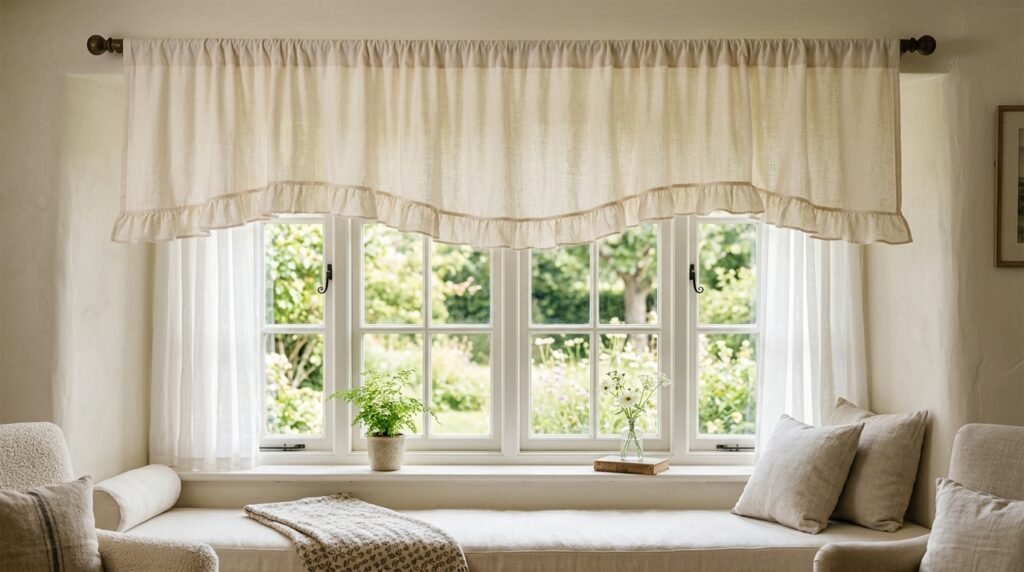
A “raw” or “tailored” bottom edge can sometimes look too modern. For a cozy cottage-farmhouse feel, consider:
- Ruffled Hem: Adding a 2-inch ruffle to the bottom edge increases the “softness” of the silhouette.
- Jute/Burlap Border: Sewing a thin strip of burlap to the bottom provides a rustic, “earthy” finish that ties into other natural elements like rugs or baskets.
6. Functional Layering: Valances Over Blinds
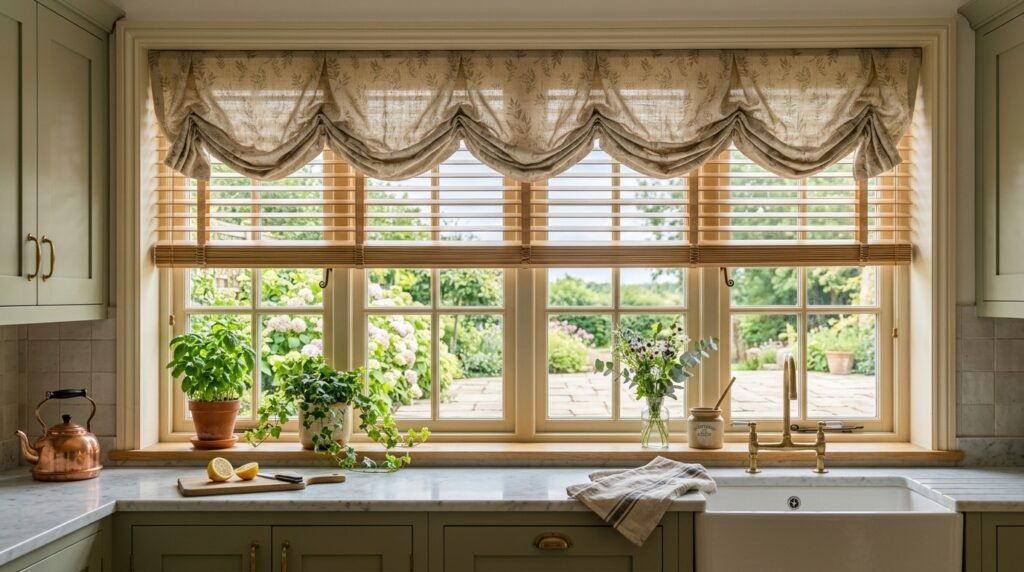
In many farmhouse designs, the valance is not used alone. It is often layered over Bamboo Shades or White Wooden Blinds.
- The Benefit: The blinds provide the necessary privacy and light control, while the gathered valance provides the “aesthetic frame” that makes the window feel finished and cozy.
7. The “Kitchen Sink” Focal Point
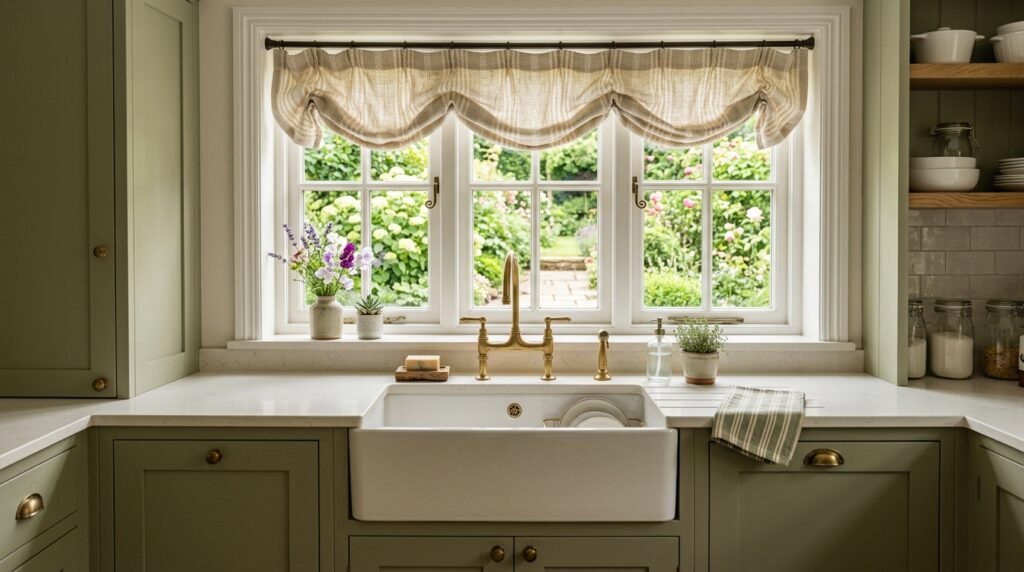
The most common application for a gathered valance is above the kitchen sink. Because this area is often a hub of activity, the valance should be hung high enough to avoid water splashes but low enough to hide the “top gap” of the window frame. This creates a framed, picturesque view of the outdoors while you work.
8. Maintenance for High Performance
- Dust Management: Because of the folds, gathered valances can collect dust. Use a vacuum with a brush attachment once a month to keep the fabric fresh.
- Steam Finishing: After installation, use a handheld steamer to “train” the folds. This ensures they hang vertically and look professionally staged rather than messy.
Cost & Budget Allocation
| Component | Budget Strategy | Est. Cost |
| Fabric | Use high-quality cotton bedsheets or drop cloths. | $15–$30 |
| Hardware | Basic black tension rods or DIY plumbing pipe. | $10–$25 |
| Sewing | Simple straight-stitch DIY or use iron-on hem tape. | $5 |
| TOTAL | High-Impact / Low-Cost | $30–$60 |
Common Mistakes to Avoid
- Under-Gathering: Using only 1.5x the width makes the valance look like an afterthought. Always aim for 2.5x minimum.
- Synthetic Shine: Avoid polyester “satin” or “shiny” fabrics. They clash with the rugged, matte nature of farmhouse design.
- Too Long: A farmhouse valance should generally be 12 to 15 inches long. Anything longer can block too much natural light and make the window feel “squat.”
FAQ
Do gathered valances make a room look smaller?
No. Because they are hung at the top of the window, they actually draw the eye upward, emphasizing the height of the ceiling.
What color is most “timeless” for a farmhouse valance?
Oatmeal or Cream. These tones are more forgiving of dust and sunlight than pure white and provide a warmer, more inviting glow when the sun shines through them.
Can I use these in a bathroom?
Yes. Just ensure the fabric is a breathable cotton or linen to prevent moisture retention. They are excellent for providing privacy while allowing light to flood the room from the top half of the window.