
Creating a warm and inviting bedroom is a matter of practical design rather than abstract “magic.” A truly cozy space relies on the balance of light temperature, material quality, and spatial organization. In professional interior design, the goal is to reduce visual noise while increasing tactile comfort. This guide outlines the specific, grounded steps needed to turn a standard sleeping area into a high-performance sanctuary that supports rest and mental recovery.
1. Layering Natural Textiles for Physical Warmth
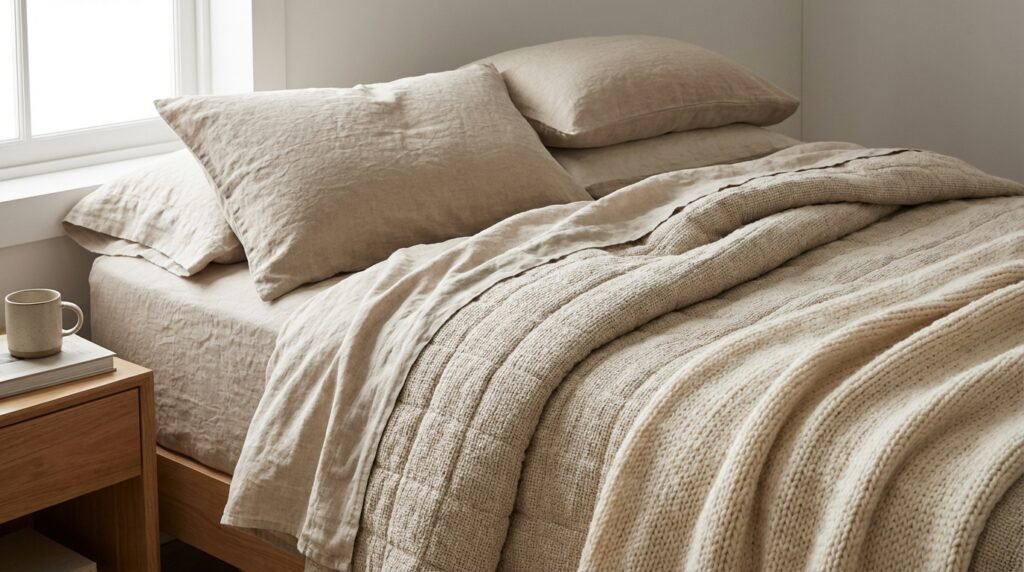
The most direct way to build warmth is through the physical materials that touch your skin. For a high-end aesthetic, avoid synthetic, shiny fabrics which often feel cold and look cheap. Instead, focus on natural fibers like stone-washed linen, organic cotton, and wool. These materials are breathable, which helps regulate body temperature, but they also have a visible “weave” that adds a sophisticated, matte texture to the room.
To achieve a professional look, layer your bedding. Start with a high-quality cotton base, add a medium-weight quilt for structure, and finish with a heavy knit throw at the foot of the bed. This “3-layer” approach creates visual depth and makes the bed look grounded and substantial.
2. The 2700K Lighting Rule for Evening Atmosphere
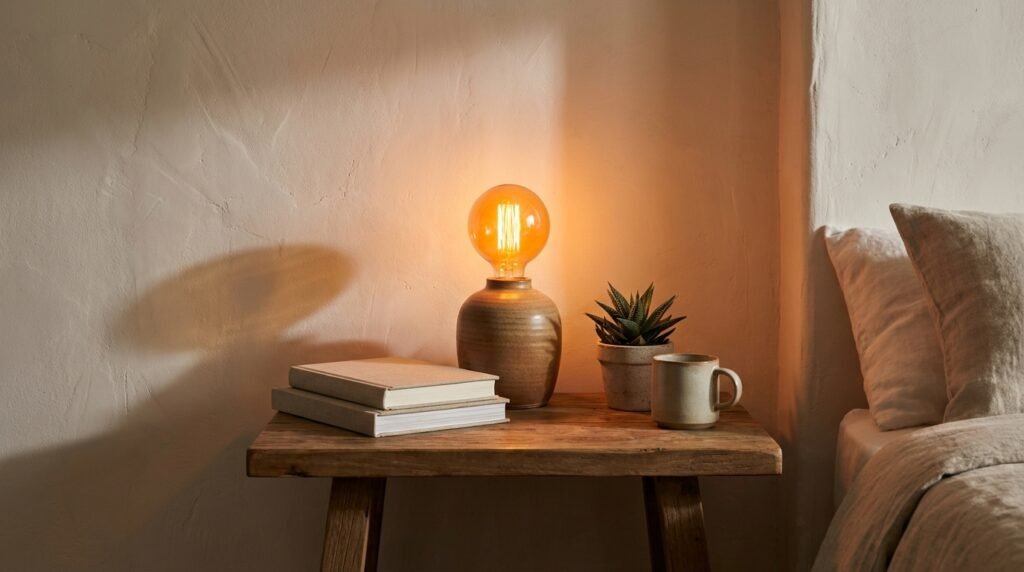
Lighting determines how the eye perceives color and texture. Standard overhead lighting is often too “cool” (blue-toned), which keeps the brain in an alert state and makes a room feel clinical. To create an inviting atmosphere, you must use warm-toned bulbs, specifically those in the 2700K (Kelvin) range. This mimics the warm, amber glow of a sunset.
Use at least three sources of light at different heights: a bedside lamp, a floor lamp in a corner, and perhaps a small accent light on a dresser. This creates a “glow” rather than a “glare,” softening the edges of the furniture and making the room feel more intimate. Avoid “daylight” bulbs in the bedroom, as they are too harsh for a space meant for relaxation.
4. Earth-Toned Palettes and Visual Grounding
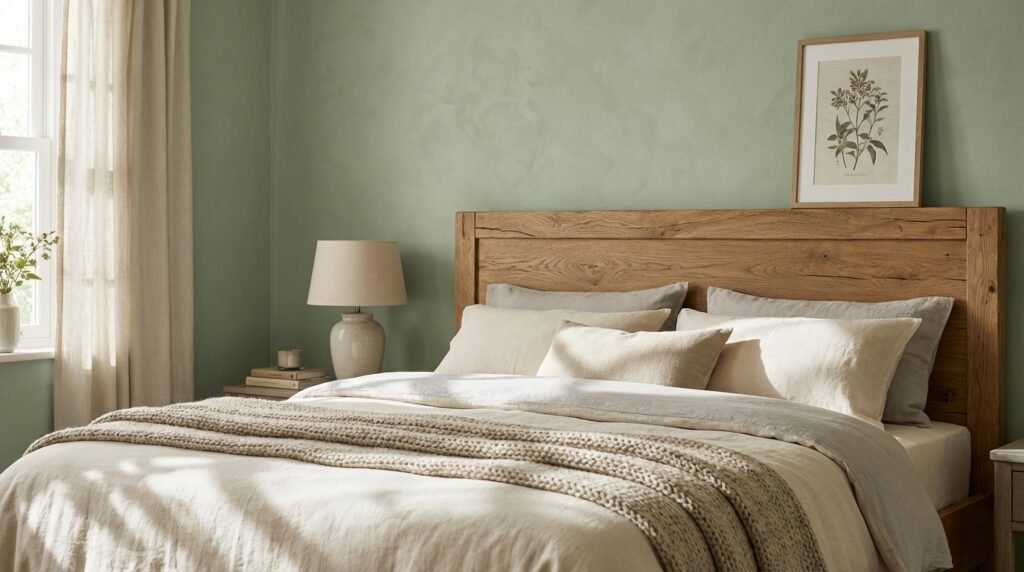
A warm aesthetic is built on a foundation of earth-based colors. Bright, sterile whites can feel cold, while high-contrast colors can be overstimulating. Professional designers lean toward “mid-tones”—colors like sage green, terracotta, warm taupe, or soft ochre. These colors are inherently soothing to the human eye because they mimic natural environments.
If you prefer neutral walls, bring these colors in through your larger furniture pieces or window treatments. The goal is to create a “tonal” room, where different shades of the same color family work together. This creates a cohesive, low-stress visual environment that feels anchored and intentional.
4. Defining the Zone with High-Pile Area Rugs
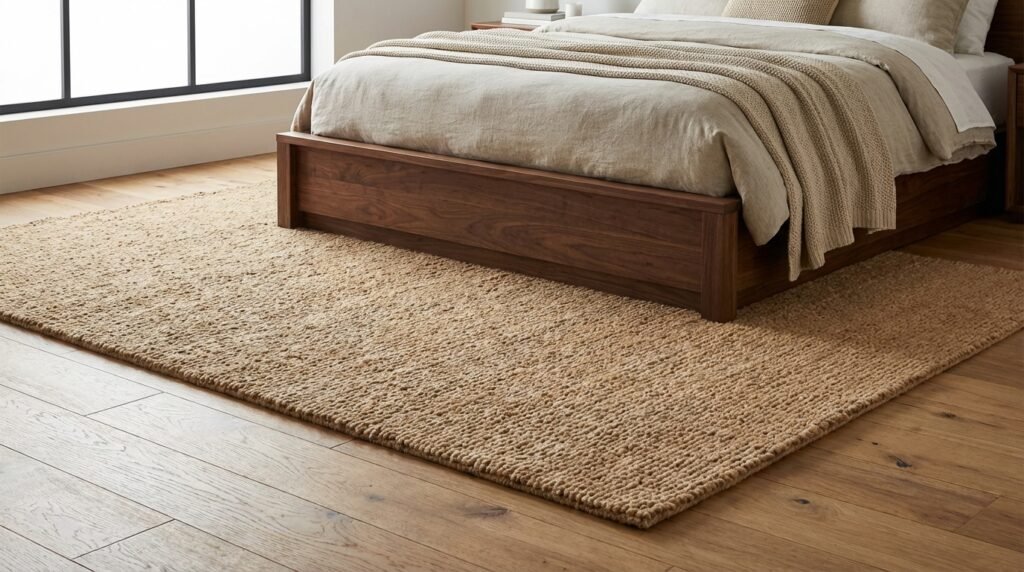
Hardwood or laminate floors are easy to clean, but they lack the thermal and acoustic warmth required for a cozy bedroom. A high-quality area rug serves two purposes: it physically warms the room by acting as an insulator, and it “zones” the bed as the central focus of the space.
In an inviting bedroom, the rug should be large enough to extend at least 24 inches beyond the sides of the bed. Materials like wool or blended shag offer a luxurious underfoot experience. If you are on a budget, a jute rug provides a great organic texture, though you may want to layer a smaller, softer sheepskin rug on top of it where your feet land in the morning.
5. Biophilic Integration and Air Quality
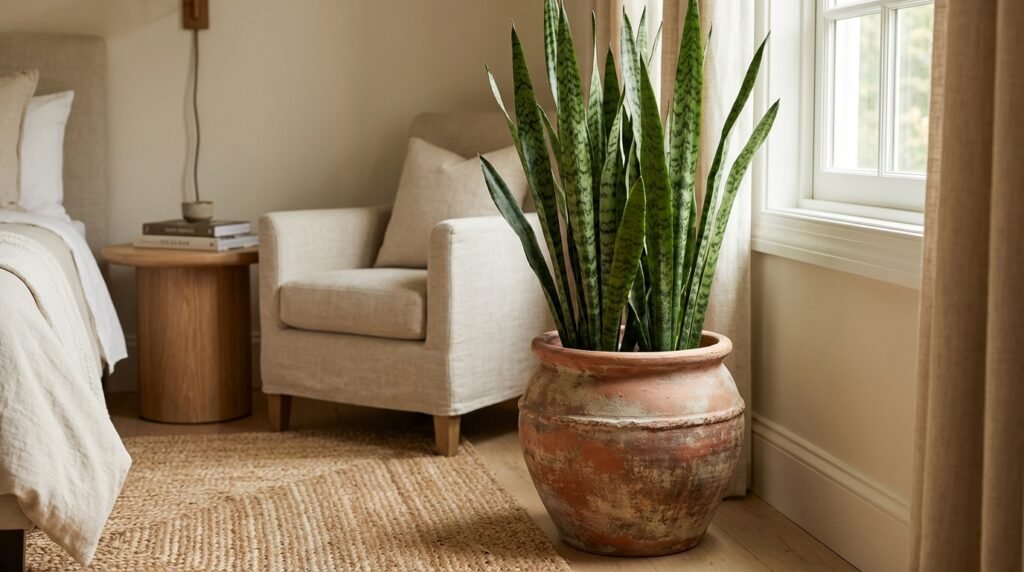
Biophilic design is the practice of bringing natural elements indoors to improve well-being. A single, large-scale plant, such as a Rubber Tree or a Fiddle Leaf Fig, can fill an empty corner and provide a vibrant, living element to the room. The deep green of the leaves provides a beautiful contrast to neutral bedding and wood furniture.
Beyond aesthetics, plants like the Snake Plant or Peace Lily are known for their ability to filter indoor air. This contributes to a “cleaner” feel in the bedroom, which is essential for a space meant for deep rest. Use natural pots made of terracotta, stone, or woven seagrass to keep the organic theme consistent.
6. Window Treatments: Linen and Blackout Solutions
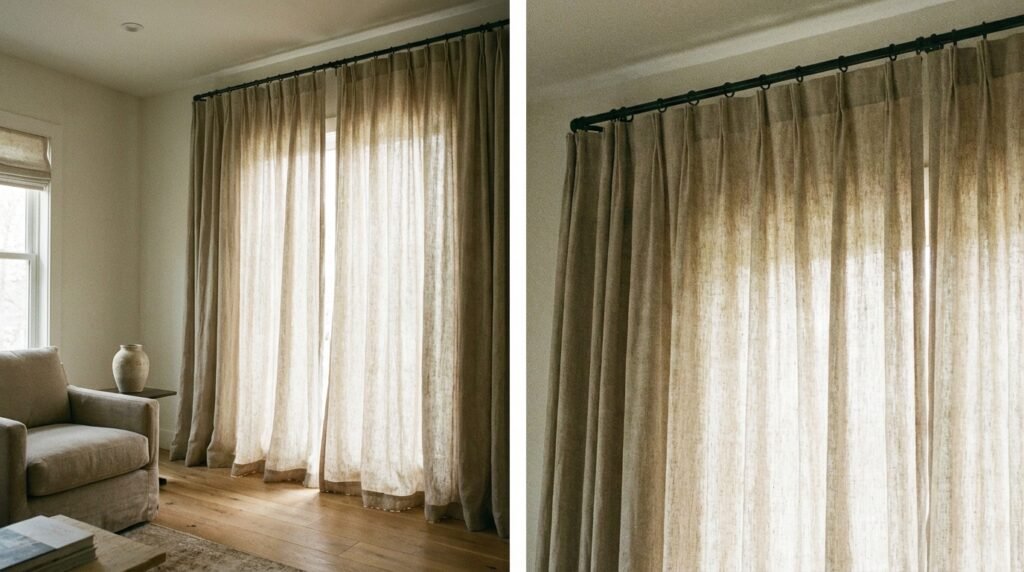
Windows are often overlooked, but they represent a large surface area that can either feel cold (glass) or warm (fabric). To make a bedroom inviting, use floor-to-ceiling curtains. Linen drapes are excellent for this; they have a heavy “drop” that looks expensive and provides a soft, diffused light during the day.
For functionality, ensure your curtains have a blackout lining. This ensures that your sleep isn’t interrupted by streetlights or early morning sun. Hanging the curtain rod 6 inches above the window frame and 6-10 inches wider than the window itself makes the ceiling feel taller and the window feel grander.
7. Natural Wood Tones and Material Honesty
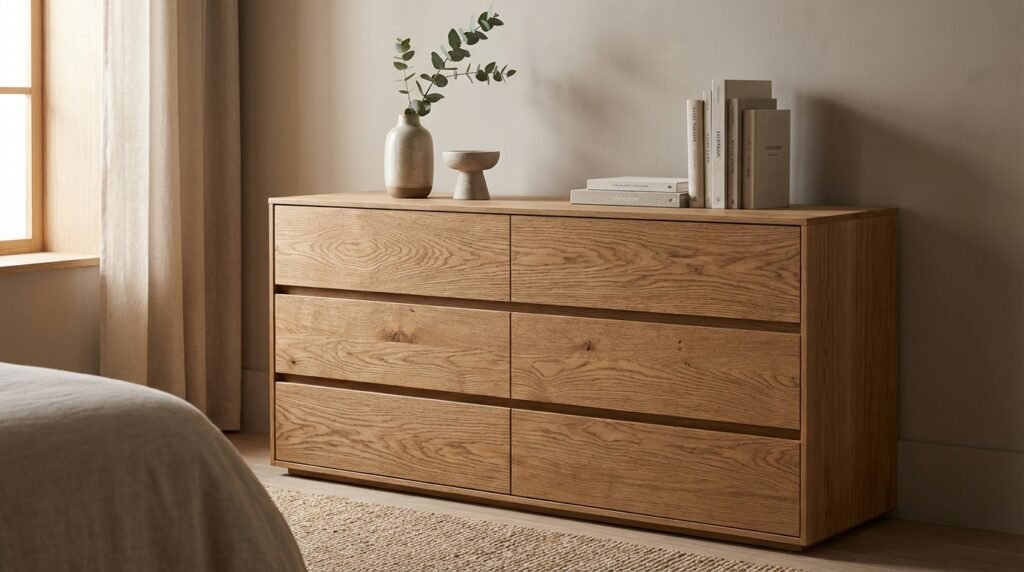
Materials like plastic or high-gloss lacquer can feel synthetic and “cold.” To build a warm aesthetic, prioritize natural wood. The visible grain of oak, walnut, or pine brings a rustic, “grounded” feeling to the bedroom. Wood is a natural insulator and has a visual “softness” that stone or metal lacks.
If you have a metal bed frame, you can balance it by using wooden nightstands or a wooden bench at the foot of the bed. Mixing wood tones is a designer secret—as long as the “undertone” (warm or cool) is the same, mixing a light oak with a darker walnut creates a space that feels collected and timeless rather than “matchy-matchy.”
8. Minimalist Nightstand Curation
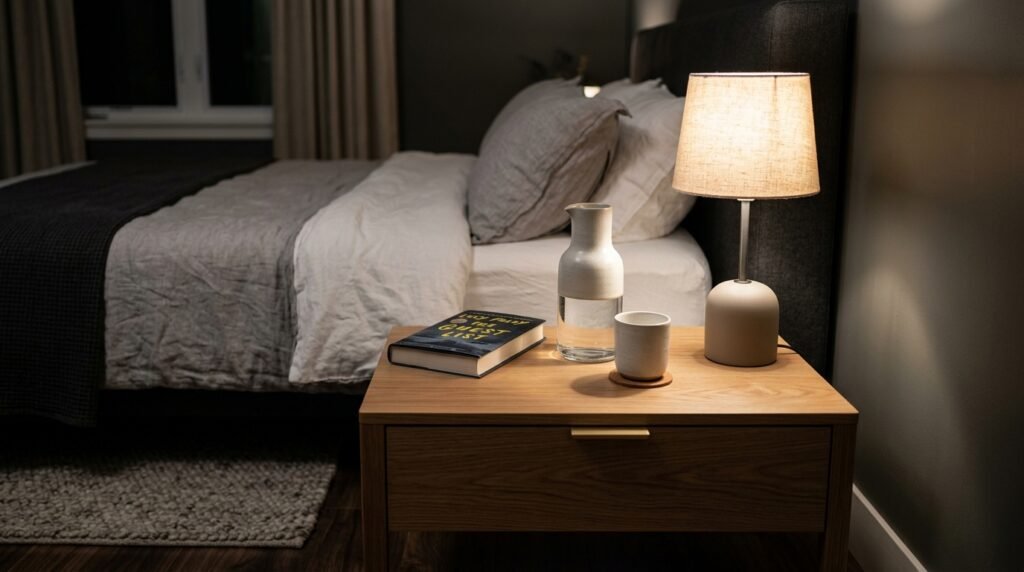
Clutter is the enemy of a warm aesthetic. An inviting room feels spacious and managed. The nightstand is the most common place for clutter to accumulate. To maintain a professional look, keep the surface 80% clear.
Limit your nightstand items to the essentials: a high-quality lamp, one book, and perhaps a small ceramic tray for jewelry or glasses. By keeping the surfaces clear, you allow the design of the furniture and the texture of the walls to be the focus. This creates a “breathable” environment that reduces the mental load before sleep.
9. Acoustic Softening with Upholstered Elements
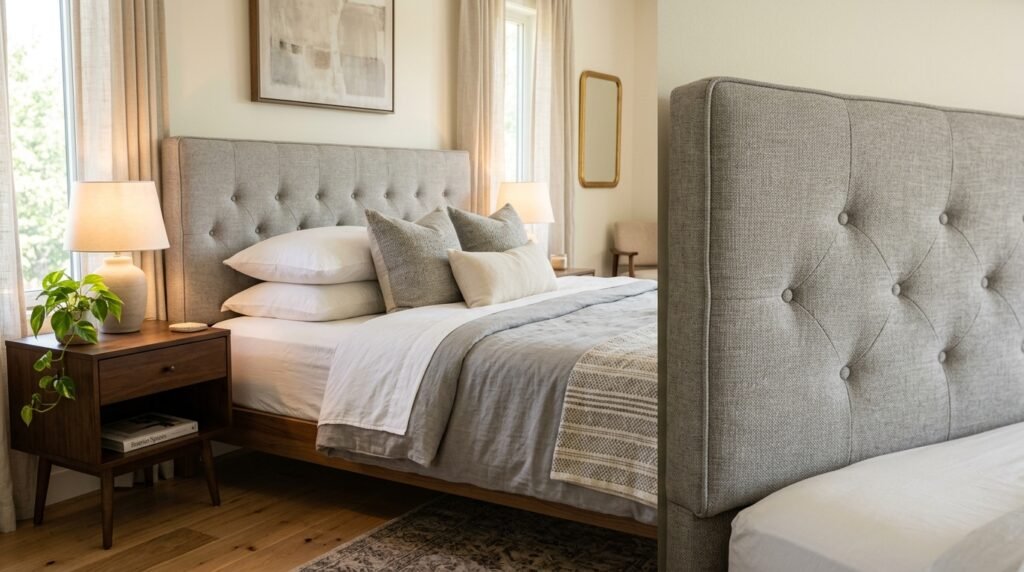
A room that echoes feels cold and uninviting. To create a “hushed” and cozy atmosphere, you need to absorb sound. Upholstered headboards are a great way to do this. They provide a soft surface to lean against and significantly dampen the noise in a room compared to a wooden or metal headboard.
Other ways to soften the acoustics include using fabric-covered storage benches or even hanging a textile wall tapestry. The more soft surfaces you have in the room, the quieter and more “cocoon-like” it will feel. This “quietness” is a hallmark of high-end, inviting bedroom design.
10. The Significance of Scent and Air Flow
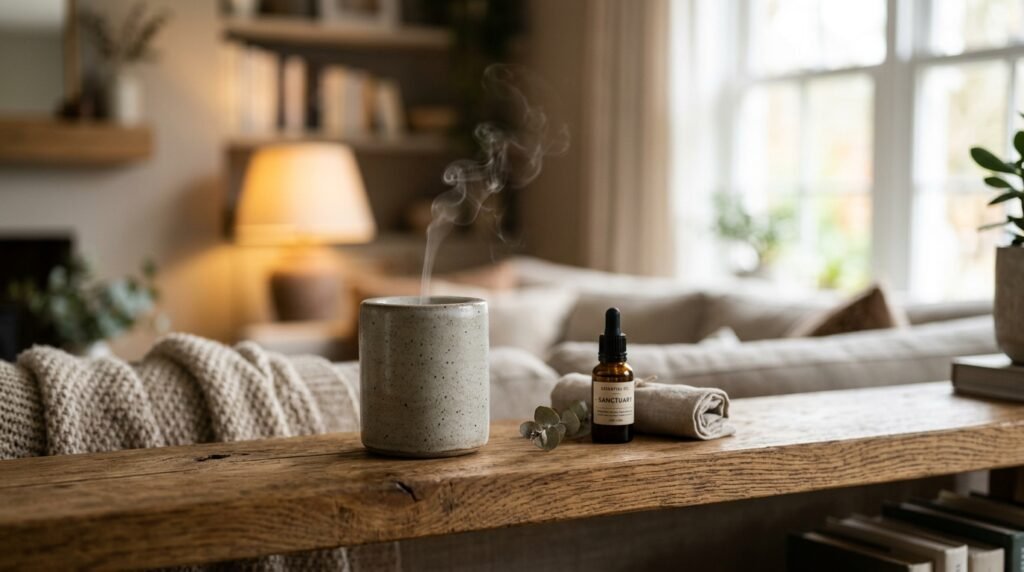
While decor is mostly visual, the “inviting” nature of a room is heavily influenced by scent and air quality. A stuffy room never feels cozy. Ensure there is good airflow, and use a subtle, natural scent to define the space. Cedarwood, lavender, and amber are professional choices for bedrooms because they are grounding and not overly “sweet” or “perfumey.”
A stone or ceramic essential oil diffuser is a stylish way to incorporate scent. It doubles as a piece of decor and doesn’t involve the fire risk of a candle. Keeping the scent consistent helps your brain associate that specific smell with the act of unwinding and sleeping.
Cost & Budget Considerations
A warm bedroom aesthetic can be achieved at various price points, provided you spend your budget on “touch points.”
- Invest in Bedding: You spend 30% of your life in bed. High-quality natural fiber sheets ($100-$200) are the best investment for both comfort and aesthetic.
- Lighting Strategy: You don’t need expensive lamps; you need the right bulbs. Switching all bulbs to 2700K LEDs costs less than $30 and changes the entire room.
- Second-Hand Wood: Solid wood furniture can be expensive new. Look for vintage oak or walnut pieces on marketplaces; they often have better craftsmanship and more “warmth” than modern MDF furniture.
Common Mistakes to Avoid
- The “Big Light” Mistake: Never rely on the center ceiling light. It creates flat, unflattering shadows and destroys the cozy atmosphere.
- Scale Issues: Avoid “postage stamp” rugs. If the rug doesn’t fit at least halfway under the bed, it’s too small and will make the room look disjointed.
- Too Many Pillows: While layers are good, 10 decorative pillows on a bed can make it feel like a chore to get into. Stick to 2-4 accent pillows for a clean, professional look.
- Matching Sets: Avoid buying a “bedroom in a box.” A room where the bed, dresser, and nightstand are identical looks like a showroom, not a home. Mix materials for a warmer, more curated feel.
FAQ: Bedroom Aesthetic and Comfort
How can I make a room feel warm if I have white walls?
Focus on “wood and wool.” Use warm wood furniture (like oak) and incorporate cream-colored textiles with heavy textures (like a cable-knit throw). The “warmth” will come from the materials rather than the wall color.
What is the best way to hide cords and tech?
Tech is the opposite of “cozy.” Use a nightstand with a drawer to hide chargers, or use decorative cord covers that match your wall color. Keeping wires out of sight is a simple way to make a room look much more high-end.
Are curtains better than blinds for a warm look?
Curtains are superior for a “warm and inviting” look because fabric adds softness and movement. Blinds are functional but can look “hard” and clinical. If you need blinds for light control, layer curtains over them to soften the window frame.